Gym Soundproofing Services
New York Soundproofing handles full gym soundproofing - both the acoustic treatment that controls echo inside large open rooms and the sound isolation that keeps weight drops, music, and class noise from disturbing neighbors. Our work covers commercial fitness clubs, boutique studios, CrossFit boxes, school gymnasiums, hotel fitness centers, and home gyms in residential buildings. We design, manufacture, and install in-house across the New York metropolitan area, New Jersey, Philadelphia, and Chicago. Request a free on-site or virtual acoustic consultation to get started.
What Is Gym Soundproofing - Acoustic Treatment vs. Sound Isolation
Gym soundproofing covers two objectives. Acoustic treatment controls echo and reverberation inside the room so coaches can be heard and the space stays usable for instruction or events. Sound isolation prevents impact, vibration, and airborne noise from leaving the gym and disturbing neighbors. Most projects need both.
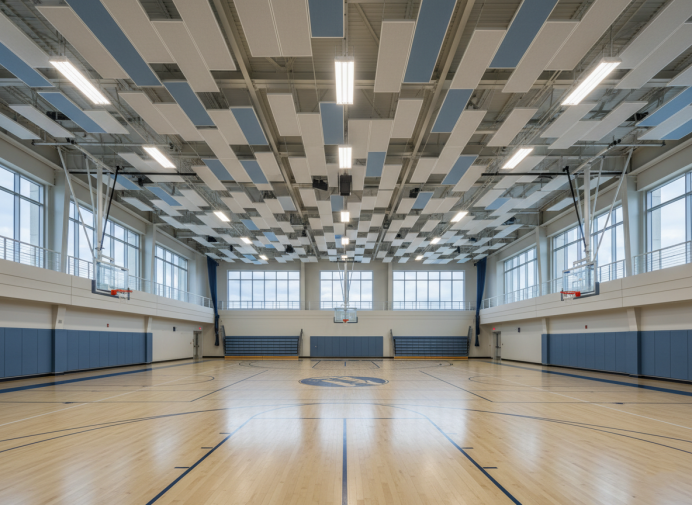
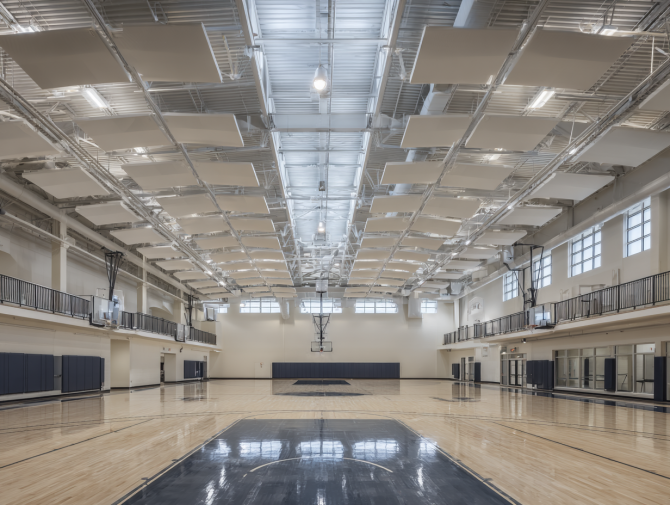
For school gymnasiums, church gyms, and YMCAs, the dominant problem is reverberation against hard walls, hardwood floors, and exposed metal-deck ceilings. The fix is acoustic treatment - wall panels, hanging baffles, or ceiling clouds - sized to the room volume.
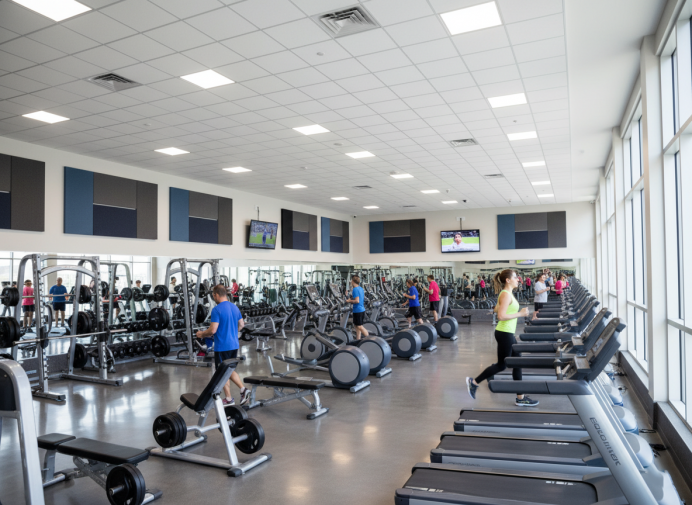
For commercial fitness clubs, boutique studios, and CrossFit boxes in mixed-use NYC buildings, the dominant problem is transmission to neighbors. Weight drops, HIIT footfall, treadmill vibration, and amplified music travel through floor and wall structures. The fix is sound isolation - floating floors, equipment platforms, decoupled wall assemblies, and door upgrades - designed against measurable targets.
Each objective has its own metric. Reverberation is measured by RT60 and NRC. Airborne transmission between rooms by Sound Transmission Class (STC). Impact noise - what's heard below when someone drops a barbell - is measured by Impact Insulation Class (IIC).
Off-the-shelf acoustic foam is not suitable for gyms. It lacks the Class A fire rating required for assembly spaces, doesn't withstand impact or humidity, and addresses only internal absorption - not impact noise or transmission to neighbors.
Common Gym Noise Problems We Solve
Gym noise problems are split between what's heard inside the room and what's heard everywhere else. Each problem has a specific acoustic cause and a specific fix.
Excessive echo and reverberation
Hard floors, painted block walls, and high open ceilings produce reverberation times that blur speech and elevate perceived noise. Coaches strain to be heard, and crowd events become chaotic.
Weight drops and impact noise from Olympic lifting
Deadlifts, kettlebells, and dropped barbells transmit low-frequency impact energy through the floor structure to the spaces below. This is the most common complaint in commercial gyms in mixed-use buildings and one of the harder problems to solve without proper floor isolation.
Treadmill, elliptical, and cardio equipment vibration
Cardio equipment generates continuous low-frequency vibration that travels through the floor structure into adjacent and below-grade spaces. Standard rubber gym flooring typically isn't enough on its own.
HIIT, plyometric, and group class impact noise
Box jumps, burpees, jumping jacks, and dance fitness produce repeated impact loads that translate into footfall noise downstairs and structure-borne noise into adjacent rooms.
Music bleeds between adjacent fitness studios
A spin studio at full volume next to a yoga room is one of the more common complaints in boutique fitness facilities. Music transmission through shared walls, doors, and ceiling plenums has to be addressed at each path.
Sound transmission to residential and office neighbors
This is the issue that drives most commercial gym soundproofing projects in NYC mixed-use buildings - and the issue that produces 311 noise complaints, neighbor lawsuits, and lease violation notices.
HVAC and mechanical noise
Fitness clubs require high-volume ventilation, and the mechanical noise from supply diffusers, return grilles, and rooftop equipment can dominate the room's noise floor.
Speech intelligibility loss
When reverberation and background music are both high, instructors can't be heard at the back of the room, members miss cues, and trainers shout - accelerating vocal fatigue across staff.
Our Gym Soundproofing Services
We deliver complete gym soundproofing projects - acoustic treatment, sound isolation, impact noise control, and equipment vibration mitigation - using our own in-house team rather than subcontractors. Each service below is part of how we close out a typical gym project.
Acoustic Consultation and On-Site Assessment
Every project starts with a consultation, on-site or virtual. Our specialists review the facility's construction, the dominant noise paths, and operational constraints - gym hours, member impact, and any neighbor complaints already on the record.
Sound and Vibration Measurements
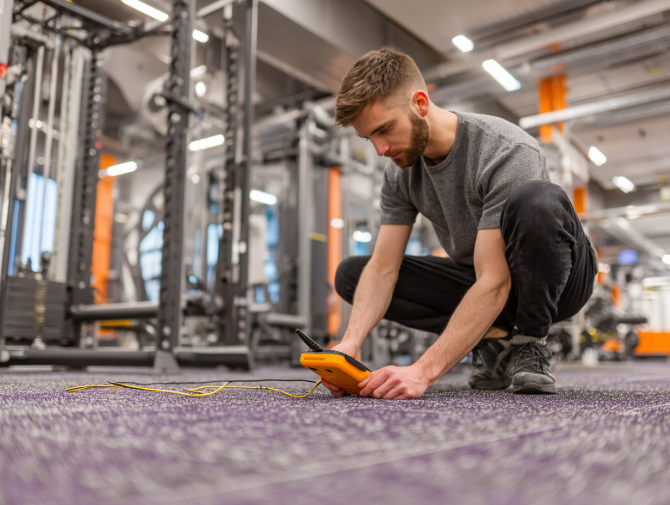
Where the project requires it, we measure reverberation time, ambient noise levels, sound transmission to adjacent spaces (STC), and impact noise (IIC). The data sets baseline targets for the design.
Custom Acoustic and Isolation Design
Based on the assessment, we design the treatment plan - acoustic absorption surfaces, floor isolation systems, equipment platforms, wall and door upgrades, and any HVAC modifications - with measurable performance targets.
Acoustic Panels, Baffles, and Custom Branding
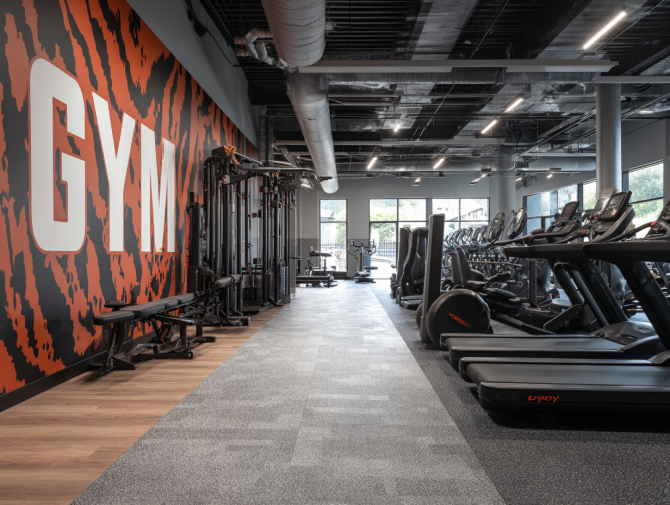
We design and manufacture our acoustic panels, baffles, and upholstery components in-house at our NYC facility, with custom shapes, fabric finishes, Pantone color matches, and printed graphics for gym branding. Fabric-wrapped wall panels reduce reverberation on open gym floors and in group fitness rooms. Suspended baffles and acoustic clouds carry the absorption load in gymnasiums with high open ceilings, exposed metal decks, or finished ceilings where wall coverage isn't enough. The same panels can be printed with gym logos, motivational graphics, or branded artwork - acoustic treatment and brand identity in one installation.
Floor Soundproofing and Equipment Vibration Isolation
Floating floor assemblies, rubber underlayments, and decoupled subfloors reduce impact noise from weight drops, plyometric work, and cardio equipment to the spaces below. Anti-vibration mats and platforms isolate treadmills, ellipticals, spin bikes, and weight stations from the building structure, controlling the low-frequency vibration that typically reaches neighbors first. This combined scope is the core of most commercial gym projects in mixed-use buildings.
Wall Soundproofing Between Studios and Adjacent Spaces
Sound-rated wall assemblies - mass-loaded vinyl, decoupled framing, sealed penetrations - control music and class noise transmission between adjacent studios and into neighboring tenant spaces.
Door and Window Soundproofing
Doors and windows are the most common flanking paths in gym projects. We install acoustic seal kits, automatic door bottoms, full soundproof door upgrades, and secondary glazing where the project calls for it. See our door soundproofing and window soundproofing services.
Sound Masking for Open Gym Floors
In larger open-plan fitness areas, sound masking raises the controlled background sound floor enough to soften the perceived intrusion of class noise from adjacent zones.
HVAC and Mechanical Noise Control
Duct silencers, lined ductwork, and equipment isolation bring ventilation noise under control in fitness clubs with high air-change requirements.
Post-Install Acoustic Verification
After installation, we return when the gym is in active use to verify reverberation, transmission, and impact noise targets, and to make adjustments where needed.
Gym Types and Fitness Facilities We Serve
Acoustic and isolation requirements vary significantly by facility type. We work with the operating constraints, building conditions, and member-experience priorities specific to each segment.
Commercial fitness clubs
Big-box clubs and multi-floor fitness centers in urban buildings. Projects typically combine open-floor acoustic treatment, group fitness room isolation, equipment vibration platforms, and wall-and-ceiling work between zones.
Boutique fitness studios
Yoga, spin, pilates, barre, and dance studios where music isolation between rooms and premium aesthetics drive the design. Treatment integrates with branded interior design.
CrossFit boxes and Olympic lifting gyms
Heavy-weight drops put floor isolation at the center of the project. Floating floors, decoupled platforms, and rubber underlayments are usually the first scope.
HIIT and group fitness studios
F45-style, OrangeTheory-style, and bootcamp formats with continuous plyometric impact and high music levels. Both impact isolation and music transmission need to be addressed.
School and university gymnasiums
Large-volume acoustic treatment is often integrated with multi-purpose use as auditoriums, assembly spaces, and event venues. Scheduling typically aligns with summer breaks or weekends.
Church gymnasiums and recreation centers
Multi-purpose spaces are used for worship, athletics, community events, and youth programming. Treatment supports both speech intelligibility and event use.
YMCA and community center gyms
Institutional procurement, durability requirements, and broad-use environments where the same room serves multiple programs.
Hotel fitness centers
Quiet operation matters because of adjacent guest rooms above, below, and beside. Floor and wall isolation usually dominate the scope.
Multi-purpose recreation venues
Spaces that switch between gym, assembly, performance, and event use. Treatment is designed for flexibility across configurations.
Home gyms in residential buildings
Apartment, condo, and townhouse home gyms where complaints from neighbors below or adjacent are driving the project.
Our Gym Soundproofing Process
Every gym project follows the same six-step process, structured to align with operating hours and to produce measurable acoustic and isolation results.
Step 1 - Free initial consultation
Reach us by phone, video call, or by booking an on-site visit. We discuss the room conditions, noise complaints, member operations, and budget.
Step 2 - On-site acoustic and vibration measurements
Where the project requires it, we collect baseline reverberation, transmission, and impact noise data so the design has measurable targets.
Step 3 - Custom design, product selection, and written estimate
We deliver a treatment plan that addresses the relevant acoustic and isolation paths, with material specifications and performance targets.
Step 4 - Local manufacturing of panels in our NYC facility
Approved panels, baffles, and upholstery components are produced in-house in NYC, including any custom prints, fabric matches, or Pantone color requirements for gym branding.
Step 5 - Professional installation, scheduled around gym operations
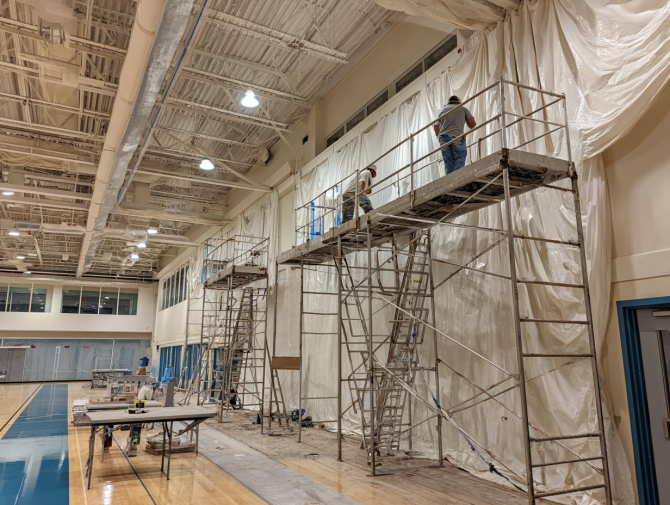
We install during early-morning hours, overnight, weekends, or in phased zone-by-zone segments so members keep using the gym. Cleanup and dust control are matched to fitness facility standards.
Step 6 - Post-installation acoustic verification and follow-up
After installation, we return when the gym is in active use to confirm performance and make adjustments if needed.

Service Area - Where We Install Gym Soundproofing
Our headquarters is in Brooklyn, NY, with additional locations in Philadelphia, PA, and Chicago, IL. We install gym and fitness studio soundproofing across these regions and ship custom-manufactured acoustic and isolation products nationwide.
- New York City: Manhattan, Brooklyn, Queens, Bronx, Staten Island
- Greater New York metro: Long Island, Westchester County, Hudson Valley
- New Jersey: Newark, Jersey City, Hoboken, Princeton, and statewide coverage
- Philadelphia, PA and Greater Philadelphia: King of Prussia, Bucks County, Montgomery County, Delaware County
- Chicago, IL and Greater Chicago metro: the city of Chicago and surrounding suburbs
- Nationwide: custom-manufactured acoustic panels, floor isolation underlayments, and equipment vibration platforms shipped to projects outside our installation service area
For more details on our regional coverage, see our Service Area page.
Why Choose New York Soundproofing for Gym Acoustic & Isolation Projects
Gym projects usually combine two scopes that are normally handled by separate trades - acoustic absorption and structural sound isolation. Our work is built around delivering both under one team.
Full-Stack Acoustic and Isolation Expertise
We design and install both acoustic treatment (panels, baffles, upholstery) and sound isolation (floor systems, equipment platforms, decoupled wall assemblies, door upgrades). Managing these scopes under separate vendors typically costs more and produces inconsistent results.
In-House Design and Manufacturing in NYC
Acoustic design, panel manufacturing, fabric finishing, and installation all run through our own team - short lead times when the project is driven by neighbor complaints, lease deadlines, or a grand opening.
Decades of Experience in Commercial and Institutional Projects
Our work spans schools, universities, offices, hotels, healthcare facilities, places of worship, recording studios, and corporate fitness environments across the New York metro area and beyond.
Recognized Institutional and Commercial Clients
Project list includes NYU, NYIT, the City of New York, WeWork, Microsoft, Warner Bros, and The Met.
Free Consultation and Written Estimates
Every project starts with a consultation - on-site, virtual, or by phone - and a written estimate before any work is committed.
Flexible Installation Scheduling
We work early mornings, overnight, weekends, and in phased zone-by-zone segments so gyms can stay open during the project.
Pantone Color Matching and Custom Branding
Gym logos, motivational graphics, and brand identity can be incorporated directly into acoustic panels without compromising acoustic performance.
Post-Install Verification
After installation, we measure reverberation, transmission, and impact noise during active operations and return to make adjustments where needed.

Get a Free Gym Acoustic and Isolation Consultation
To start a gym soundproofing project - whether it's a school gymnasium acoustic upgrade, a commercial fitness club with neighbor complaints, or a boutique studio fit-out - call us at (877) 999-2201, fill out the form on this page, or book a virtual consultation. Initial consultations are free, with no obligation, and we serve gyms, fitness operators, and facility managers across NYC, New Jersey, Philadelphia, and Chicago.
FREQUENTLY ASKED QUESTIONS
Do you serve gyms outside of NYC?
Yes. Our installation service area includes the New York metro area, New Jersey, Philadelphia and Greater Philadelphia, and Chicago and the Greater Chicago metro. For projects outside that area, we ship custom-manufactured acoustic panels, floor isolation underlayments, and equipment vibration platforms nationwide.
Can panels be customized with gym branding, logos, or motivational graphics?
Yes. We print directly onto acoustic panel fabric and match Pantone color references, which lets gyms incorporate logos, brand colors, and motivational graphics without compromising the panel's acoustic performance.
How do you address HVAC noise in fitness clubs?
HVAC noise is reduced through duct silencers, lined ductwork, equipment isolation, and supply or return diffuser changes. We coordinate with the facility's mechanical engineer or contractor when HVAC noise is part of the scope.
Will gym soundproofing eliminate neighbor noise complaints?
A properly scoped project addresses the specific paths driving the complaints - typically impact noise to the unit below and music or class noise to adjacent tenants. After installation, we verify performance against the targets in the design. Outcomes depend on how aggressive the targets are and on the building structure, which we evaluate during the initial assessment.
Can you install gym soundproofing during operating hours, or do we need to close?
In most cases, the gym does not need to fully close. We install during early-morning hours, overnight, weekends, or in phased zone-by-zone segments so members can keep using the rest of the facility. Some structural work - particularly floor systems - requires temporary closure of the affected area, but we plan around the operating schedule.
How long does a gym soundproofing installation take?
Installation timing depends on facility size, scope, and product lead times. Smaller acoustic-treatment-only projects can be installed in a few days. Projects that include floor isolation systems, wall upgrades, or equipment platforms run longer. We provide a specific timeline as part of the written estimate.
Are your gym's acoustic panels fire-rated?
Yes. The acoustic panels, baffles, and upholstery materials we install in gyms and other public assembly spaces are specified to meet the fire-rating requirements that apply to those spaces. We confirm rating documentation as part of the design and submittal process.
Can you reduce treadmill and cardio equipment vibration to the apartments below?
Yes. Treadmill and cardio vibration is reduced through anti-vibration mats and isolated platforms placed under the equipment, combined with floor isolation when the underlying structure is the dominant transmission path. We assess the floor construction during the consultation and specify the right combination.
How do you isolate music between adjacent fitness studios?
Music transmission between studios goes through walls, doors, and ceiling plenums above the partitions. Effective isolation usually requires upgrading the wall assembly, sealing the door, and treating any shared ceiling cavity. Adding absorption inside one of the studios alone does not stop transmission - the assemblies between rooms have to be addressed.
What's the best way to soundproof a commercial gym in a mixed-use building?
Commercial gyms in mixed-use buildings usually need a combination of floor isolation (for impact noise to apartments below), wall isolation (for music and class noise to adjacent tenants), door upgrades (often the largest leakage path), and HVAC noise control. We assess each path during the consultation and build the scope around the assemblies that are actually causing complaints, not generic across-the-board treatment.
How do you reduce weight drop and impact noise from Olympic lifting?
Weight-drop noise is structure-borne and can't be reduced by adding panels to walls or ceilings. The fix is at the floor - floating floor assemblies, rubber underlayments, decoupled platforms, and dedicated lifting platforms that absorb impact energy before it reaches the building structure. Standard gym tile or rubber flooring on its own typically isn't enough for serious weight rooms in mixed-use buildings.
What's the difference between gym acoustic treatment and gym sound isolation?
Acoustic treatment reduces echo and reverberation inside the gym so coaches can be heard and the room feels controlled. It uses absorptive surfaces - panels, baffles, clouds - and is measured by NRC and reverberation time. Sound isolation prevents noise from traveling out of the gym to neighboring spaces. It uses dense, decoupled assemblies - floating floors, mass-loaded walls, sealed doors - and is measured by Sound Transmission Class (STC) for airborne noise and Impact Insulation Class (IIC) for impact noise. Most gym projects need both.
In this video New York Soundproofing demonstrates the dramatic difference before - and after - installing our acoustic panels. This acoustic treatment project was at the Galaxy Visuals video studio - a state-of-the-art video studio in Brooklyn, NY.
The video room was turned from acoustically unusable to sounding exceptional!
When our clients moved into the space, there was so much echo they couldn't do any video shoots with decent sound, or even understand each other speak.
New York Soundproofing to the rescue! We installed acoustic panels that matched the space and could fit in an area that is outside of the camera frame for a fantastic result. This is only one example of many where we transform an unusable space into a great-sounding room fit for recording, listening and more.
Contact us today to see how we can help transform your space! (Also see Galaxy's client testimonial video below).

New York's Soundproofing Experts
We specialize in creating highly-customized sound environments such as home offices, recording studios, home studios and music rooms, conference & teleconference rooms, bars and clubs, offices, restaurants, temples, churches, school auditoriums and much more.