Indoor Pool Soundproofing
Indoor pools — also called natatoriums — present two independent acoustic challenges that must be addressed simultaneously. Hard reflective surfaces create extreme reverberation that makes communication difficult and unsafe. Mechanical equipment — pumps, filtration systems, and HVAC — generates constant background noise that travels both through the air and through the building structure. Both problems require different treatment methods, and both are complicated by a third constraint: the high humidity and chlorine vapor present in pool environments make most standard acoustic materials unsuitable.
Why Indoor Pools Have Extreme Acoustic Problems
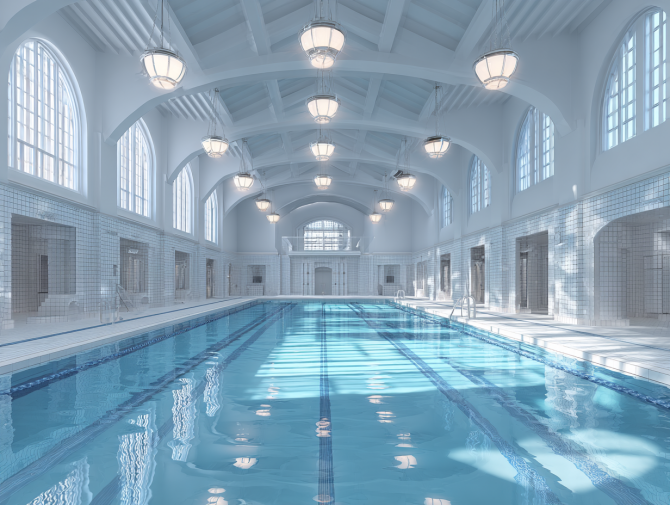
The acoustic difficulty of an indoor pool is determined by three factors operating at the same time: surfaces that are entirely hard and reflective, a large air volume with high ceilings, and a permanently elevated background noise level from water activity and mechanical systems.
Reverberation time in untreated natatoriums typically measures between 3.0 and 5.0 seconds (RT60). The recommended RT60 for a recreational indoor pool is 1.5–2.0 seconds. For competitive and instructional aquatic facilities, the target is 1.0–1.5 seconds. At 3–5 seconds, speech becomes unintelligible — lifeguards cannot issue clear warnings, and instructors cannot communicate with swimmers. This is not only a comfort issue but a documented safety concern.
The hard surface problem in pool environments is structurally different from other large commercial spaces. In a gymnasium or warehouse, absorptive treatments can be added to floors, seating, and equipment areas. In an indoor pool, the floor is water, and the lower walls are continuously wet. The only available surfaces for acoustic treatment are the upper walls and ceiling — and both are typically concrete or painted masonry.
Standard acoustic materials fail in pool environments for a predictable physical reason. Open-cell foam, mineral wool, and standard fabric-wrapped panels absorb moisture from the air. In a pool environment with relative humidity consistently above 70–90%, these materials become saturated within months. Saturated porous materials lose their sound absorption coefficient, begin to degrade structurally, and in the case of fabric-wrapped products, develop mold. The result is an acoustic treatment that fails within 1–2 years and requires complete replacement.
Two Distinct Noise Problems in Indoor Pools
Noise problems in indoor pools divide into two categories with different physical mechanisms and different solutions: acoustic treatment of the space itself, and mechanical noise isolation from pool equipment.
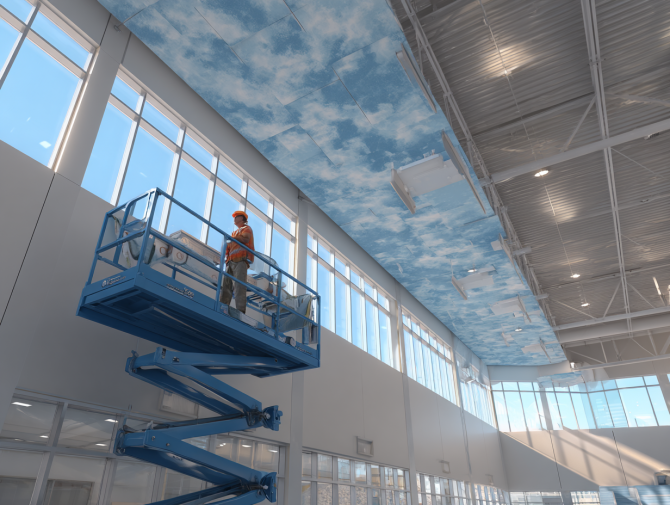
Acoustic treatment addresses the reverberation and echo produced by sound reflecting off hard surfaces inside the pool enclosure. The sound sources are voices, splashing water, starting blocks, and whistles — all of which generate airborne sound that bounces between surfaces. The solution is adding sound-absorbing surface area to the upper portions of the room. This does not require structural changes to walls or floors.
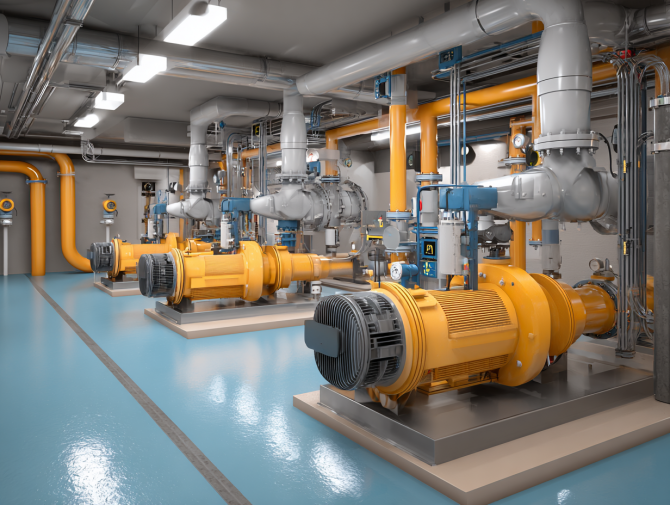
Mechanical noise isolation addresses the noise produced by pool pumps, filtration equipment, and HVAC systems. This noise travels in two ways: as airborne sound through the air from the equipment room into the pool space or adjacent rooms, and as structure-borne vibration through the floor slab and walls into the building. The solution requires enclosures, barriers, and vibration isolation — not acoustic panels.
Addressing only one problem while ignoring the other produces an incomplete result. A pool where reverberation has been reduced but pump noise remains will still be uncomfortable and difficult to communicate in — the mechanical background noise fills the space even without echo. A pool where equipment is isolated but reverberation is untreated will still have intelligibility problems from splash and voice noise.
Materials for Wet Environments
Acoustic materials selected for indoor pool applications must satisfy three requirements simultaneously: resistance to moisture absorption, chemical resistance to chlorine vapor and pool water, and compliance with fire rating standards. Materials that fail any of these requirements will degrade, lose acoustic performance, or create hygiene problems — typically within one to two years of installation.
PVC-faced acoustic baffles and panels are the most widely used solution for natatoriums. The PVC surface is impermeable to both water and chlorine compounds, and the acoustic core — typically fiberglass or mineral wool — is fully enclosed within the facing and never contacts the pool atmosphere directly.
Closed-cell foam with a protective coating does not absorb water at the cellular level and retains its noise reduction coefficient in sustained high-humidity conditions. It is lighter than PVC-faced products and is appropriate for ceiling and upper wall applications where weight is a constraint.
Perforated metal panels with an encapsulated acoustic fill are inert to moisture and pool chemicals. The perforated metal face allows sound to enter the absorptive core while protecting it completely from the environment. This format is used in competitive and institutional aquatic facilities where longevity and appearance are priorities.
Fiberglass panels with a sealed facing are moisture-stable at the fiber level. The sealed facing prevents direct water contact with the core material, making them suitable for pool ceiling applications when properly specified.
Our Indoor Pool Soundproofing Services
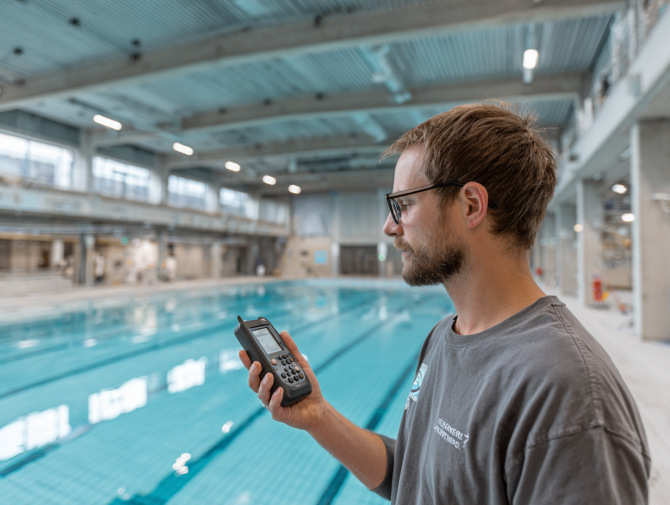
We provide acoustic treatment and soundproofing for indoor pools across residential, commercial, athletic, and hospitality properties. All materials specified and installed in pool environments meet moisture resistance, chemical resistance, and fire rating requirements appropriate for natatorium applications.
We work with the following facility types:
- Residential buildings with private or shared indoor pool areas
- Hotels and resorts where natatoriums are adjacent to guest rooms or spa facilities
- Competitive aquatic centers and schools requiring compliance with intelligibility standards for instructional use
- University and municipal pools requiring RT targets for multi-use programming
- Fitness clubs and wellness spas where pool mechanical noise affects adjacent treatment or exercise areas
Every project includes RT60 measurement before work begins, solution design matched to the specific geometry and surface conditions of the pool, material supply, installation, and a verification measurement on completion.
New York Soundproofing has completed acoustic projects in commercial, hospitality, and institutional facilities across New York City, with experience in both new construction and retrofit conditions in occupied buildings.
Our Process
Every indoor pool project begins with on-site measurement. Acoustic conditions in natatoriums vary significantly based on room geometry, ceiling height, and existing surface materials. A measurement-based approach produces a solution designed to the actual conditions of the space rather than a generic specification.
Acoustic Assessment
We measure RT60 at multiple positions within the pool space to establish the baseline reverberation time across frequency bands. For projects involving mechanical noise, we also measure sound pressure levels in adjacent rooms to quantify transmission from pool equipment. The assessment report documents existing conditions and identifies the specific treatment required to reach the target RT.
Solution Design
Based on measurement data, we design the treatment plan: baffle layout and spacing, wall panel zones, equipment enclosure specifications, and isolation mount selection. The design includes projected RT60 after treatment and confirms that all specified materials meet pool environment requirements. For projects in occupied buildings, we include an installation sequence that minimizes disruption to pool operations.
Installation and Verification
Installation is performed by our own team. After installation is complete, we conduct a final RT60 measurement at the same positions used during the assessment. The post-installation measurement is provided to the client in writing and documents the achieved reduction in reverberation time.
Why Choose Us for Indoor Pool Soundproofing
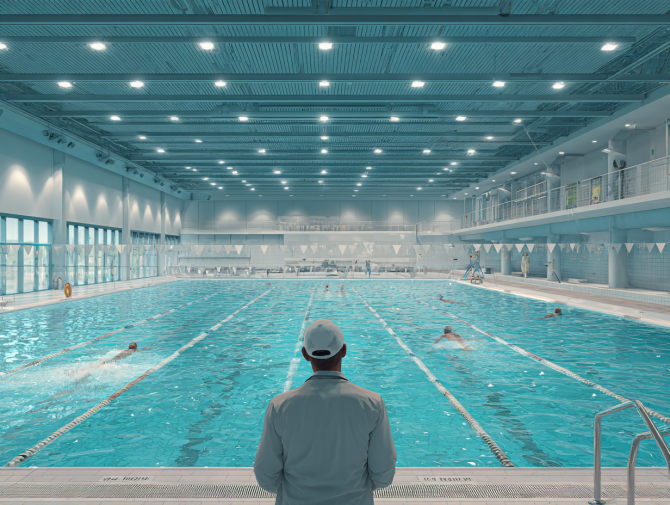
Clients select us for pool acoustic projects based on three consistent factors: direct experience with commercial aquatic facilities, in-house manufacturing of moisture-resistant acoustic materials, and a measurement-based delivery process that documents results.
Experience with Commercial Aquatic Facilities
Our team has completed acoustic treatment projects in natatoriums across residential towers, hotels, athletic facilities, and institutional buildings. This range covers the full variety of pool conditions — from small residential pool rooms with low ceilings to large-volume competitive pools requiring engineered baffle systems.
Moisture-Resistant Materials from In-House Manufacturing
New York Soundproofing manufactures acoustic panels locally. In-house manufacturing allows us to produce panels to the exact dimensions required by the project and to specify the appropriate facing material — PVC, coated foam, or metal — for the specific moisture and chemical conditions of the installation.
Pre- and Post-Installation RT Measurements
Every pool project includes acoustic measurements before and after installation. The pre-installation measurement establishes the baseline. The post-installation measurement documents the achieved RT60 in writing. Clients receive both reports as a verifiable record of the project's acoustic performance.
Request an Acoustic Assessment for Your Indoor Pool
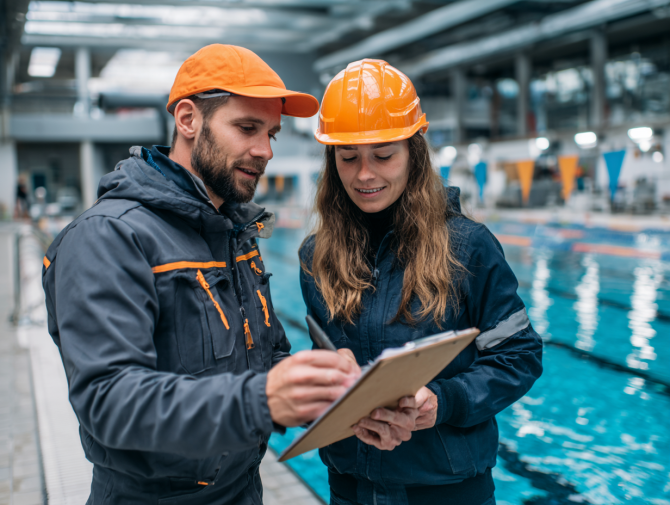
During the assessment visit, we measure RT60 at multiple positions within the pool space, document existing surface conditions and ceiling geometry, and — where mechanical noise is a concern — measure sound levels in adjacent rooms. The assessment produces a written summary of findings, recommended treatment options, and a cost estimate. There is no obligation to proceed.
FREQUENTLY ASKED QUESTIONS
How long does indoor pool acoustic treatment installation take?
A ceiling baffle installation in a standard recreational pool typically takes two to four days depending on the number of baffles and ceiling access conditions. Combined projects that include wall panels, equipment enclosures, and vibration isolation may take five to eight days. Projects in occupied facilities can be scheduled to work around pool operating hours.
How do I reduce noise from pool pumps in adjacent rooms?
Pool pump noise reaches adjacent rooms through two paths: airborne transmission through walls and doors, and structure-borne vibration through the floor slab. Airborne transmission is reduced with an acoustic enclosure around the pump equipment and sealing of any gaps or penetrations between the equipment room and adjacent spaces. Structure-borne transmission is controlled by installing vibration isolation mounts under the pump and motor. Both paths must be treated; addressing only one will leave the other intact.
What is the difference between acoustic treatment and soundproofing for an indoor pool?
Acoustic treatment reduces reverberation and echo within the pool space by adding sound-absorbing surfaces to the ceiling and upper walls. It does not block noise from leaving or entering the room. Soundproofing — in the context of pool equipment — prevents mechanical noise from pumps, filtration systems, and HVAC from transmitting into adjacent rooms through the air or through the building structure. Both are distinct problems that require different materials and methods. Most indoor pool projects require both.
Can standard acoustic panels be used in a pool environment?
Standard acoustic panels — including fabric-wrapped panels and open-cell foam products — are not suitable for indoor pool environments. High humidity causes fabric to retain moisture and promotes mold growth on the substrate. Open-cell foam absorbs water vapor, loses its noise reduction coefficient, and degrades structurally. Pool installations require acoustic panels with a moisture-proof facing such as PVC, coated closed-cell foam, or perforated metal with a sealed acoustic core.
What is the recommended reverberation time for an indoor pool?
The recommended RT60 for a recreational indoor pool is 1.5–2.0 seconds. Competitive and instructional aquatic facilities, where speech intelligibility between coaches and athletes is critical, target RT60 of 1.0–1.5 seconds. An untreated natatorium typically measures 3.0–5.0 seconds, which causes significant intelligibility loss and is a documented safety concern for lifeguard communication.
In this video New York Soundproofing demonstrates the dramatic difference before - and after - installing our acoustic panels. This acoustic treatment project was at the Galaxy Visuals video studio - a state-of-the-art video studio in Brooklyn, NY.
The video room was turned from acoustically unusable to sounding exceptional!
When our clients moved into the space, there was so much echo they couldn't do any video shoots with decent sound, or even understand each other speak.
New York Soundproofing to the rescue! We installed acoustic panels that matched the space and could fit in an area that is outside of the camera frame for a fantastic result. This is only one example of many where we transform an unusable space into a great-sounding room fit for recording, listening and more.
Contact us today to see how we can help transform your space! (Also see Galaxy's client testimonial video below).

New York's Soundproofing Experts
We specialize in creating highly-customized sound environments such as home offices, recording studios, home studios and music rooms, conference & teleconference rooms, bars and clubs, offices, restaurants, temples, churches, school auditoriums and much more.