Museum Soundproofing Services
New York Soundproofing handles full museum soundproofing - multi-zone acoustic treatment for galleries and atriums, sound isolation between multimedia exhibits and quiet zones, and acoustic integration with exhibit design and architectural preservation. Our work covers art museums, history museums, science and natural history museums, children's museums, university galleries, historic house museums, and cultural centers. We design, manufacture, and install in-house across the New York metro area, New Jersey, Philadelphia, and Chicago, with project experience that includes The Met. Request a free on-site or virtual acoustic consultation to get started.
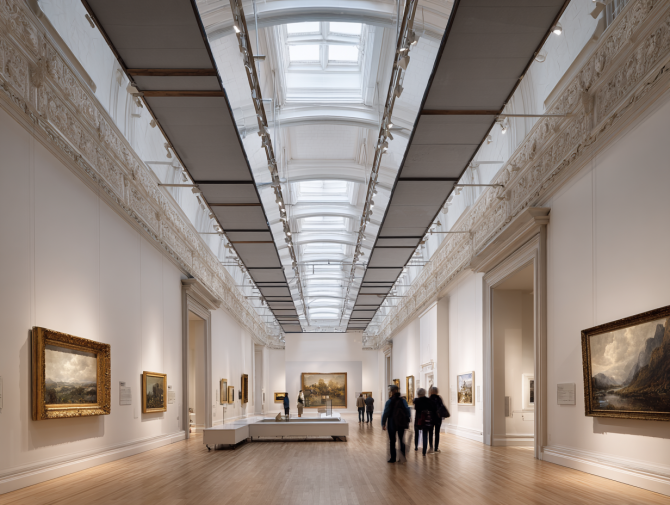
What Is Museum Soundproofing - Multi-Zone Acoustics for Galleries, Exhibits, and Public Spaces
Museum soundproofing combines three tools: acoustic treatment for reverberation control in galleries and atriums, sound isolation between exhibits and zones, and sound masking for visitor flow areas. Most projects need all three, because museums are multi-zone environments with very different acoustic targets - quiet galleries, multimedia exhibits, theaters, atriums, and conservation-adjacent spaces all behave differently, and a single treatment scope rarely fits all of them.
Sound bleed between exhibits is the museum-specific challenge most other space types don't have. Modern exhibits use audio and interactive media as part of the experience, and an exhibit's soundtrack reaching the next room undermines both spaces. The fix is at the assemblies between exhibits - walls, doors, ceiling plenums - designed for the sound transmission targets of the gallery layout.
Aesthetic integration is a design discipline in museum work, not an add-on. Acoustic treatment has to support curatorial intent and architectural design, not compete with it. Custom-printed panels, fabric matched to exhibit graphics, and hidden installations behind architectural elements are part of the standard scope. Historic and landmark museums add preservation constraints - original interiors and protected details limit what's possible visibly, so most interventions have to be hidden or removable.
Off-the-shelf acoustic foam is not suitable for museums. It lacks the Class A fire rating required for public assembly spaces, doesn't integrate with curatorial design, and addresses only one of the three acoustic objectives.
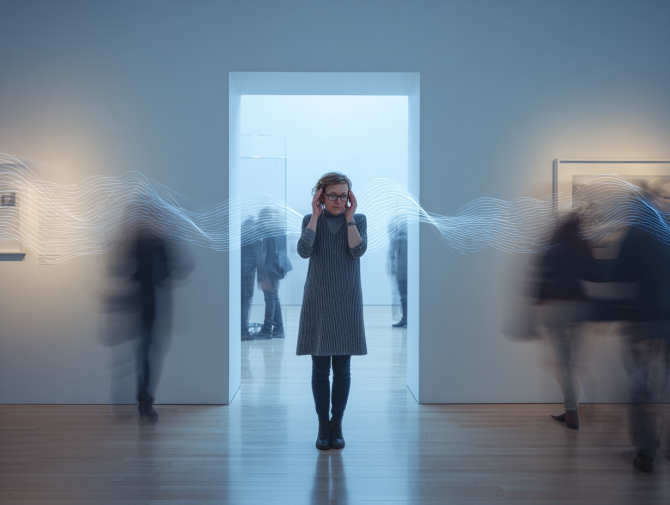
Common Museum Acoustic Problems We Solve
Museum acoustic problems usually fall into three categories: sound bleed between zones with different acoustic targets, excessive reverberation in large open spaces, and external or mechanical noise reaching galleries. Each has a specific cause and a specific fix.
Sound bleed between multimedia exhibits and quiet galleries
The most common museum-specific complaint. Exhibits with audio reach adjacent rooms through walls, doors, and ceiling plenums when those assemblies aren't sound-rated.
Excessive reverberation in atriums and large galleries
High ceilings, hard floors, stone or marble walls, and open architectural design produce long reverberation times that elevate the noise floor and undermine speech in lectures, tours, and audio guides.
Audio overlap in interactive exhibit zones
Multiple mediated experiences playing simultaneously create acoustic chaos in interactive zones, especially in science and children's museums.
Speech intelligibility loss in lecture halls and orientation theaters
Without proper treatment, docent talks, school programs, and orientation videos lose clarity for back-of-room visitors.
HVAC and mechanical noise
Continuous HVAC noise can dominate the noise floor in galleries and is particularly disruptive near sensitive collections and quiet contemplative spaces.
External noise infiltration
Street traffic, sirens, and adjacent construction reach galleries through windows and façades - a daily issue for urban museums and historic buildings with original glazing.
Multi-use space conflicts
Many museums host events, lectures, weddings, and corporate functions in the same spaces used for daily exhibits. Without acoustic isolation, event use conflicts with regular operations.
Historic building acoustic limitations
Landmark and heritage museums can't be modified visibly, which constrains the interventions that are available without compromising preservation requirements.
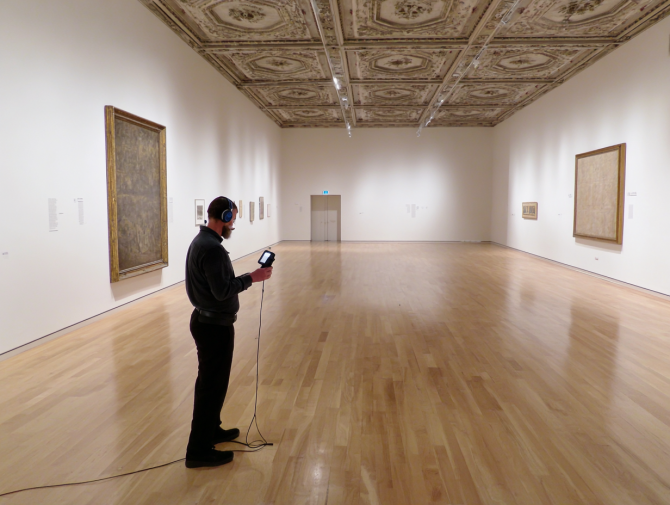
Our Museum Soundproofing Services
We deliver complete museum soundproofing - multi-zone acoustic design, exhibit isolation, sound masking, and aesthetic integration - using our own in-house team and coordinating with exhibit designers, architects, and AV integrators on the rest of the project.
Acoustic Consultation and Museum Zone Assessment
Every project starts with a consultation, on-site or virtual. We map the museum's zones, identify the acoustic priorities for each, and discuss exhibit cycles, operational hours, preservation requirements, and any coordination needs with the design or AV team.
Sound and Vibration Measurements
Where the project requires it, we measure reverberation time, ambient noise, transmission between exhibits, and vibration where collections are sensitive. The data sets baseline targets for the design.
Multi-Zone Acoustic Design
Based on the assessment, we design zone-specific acoustic targets and integrate the treatment with exhibit design, architectural preservation, and curatorial intent.
Acoustic Panels, Baffles, and Custom Branding
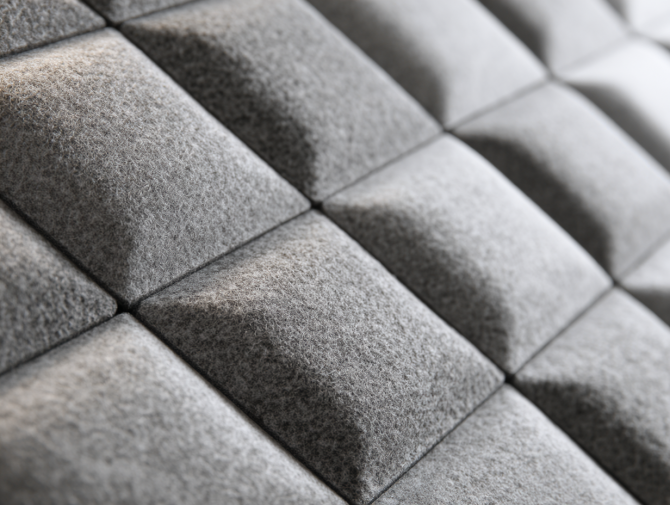
We design and manufacture acoustic panels, baffles, and upholstery components in-house at our NYC facility. Wall and ceiling panels reduce reverberation in galleries and atriums. Suspended baffles and acoustic clouds carry the absorption load in high-ceiling atriums and multi-story spaces. Custom-printed panels integrate exhibit graphics, museum branding, or architectural motifs - acoustic treatment and curatorial design in one installation.
Wall and Door Soundproofing for Exhibit Zones
Sound-rated wall assemblies, door soundproofing with acoustic seals, and automatic door bottoms separate multimedia exhibits, theaters, and quiet galleries.
Sound Masking for Galleries and Public Spaces
Sound masking supports privacy at information desks, donor lounges, and research areas, and reduces the perceived intrusion of incidental noise in transitional spaces.
Window Soundproofing for Urban and Historic Museums
Secondary glazing and window soundproofing reduce external noise in urban museums and in historic museums where original windows can't be replaced.
HVAC and Mechanical Noise Control
Duct silencers, lined ductwork, and equipment isolation control HVAC and mechanical noise reaching galleries - particularly in conservation-adjacent zones.
Coordination with Exhibit Designers, Architects, and AV Integrators
We work with exhibit design firms, museum architects, AV integrators, and facility teams to integrate acoustic scope into the larger project. Acoustic treatment is one component of a creative and technical project, and we plan around the rest of it rather than parallel to it.
Post-Install Acoustic Verification
After installation, we return when the museum is in active operation to verify reverberation, transmission between zones, and acoustic performance during visitor hours, and to make adjustments where needed.
Museum Types and Spaces We Serve
Art museums and galleries
Quiet contemplative environments, multi-floor galleries, large-volume atriums, and special exhibition spaces with specific aesthetic constraints.
History museums
Multimedia exhibits, dioramas with soundtracks, lecture spaces, and document and archive areas.
Science and natural history museums
Interactive exhibits, hands-on stations, planetariums, orientation theaters, and high-energy zones that need to be isolated from quieter galleries.
Children's museums
High-energy interactive zones, education spaces, and multi-use play and learning areas with durability and cleanability requirements.
University museums and academic galleries
Integration with university acoustic identity, scholarly research environments, and lecture space coordination.
Historic house museums
Preservation constraints, original architecture protection, and hidden acoustic interventions.
Memorial and heritage museums
Contemplative environments, oral history exhibits, and video testimony spaces where audio quality and isolation matter equally.
Special collection and archive spaces
Quiet research rooms, reading areas, and exhibition-adjacent zones with conservation-aware HVAC and vibration considerations.
Cultural centers and community museums
Multi-use programming, event spaces, exhibition halls, and educational zones.
Visitor centers and orientation theaters
First-impression spaces, introductory video experiences, ticketing, and information areas.
Our Museum Soundproofing Process
Every museum project follows the same six-step process, structured around exhibit cycles, operational hours, and coordination with the rest of the project team.
Step 1 - Free initial consultation
Phone, video call, or on-site visit to map zones, discuss complaints, identify constraints, and align with the design or AV team where needed.
Step 2 - On-site acoustic measurements and zone analysis
Reverberation, ambient noise, transmission between exhibits, and vibration data near sensitive collections.
Step 3 - Multi-zone acoustic design, product selection, and written estimate
Treatment plan integrated with exhibit design, curatorial intent, and architectural preservation requirements.
Step 4 - Local manufacturing of panels in our NYC facility
Including custom prints, fabric matches, and integration with exhibit graphics and museum branding.
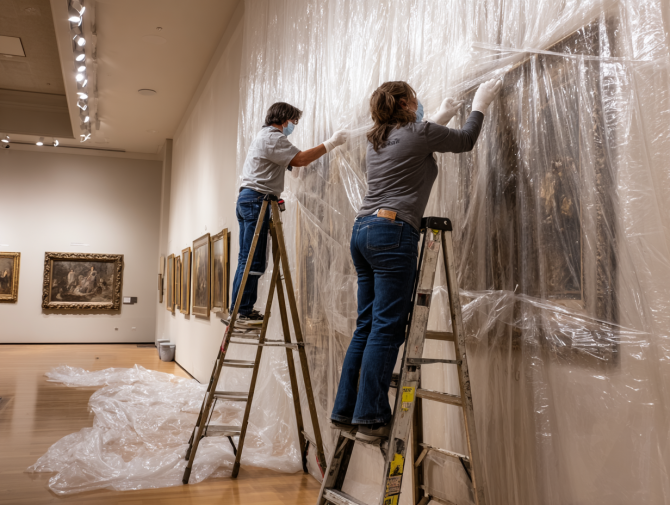
Step 5 - Professional installation, scheduled around museum operations
Overnight, weekends, exhibit changeovers, or scheduled closures. Cleanup and dust control matched to museum facility and conservation standards.
Step 6 - Post-installation acoustic verification and follow-up
Confirm performance during active visitor hours.

Service Area - Where We Install Museum Soundproofing
Our headquarters is in Brooklyn, NY, with additional locations in Philadelphia, PA, and Chicago, IL. We install museum soundproofing across these regions and ship custom-manufactured acoustic and masking products nationwide.
- New York City: Manhattan, Brooklyn, Queens, Bronx, Staten Island
- Greater New York metro: Long Island, Westchester County, Hudson Valley
- New Jersey: Newark, Jersey City, Hoboken, Princeton, and statewide coverage
- Philadelphia, PA and Greater Philadelphia: King of Prussia, Bucks County, Montgomery County, Delaware County
- Chicago, IL and Greater Chicago metro: city of Chicago and surrounding suburbs
- Nationwide: custom-manufactured acoustic panels, sound masking systems, and custom-printed exhibit-integrated graphics shipped to museum projects outside our installation service area
For more detail on our regional coverage, see our Service Area page.
Why Choose New York Soundproofing for Museum Acoustic Projects
Museum projects combine acoustic, design, and preservation constraints under tight project deadlines tied to exhibit openings, donor events, or seasonal campaigns. Our work is built around handling all three under one team.
Multi-Zone Museum Expertise
Acoustic treatment, sound isolation, and sound masking designed and installed together, mapped to zones across galleries, exhibits, theaters, and public spaces.
Coordination with Exhibit Designers, Architects, and AV Integrators
We work alongside exhibit design firms, museum architects, and AV integrators to integrate acoustic scope into the full project. Acoustic treatment is one component of a larger creative and technical project, and we plan around it rather than parallel to it.
In-House Design and Manufacturing in NYC
Acoustic design, panel manufacturing, fabric finishing, and installation all run through our own team - short lead times for exhibit-driven deadlines and phased gallery renovations.
The Met and Other Cultural Institution Clients
Project list includes The Met, NYU, NYIT, the City of New York, Microsoft, Warner Bros, and WeWork.
Aesthetic Integration with Curatorial Vision
Pantone color matching, custom prints, and design coordination with exhibit graphics, museum branding, and architectural preservation requirements. Acoustic treatment supports curatorial intent rather than competing with it.
Free Consultation and Written Estimates
Every project starts with a consultation - on-site, virtual, or by phone - and a written estimate before any work is committed.
Flexible Installation Scheduling
We work overnight, weekends, exhibit changeover periods, and scheduled museum closures so galleries can stay open during the project.
Post-Install Verification
After installation, we measure reverberation, transmission, and acoustic performance during active visitor hours and return to make adjustments where needed.

Get a Free Museum Acoustic Consultation
To start a museum soundproofing project - whether it's a gallery renovation, a new exhibit installation, an atrium acoustic upgrade, or a historic museum preservation project - call us at (877) 999-2201, fill out the form on this page, or book a virtual consultation. Initial consultations are free, with no obligation, and we serve museums and cultural institutions across NYC, New Jersey, Philadelphia, and Chicago.
FREQUENTLY ASKED QUESTIONS
Do you serve art museums, history museums, science museums, and children's museums?
Yes. We work with art, history, science, natural history, children's, university, and historic house museums, along with cultural centers and special collection spaces. The acoustic approach is adapted to each — children's museums prioritize durability and zone isolation, historic house museums prioritize preservation, science museums prioritize exhibit isolation.
How do you handle vibration concerns near sensitive collections?
We assess vibration levels during the on-site measurement phase and design the project to keep mechanical and structural vibration within the targets set by the conservation team. Equipment isolation, decoupled assemblies, and HVAC modifications are part of that scope where needed.
Can panels be customized to integrate with exhibit graphics and museum branding?
Yes. We print directly onto acoustic panel fabric and match Pantone color references, which lets museums incorporate exhibit graphics, branding, or architectural motifs without compromising acoustic performance.
Can you install during museum hours, or do we need to close galleries?
Most installations are scheduled overnight, on weekends, during exhibit changeovers, or during scheduled museum closures so the museum stays open during the project. Some scopes require closing the affected gallery temporarily, which we plan around the operating schedule.
How long does a museum soundproofing installation take?
Timing depends on museum size, zone count, and scope. Single-gallery projects are typically installed in a few days; multi-zone or full-museum projects scale from there. We provide a specific timeline as part of the written estimate.
Are your museum acoustic panels fire-rated?
Yes. The acoustic panels, baffles, and upholstery materials we install in museums and other public assembly spaces are specified to meet the fire-rating requirements that apply to those spaces. We confirm rating documentation as part of the design and submittal process.
How do you coordinate with exhibit designers and museum architects?
We work alongside exhibit design firms, museum architects, and AV integrators throughout the project — from initial assessment through installation. Acoustic treatment is integrated into the design rather than retrofitted around it. Where the rest of the team is already in place, we plan our scope to align with their schedule and design priorities.
Can you install acoustic treatment in historic or landmark museums without altering original architecture?
Yes. We work with preservation requirements using hidden installations, removable systems, secondary glazing instead of window replacement, and panels designed to integrate with original interiors. We discuss preservation constraints during the consultation and design under them.
How do you reduce reverberation in atriums and large gallery spaces?
Through ceiling-suspended baffles and acoustic clouds, wall panels at upper-third elevations, and acoustic upholstery on hard surfaces. The exact combination depends on ceiling height, room volume, and the architectural and aesthetic constraints set by the museum.
How do you prevent sound bleed between multimedia exhibits and quiet galleries?
Sound bleed is controlled at the assemblies between rooms — walls, doors, and ceiling plenums above the partitions. We upgrade those assemblies to sound transmission targets that match the audio levels in the exhibit and the quiet level required in the adjacent gallery.
What's the difference between acoustic treatment, sound isolation, and sound masking in museums?
Acoustic treatment reduces echo and reverberation inside galleries and atriums by absorbing reflected sound. Sound isolation prevents sound from passing between zones — for example, keeping a multimedia exhibit's audio from reaching the next gallery. Sound masking adds a low-level controlled background sound that supports privacy and softens incidental noise in lobbies and information areas. Most museum projects need a combination of all three.
In this video New York Soundproofing demonstrates the dramatic difference before - and after - installing our acoustic panels. This acoustic treatment project was at the Galaxy Visuals video studio - a state-of-the-art video studio in Brooklyn, NY.
The video room was turned from acoustically unusable to sounding exceptional!
When our clients moved into the space, there was so much echo they couldn't do any video shoots with decent sound, or even understand each other speak.
New York Soundproofing to the rescue! We installed acoustic panels that matched the space and could fit in an area that is outside of the camera frame for a fantastic result. This is only one example of many where we transform an unusable space into a great-sounding room fit for recording, listening and more.
Contact us today to see how we can help transform your space! (Also see Galaxy's client testimonial video below).

New York's Soundproofing Experts
We specialize in creating highly-customized sound environments such as home offices, recording studios, home studios and music rooms, conference & teleconference rooms, bars and clubs, offices, restaurants, temples, churches, school auditoriums and much more.