.png)
New Yorkers love their furniture in a different way than most people do. We live in smaller spaces, so every piece needs to feel intentional. A chair isn't just a chair here. A sofa isn't just a place to sit. These pieces hold memories. They travel with us through moves, renovations, relationships, and seasons of life. Eventually, though, the fabric wears down or the cushioning loses its strength. And that's the moment people start asking the same question: how much does furniture reupholstery cost?
There isn't one number that fits every situation. Reupholstery is a craft. It's detailed work performed by artisans who rebuild a piece from the inside out. When done well, it brings a chair or sofa back to life with a level of care you can't buy straight off the showroom floor. At New York Soundproofing, we spend most of our days improving interior comfort through acoustics, but we also collaborate with designers and craftspeople who work with fabric, structure, and detail in ways that echo the same meticulous philosophy. So when people come to us wondering what it takes to reupholster their furniture in a city like New York, the answer deserves something richer than a range pulled from a price sheet. It deserves context, craftsmanship, and honesty.
Before comparing costs by furniture type or talking about fabric choices, it helps to understand what actually affects pricing and why two seemingly similar pieces can cost completely different amounts to restore.
What Goes Into Upholstery Prices
.png)
At first glance, an average upholstery price guide makes reupholstery look like a fabric decision. But fabric is only one part of the equation. The real cost comes from the work hidden underneath - the stripping, rebuilding, tightening, reshaping, and tailoring that determine how the piece will feel and perform once restored.
Reupholstery always begins the same way. A full teardown. Old staples removed by hand, worn padding pulled away, loose webbing and burlap taken out, all without damaging the frame. Once exposed, the interior tells its story. Hardwood frames often need only minor reinforcement. Softer woods may require structural tightening. Springs sag, cushions collapse, and joints loosen over time. Each repair affects the final upholstery cost, which is why two chairs that look similar can land in completely different ranges.
Labor drives most of the price. A single piece can take 10 to 25 hours of skilled work, from rebuilding internal padding to aligning patterns so seams look intentional rather than accidental. Fabric influences complexity. Velvet demands careful handling. Heavy weaves need extra tension. Linen wrinkles unless backed properly. Performance fabrics resist stains but often require specialty tools.
NYC logistics play a part as well. Moving large furniture through narrow stairwells, dealing with prewar hallways, or navigating tight elevators adds time and occasionally extra handling fees.
To make the picture clearer, here is a general breakdown of typical pricing ranges in New York:
Estimated Upholstery Cost Breakdown
|
Task / Component |
Typical NYC Price Range |
Notes |
|
Teardown & removal of old materials |
$150-$450 |
Depends on size, detail, tufting, and age of piece |
|
Frame reinforcement or repairs |
$100-$500+ |
Antique or damaged frames often require more work |
|
Spring retensioning or replacement |
$150-$400 |
Sagging seats increase this portion of the job |
|
Rebuilding foam & padding |
$100-$350 |
Higher for sculpted arms or multi-layer cushions |
|
Labor (10-25 hours) |
$75-$125/hr |
NYC labor rates vary by experience and shop |
|
Fabric (per yard) |
$40-$150/yd |
Most pieces require 6-20 yards |
|
Pickup/Delivery logistics |
$50-$150 |
Depends on stairs, elevators, and building access |
These numbers are not final quotes. They're a realistic snapshot of market pricing so homeowners know what drives the total. Reupholstery isn't "new fabric for old furniture." It is the restoration of structure, comfort, and craftsmanship, work that gives a well-built piece another decade of life.
Reupholstery Cost by Furniture Type
Different pieces require different levels of work, and understanding these distinctions helps homeowners make better decisions when evaluating total upholstery prices. What seems simple at first glance often involves more hand-finishing than people expect, and the pricing reflects those hidden details.
Chairs and Armchairs
Chairs look small. They are not simple. A well-built armchair can contain dozens of internal components that need attention after years of use. Springs may need retensioning. Padding often requires full replacement rather than minor patching. Pattern alignment becomes more demanding on small surfaces because every seam is visible, every mismatch noticeable.
A straightforward dining-style upholstered chair typically falls around $150-$350 for the seat alone. Standard armchairs cost closer to $600-$1,200, depending on fabric choice and internal repairs. More complex silhouettes - wingbacks, barrel chairs, mid-century sculpted frames, or tufted armchairs - often range from $900-$1,800 because of the time required to rebuild and sculpt each component.
For many homeowners, the value isn't just in the number. Restoring a favorite reading chair, a vintage heirloom, or a well-built mid-century piece often pays off in comfort and longevity far beyond what a new mass-market replacement could offer.
Sofas and Sectionals
Sofas take time. Sectionals take even more. Multiple surfaces, larger frames, deeper cushioning, and structural rebuilding all contribute to increased cost. A standard three-seat sofa typically requires 12-18 yards of fabric, plus extensive interior work to restore support and comfort. Modern designs with attached back cushions or integrated detailing add additional hours of labor.
Most sofas in NYC fall into the $1,200-$3,000 range for reupholstery, depending on the complexity of the frame and cushion design. Larger or more intricate models - deep-tufted Chesterfields, sculptural Italian sofas, L-shaped sectionals - can reach $3,000-$6,000+ because they require more fabric, more structural rebuilding, and more precision.
For many homeowners who originally purchased a high-quality sofa, reupholstery is still the smarter and more sustainable choice. A strong hardwood frame can last decades once professionally restored, turning reupholstery into an investment rather than a simple refresh.
Dining Chairs and Ottomans
Dining chairs often sit at the simpler end of the pricing spectrum, especially when only the seat needs attention. A basic recovered seat typically costs $60-$150, while chairs with upholstered backs generally fall between $150-$350. Add nailhead trim, patterned fabric alignment, or foam replacement, and the price naturally rises.
Ottomans vary more than people expect. A small, clean design may fall within $200-$400, while a deep-tufted ottoman or one with built-in storage can reach $400-$800+ because tufting, shaping, and padding reconstruction all require additional labor.
These categories often serve as a comfortable entry point for homeowners new to reupholstery. The projects are manageable, the transformation is dramatic, and the investment feels proportional to the impact the updated pieces have on the room.
How Fabric Choice Affects the Final Price
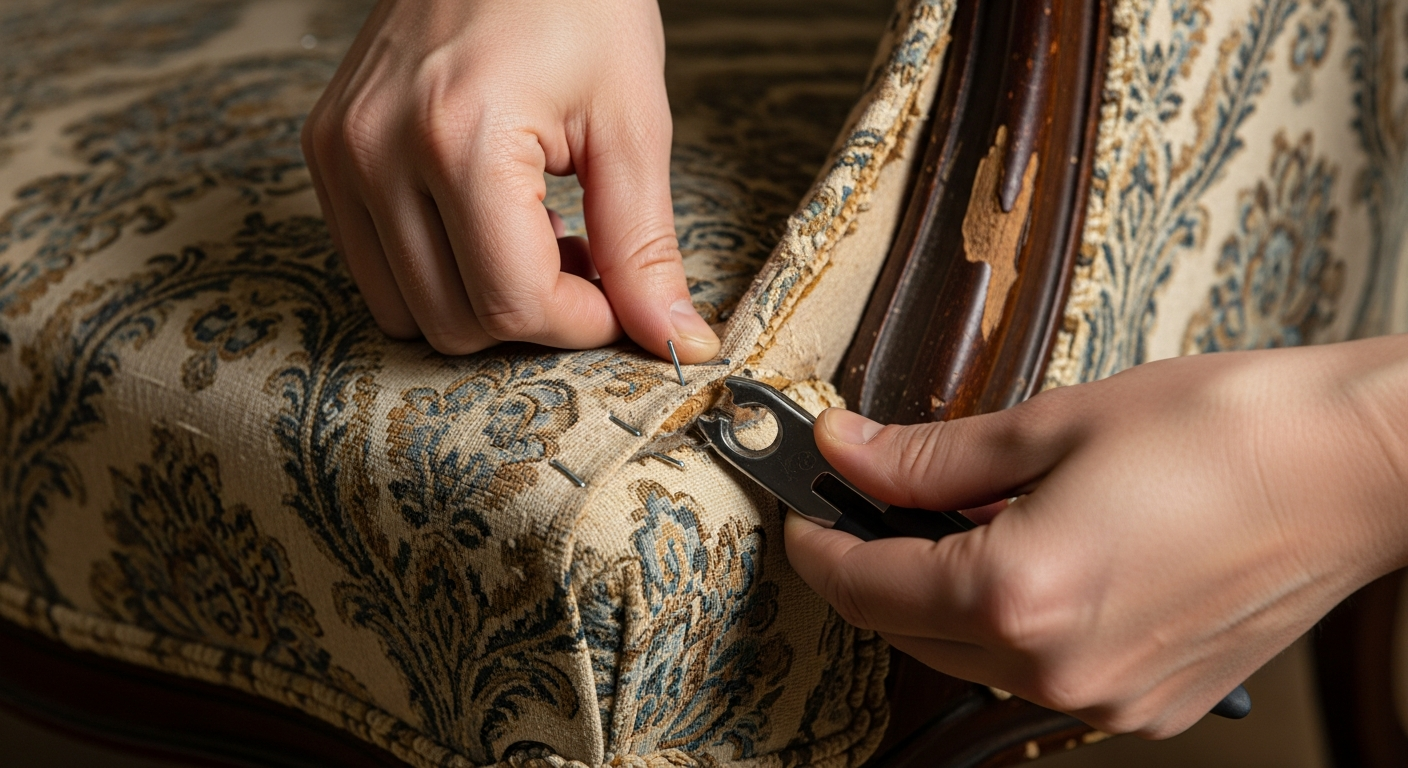
Fabric is the part everyone sees, touches, and falls in love with. It's also the element that can shift the final cost in ways homeowners do not always expect. Two fabrics might look similar at first glance, yet behave completely differently once the upholsterer begins working with them. The structure of the weave, the elasticity, the density, the finish, and the fiber content all influence how long the job takes and how the finished piece holds up over time.
Heavy woven textiles create a crisp, sculpted look but take more time to tension properly. Linen is airy and beautiful, yet it stretches unevenly unless supported with the correct stabilizers. Velvet responds to touch with that luxurious color change, although it requires careful directional cutting so the pile sits correctly. High-performance blends have become incredibly popular in New York households with kids, pets, or frequent guests. They offer durability but can be tough on needles or require special tools to avoid puckering.
Labor follows fabric. A material that feels temperamental in the hands of an upholsterer almost always increases the upholstery cost because it demands extra precision. Patterned fabrics, especially stripes and large-scale prints, need to be matched across seams so the furniture looks intentional rather than chaotic. This is not a quick step. It's a craft within the craft. When clients choose a bold geometric textile or a floral print with a repeating rhythm, the result can be stunning. But the work required to achieve that visual alignment is reflected in the final invoice.
Fabric also plays a major role in longevity. Many pieces we see in older NYC apartments remain structurally strong but were originally covered with synthetic fabrics that deteriorated quickly. When homeowners choose high-quality textiles for reupholstery, they are not just improving beauty. They are investing in the next decade or two of comfortable living. And that is part of what makes reupholstery appealing. A piece built well once can be built well again.
Reupholstery vs Buying New - When It Makes Sense
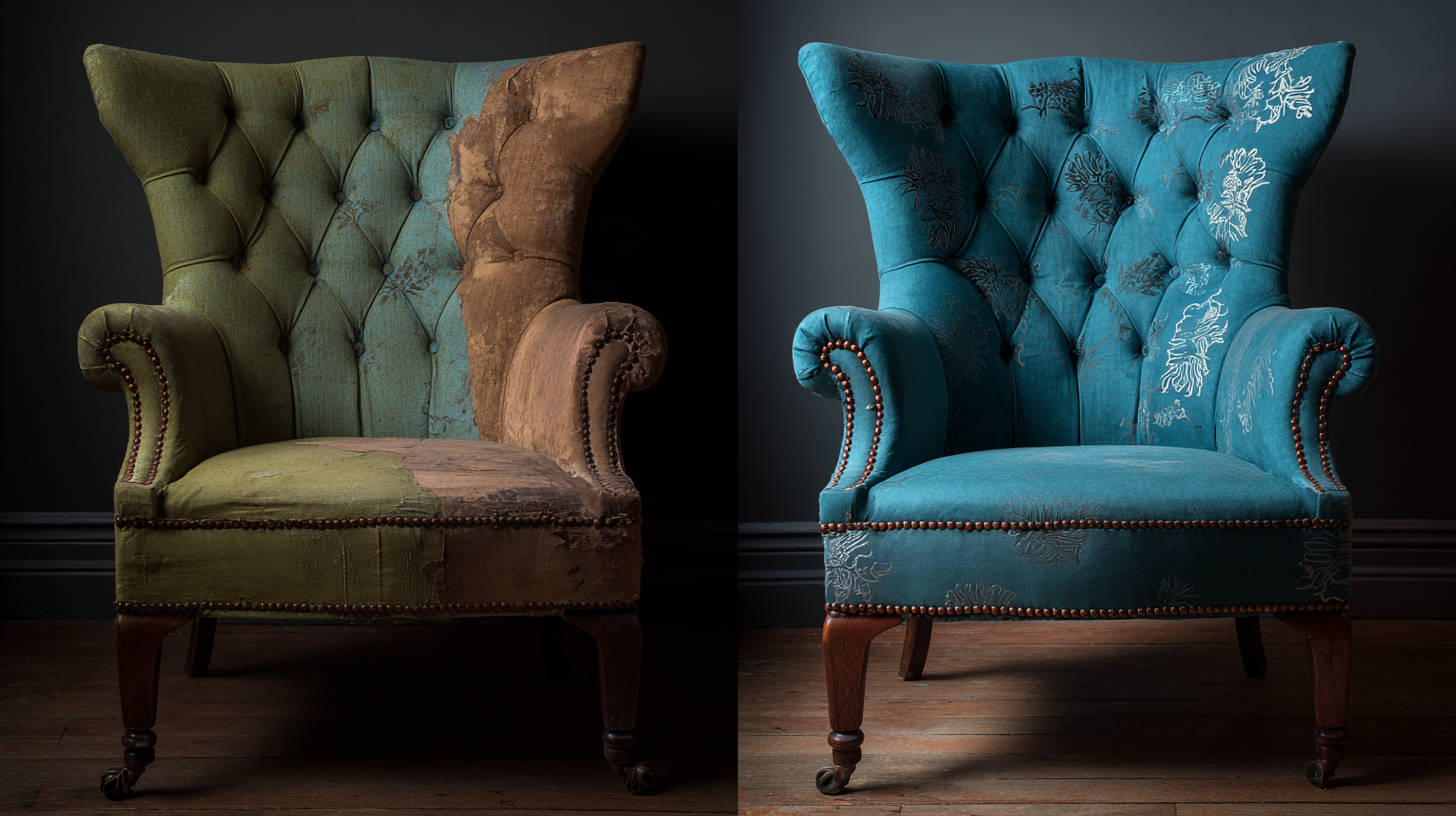
One of the most common questions people have is whether reupholstery is worth it compared with buying something new. On the surface, new furniture seems easier. You order it, it arrives, and it looks perfect for the first month. But there are deeper considerations that influence the true value of keeping a well-built piece.
The Quality Argument
Quality is the first. Older furniture frames were often made from hardwood, crafted with traditional joinery, and built to last long before fast furniture became the norm. These frames age gracefully and remain structurally sound long after the original fabric has faded. New pieces made today at lower price points rarely have the same longevity. Their frames may be softer, lighter, or reinforced with materials that do not respond well to heavy use. When homeowners begin comparing a solid frame they already own with a mass-produced item from a catalog, reupholstery starts to feel like the smarter investment.
Furniture with History
Sentimental value plays its part too. A sofa that has been in a family for years, a chair that has moved through multiple apartments, or a piece inherited from a loved one carries emotional weight. Reupholstery restores that story instead of replacing it. People tell us all the time that they feel relieved when they realize they do not have to part with something meaningful just because the fabric aged.
The Sustainability Factor
Sustainability is the quiet argument in favor of restoration. Reupholstery keeps furniture out of landfills and reduces the demand for fast manufacturing. For many clients in New York, where space is premium and environmental impact is top of mind, this matters. A restored piece becomes a personal commitment to using what you already have and making it better.
The financial comparison varies. In some cases, the reupholstery cost is lower than buying a brand-new high-end replacement. In others, the price is similar. But the difference lies in what you actually get for that investment. Reupholstery gives you a piece tailored to your home, your comfort needs, your lifestyle, and your design taste. It becomes uniquely yours, not one of thousands created to fit a generic living room.
Get a Quote for Your Piece in NYC
If you have been wondering about the cost to reupholster furniture, the truth is that no two projects are ever identical. The frame, the condition, the construction, the fabric, the level of detail, and the environment it lives in all shape the final price. New York adds its own challenges. Stairs. Elevators. Tight hallways. Limited workspace. Taller pieces that need to be maneuvered carefully. Every detail influences the labor and craftsmanship required to restore your furniture properly.
That is why the most accurate way to determine your reupholstery cost is through a direct evaluation. A specialist needs to see the piece, understand the history behind it, examine the frame, check for sagging or structural issues, and learn what kind of transformation you want. Some homeowners want to preserve the exact silhouette. Others dream of reshaping cushions or altering proportions slightly. These choices matter.
At New York Soundproofing, we believe that comfort is the foundation of good living. Whether we are isolating a room acoustically or guiding a homeowner toward the right fabrics and finishes, our commitment is the same. Thoughtfulness. Precision. Quality that lasts. If you have a piece of furniture that no longer looks or feels the way it once did, we can help you understand what it will take to give it a second life.
Your home deserves pieces that feel alive, comfortable, and intentional. If you are ready to explore your options, reach out for a personalized quote. The transformation often begins with a simple conversation.