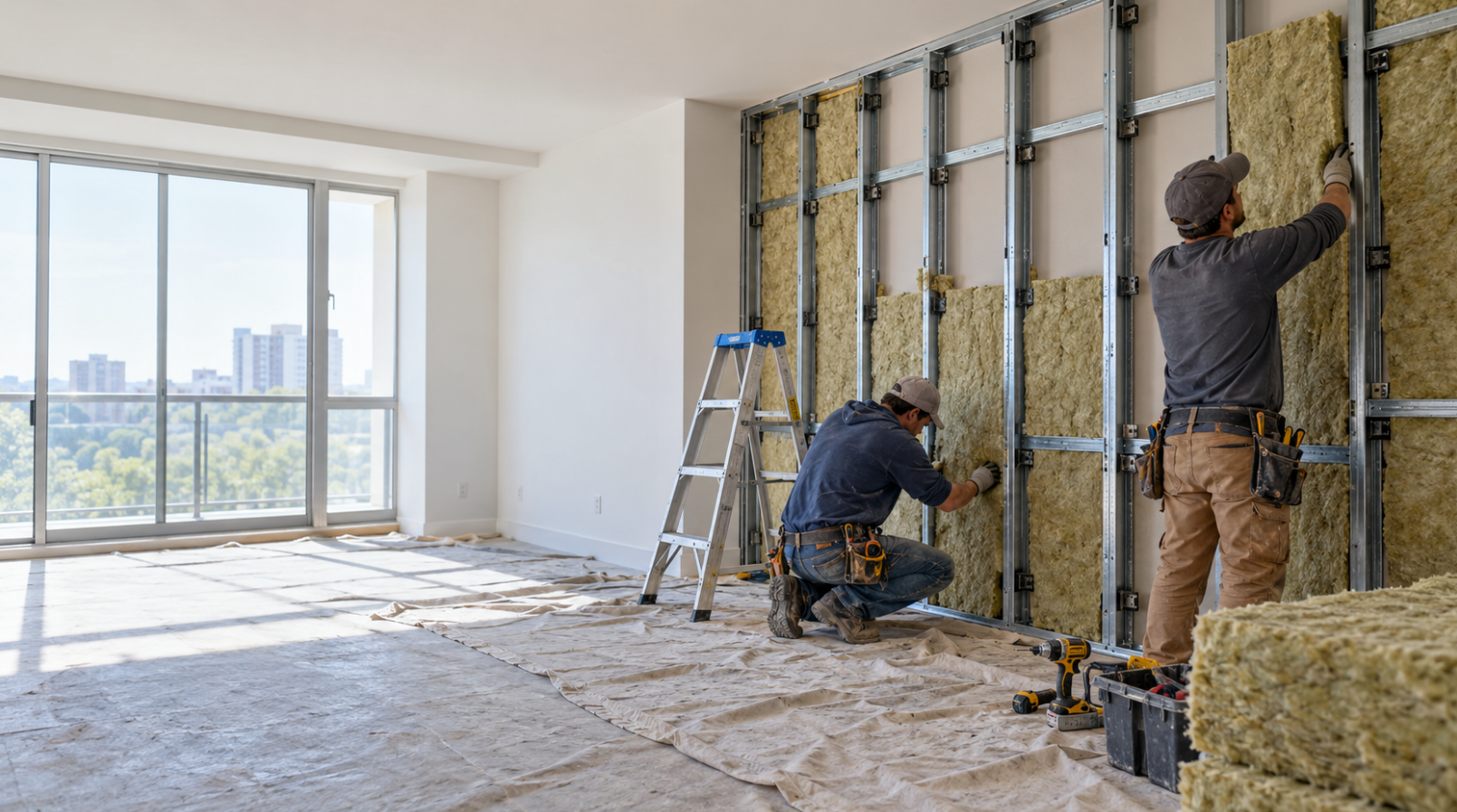
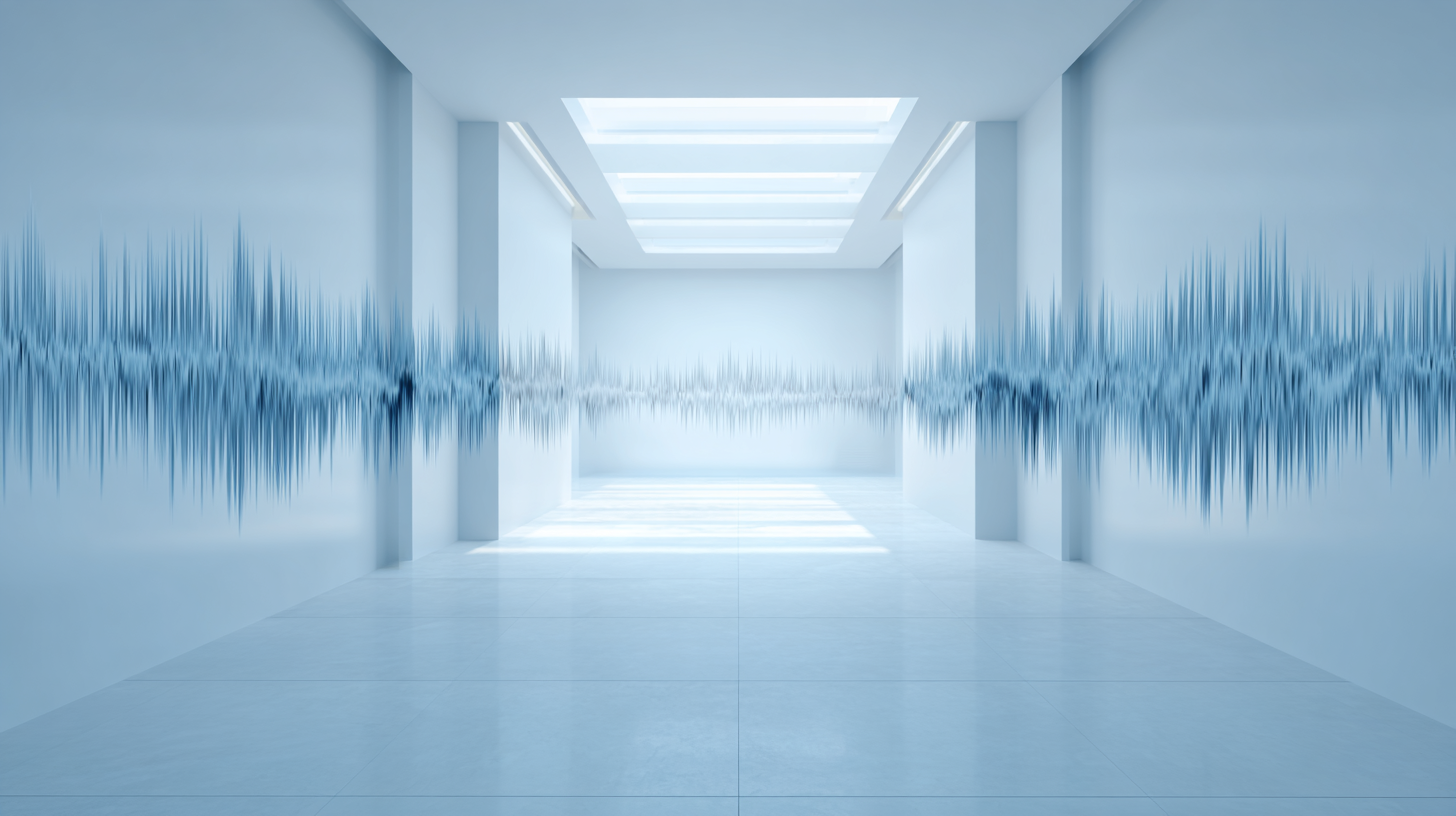
You walk into an empty apartment. You clap once. The sound lingers, swirling around you for a second or two before fading away. That lingering quality? That's reverberation.
Understanding what is reverberation might seem like acoustic nerd territory. It's not. If you've ever struggled to hear someone across a restaurant table, felt exhausted after a day in a noisy office, or wondered why your home recordings sound amateur, reverberation is likely part of the problem.
At New York Soundproofing, we've spent decades helping clients understand and control how sound behaves in their spaces. And here's what we've learned: you can't fix what you don't understand. Grasping the basics of reverberation is the first step toward making any room sound better.
Let's break it down.
What Is Reverberation? A Simple Explanation
The meaning of reverberation is straightforward once you visualize it. When you make a sound, waves travel outward from the source in all directions. These waves hit surfaces like walls, ceilings, floors, and furniture. Some energy gets absorbed. The rest bounces back.
But it doesn't bounce just once. Those reflected waves hit other surfaces and bounce again. And again. Hundreds of reflections happen within fractions of a second. They layer on top of each other, creating a smooth decay that we perceive as reverberation.
Think of it like dropping a stone in a swimming pool. Ripples spread outward, hit the walls, and reflect back. Those reflected ripples cross paths with new ripples, creating complex patterns. Sound works similarly, except it happens in three dimensions and much faster.
The result is that characteristic "tail" after any sound. In a tiled bathroom, that tail is long and bright. In a carpeted bedroom full of furniture, it's short and muted. Every room has its own reverberant signature based on its size, shape, and surfaces.
Reverberation vs Echo - What's the Difference?
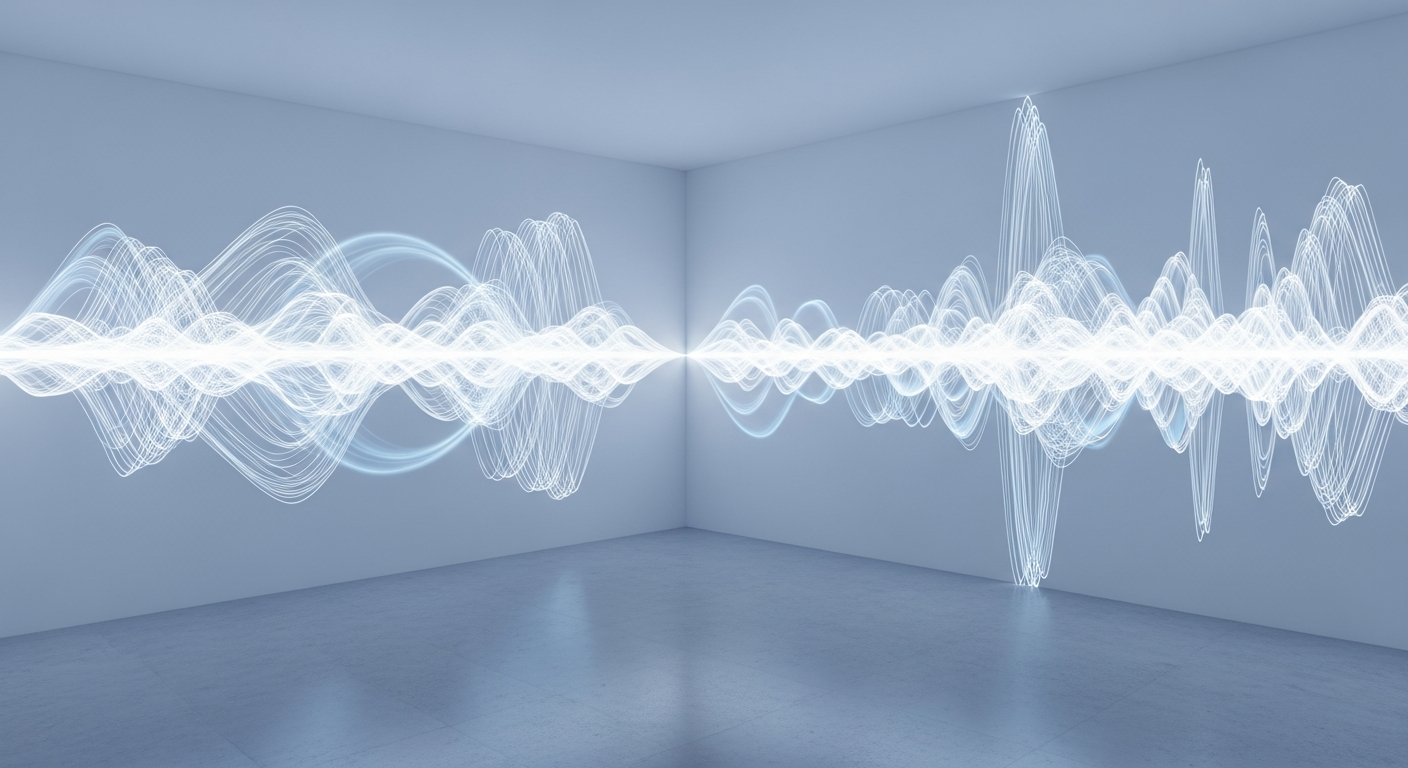
People use these terms interchangeably. They shouldn't. Echo and sound reverberation are related phenomena, but they behave differently and create different problems.
An echo is a distinct repetition of sound. You shout into a canyon and hear your voice come back a moment later. Clear. Recognizable. Separate from the original. For your brain to perceive a reflection as an echo, it needs to arrive at least 100 milliseconds after the direct sound. That delay requires distance. Big distance. Canyons, large stadiums, parking garages.
Reverberation is different. The reflections arrive so quickly and in such abundance that your brain can't separate them. Instead of hearing distinct repeats, you hear a continuous decay. A wash of sound that gradually fades.
Here's a practical way to think about it. Stand in the Grand Canyon and yell. You'll hear echoes. Stand in an empty gymnasium and yell. You'll hear reverberation. The gym isn't big enough to create the delay needed for true echo, but those hard parallel surfaces create plenty of overlapping reflections.
In most indoor spaces, reverberation is your concern. True echo rarely occurs in typical rooms. That persistent, muddy sound quality you're fighting? That's reverb.
Why Does Reverberation of Sound Occur?
Three factors determine how much reverberation builds up in any space. Understanding them helps you understand solutions.
Hard Surfaces Reflect Sound
Reverberation of sound occurs for one primary reason: reflective surfaces. Sound waves bounce off hard materials like light bounces off a mirror. Glass windows. Concrete walls. Hardwood floors. Tile. Marble countertops. Metal fixtures. These surfaces return almost all the sound energy that hits them.
Walk through a typical Manhattan loft. Exposed brick walls. Polished concrete floors. Floor-to-ceiling windows. Minimal furniture. Every surface is a reflector. Sound has nowhere to go except back into the room, bouncing until it finally loses energy. The result is that characteristic urban loft sound: bright, splashy, and exhaustingly reverberant.
Now imagine the opposite. A living room with plush carpet, heavy curtains, upholstered furniture, and bookshelves. These soft, porous materials absorb sound energy instead of reflecting it. Reverberation drops dramatically.
Room Geometry Matters
Shape and size amplify or reduce acoustic reverberation. Parallel walls are particularly problematic. Sound bounces back and forth between them like a ping-pong ball, reinforcing certain frequencies and creating flutter effects.
High ceilings increase room volume, giving sound more space to travel and more time to decay. Cathedral ceilings look stunning but create acoustic challenges. The same applies to open floor plans where sound travels freely across large areas without interruption.
Irregular shapes actually help. Angled walls, varied ceiling heights, and architectural details scatter sound in different directions rather than bouncing it predictably. This is why concert halls often feature complex geometric designs.
Lack of Absorption
When a room lacks absorptive materials, sound energy has nowhere to go. It keeps bouncing until friction and air resistance finally dissipate it. This takes time. That extended decay is what creates problematic reverberation.
Modern design trends have made this worse. Minimalism is beautiful but acoustically brutal. The clean lines and sparse furnishings that look great on Instagram create reverberant nightmares in real life. Every design choice that removes soft materials from a space increases reverberation.
Reverberation in Music
Here's something important: reverberation isn't inherently bad. In the right context, it's essential.
The reverberation music definition centers on artistic enhancement. Musicians and producers have understood for centuries that reverb adds dimension, warmth, and emotional depth to sound. A voice recorded in a completely dead room sounds flat and lifeless. Add some reverb and suddenly there's space around it. Presence. Soul.
Think about the spaces where music sounds magical. Gothic cathedrals with stone walls and vaulted ceilings. Concert halls are designed by acoustic engineers obsessing over every surface angle. The shower, where your singing actually sounds decent. These spaces share one thing: controlled, flattering reverberation.
Classical music was literally composed for reverberant spaces. Organ music needs those long decay tails to achieve its full majesty. Choral pieces rely on voices blending together in reflective stone churches. Take that music into a dead room and it loses its power.
Recording studios use reverb strategically. The "dry" signal is the direct sound without any room reflections. The "wet" signal includes reverb. Engineers blend these to create the perfect balance. Too dry feels sterile and clinical. Too wet sounds muddy and distant. The sweet spot depends on genre, emotion, and artistic intent.
Even modern electronic and pop music drowns in artificial reverb. Producers add digital reverb effects to drums, vocals, and synthesizers. They're simulating the natural acoustic phenomenon because our ears expect it. Completely dry recordings sound wrong to us on a primal level.
So, when does reverb become problematic? When you can't control it. When the room imposes its acoustic signature on everything, whether you want it or not. When the natural sound reverberation of your space fights against clarity rather than enhancing beauty.
When Acoustic Reverberation Becomes a Problem
The line between pleasant ambience and acoustic nightmare is thinner than most people realize. Cross it and reverberation stops enhancing sound. It starts destroying it.
Speech Intelligibility Issues
This is the big one. Excessive reverberation murders speech clarity.
When someone talks, reflected versions of their words arrive milliseconds after the direct sound. If the reverb tail is long enough, one syllable overlaps with the next. Words blur together. Comprehension drops.
Conference rooms suffer from this constantly. Hard walls, glass partitions, flat ceiling. Every voice bounces everywhere. People speak louder to be heard, adding more energy to the reverberant field. Meetings become exhausting. Classrooms face identical challenges. Teachers wonder why students seem distracted when, often, it's the acoustics forcing them to work harder just to process basic information.
Noise Fatigue
Ever left a restaurant feeling drained even though you just sat and ate? Blame acoustic reverberation.
Conversations from other tables reflect off hard surfaces and accumulate into an oppressive sonic fog. You raise your voice. So does everyone else. The volume climbs. Open plan offices produce the same effect over eight hours. Studies show productivity drops and stress increases in acoustically poor spaces. The fatigue is real, even when you can't identify the cause.
Recording and Production Problems
That echoey, amateur quality on bad podcasts? Reverberation. The hollow sound during Zoom calls? Reverberation. The reason home recordings never sound professional, despite using the same microphone? Often reverberation.
Microphones capture the direct sound you want and all the reflected sound you don't. Once reverb is baked into a recording, removing it is nearly impossible. Prevention beats correction every time.
Understanding Reverberation Time (RT60)

Acousticians measure reverberation using a metric called RT60. It represents the time required for sound to decay by 60 decibels after the source stops. In practical terms, it's how long the reverb tail lasts before becoming inaudible.
Different spaces need different RT60 values. Recording studios and control rooms typically aim for 0.3 to 0.5 seconds. Short and controlled. You want to hear exactly what's being recorded without the room coloring everything.
Offices and conference rooms work best around 0.6 to 0.8 seconds. Enough liveliness to feel natural but short enough to maintain speech clarity.
Concert halls and performance venues target 1.5 to 2.5 seconds depending on repertoire. Classical music benefits from longer decay. Amplified rock concerts need tighter control.
Professional acoustic consultants measure RT60 using specialized equipment and calibrated sound sources. They can tell you exactly how your room performs and how specific treatments will change those numbers. It takes the guesswork out of acoustic treatment.
When to Consult an Acoustics Professional
Some reverb problems yield to simple solutions. Adding rugs, curtains, and upholstered furniture makes a noticeable difference in residential spaces. Strategic placement of a few acoustic panels handles mild issues effectively.
But some situations demand expertise. If speech intelligibility is severely compromised in a commercial space, professional measurement and treatment planning prevent expensive trial and error. If you're building a recording studio or home theater where acoustic performance is critical, expert design from the start saves money and frustration. If your space has unusual geometry or construction materials that make predicting acoustic behavior difficult, professional analysis provides clarity.
At New York Soundproofing, we provide comprehensive acoustic consultations throughout the NYC metro area. Our experts measure your space, identify exactly what's causing problems, and design solutions tailored to your needs and budget. No guesswork. No generic recommendations.
Understanding reverberation is the first step. Controlling it transforms how you experience your space.
Ready to take control of your room's acoustics? Contact us today or call (877) 999-2201 for a free consultation.