Here's a question we hear almost daily at New York Soundproofing: "How many acoustic panels do I need for my space?" It sounds simple. It's not.
The honest answer? It depends. But don't worry. After decades of transforming echo-filled nightmares into acoustically perfect rooms across Manhattan, Brooklyn, and beyond, we've developed reliable methods to figure this out. No guesswork required.
Getting the right number of panels matters more than most people realize. Too few panels and you've wasted money on a half-solution. Too many and you've killed the natural life of your room, creating a dead, uncomfortable space that feels like talking into a pillow. Neither outcome is what you want.
This guide will walk you through everything. The quick rules of thumb. The factors that actually matter. A simple formula you can use today. And room-specific advice based on what we've learned installing thousands of acoustic treatments in real NYC spaces.
Let's get your sound right.
The Quick Answer - How Much Soundproofing Do I Need?
If you want a number right now, here it is: most rooms need acoustic treatment covering 15–30% of the wall and ceiling surface area.
That's your starting point. A 200 square foot home office? You're probably looking at 30–60 square feet of panels. A larger recording space? Closer to 40% coverage might be necessary.
But please understand something important. This range is a guideline, not a guarantee. We've walked into rooms where 20% coverage solved everything. We've also seen spaces where 35% wasn't enough because of specific architectural challenges. Concrete walls, floor-to-ceiling windows, vaulted ceilings. These things change the math dramatically.
The percentage you need depends on what problem you're solving. Echo reduction in a podcast room requires different treatment than soundproofing a home theater. Speech clarity in a conference room has different demands than mixing music in a studio.
So yes, 15–30% is real guidance based on real experience. Use it as your baseline. Then let's refine it based on your specific situation.
Factors That Determine How Many Sound Panels You Need
Before you start shopping, understand what's driving your acoustic needs. Four factors matter most.
Room Size and Ceiling Height
People measure floor space and stop there. That's a mistake. Volume matters more than footprint. A 12×14 foot room with 8-foot ceilings behaves very differently from the same floor plan with 12-foot ceilings. Higher ceilings mean more air for sound to bounce around in. More reverberation. More problems.
We recently treated a Brooklyn loft with 16-foot ceilings. Beautiful space. Acoustic disaster. The client needed nearly twice what they'd budgeted because those extra vertical feet created an enormous reverberant field. Calculate your room's volume. Rooms over 2,000 cubic feet almost always need more aggressive treatment.
Room Purpose
What happens in this room? Your answer shapes everything.
A home office needs modest treatment focused on specific reflection points. You're making Zoom calls, not building a studio. Recording studios demand much more: 30–40% coverage plus specialized bass traps. Home theaters present an interesting challenge. Many people over-treat them, but a completely dead room sounds unnatural for movies. Conference rooms prioritize speech intelligibility, where ceiling treatment often matters more than wall panels.
Existing Surfaces and Furnishings
Walk into your room. What do you see? Hardwood floors, glass windows, concrete walls. These surfaces reflect sound aggressively, multiplying your echo problem.
Now imagine thick carpet, heavy drapes, upholstered sofas. These materials absorb sound naturally. When asking how many soundproof panels I need, a well-furnished room might need just a few strategic pieces. A minimalist space with hard surfaces everywhere could require twice the coverage for the same result.
Current Acoustic Problems
Here's where people confuse themselves. Echo and noise leakage are completely different problems.
Echo happens inside your room. Sound bounces off surfaces and reaches your ears with slight delays. Acoustic panels solve this by absorbing reflections.
Noise leakage moves between spaces. Your neighbor's music through the wall. Street traffic penetrating windows. Acoustic panels alone won't fix this. You need mass, decoupling, and proper soundproofing construction.
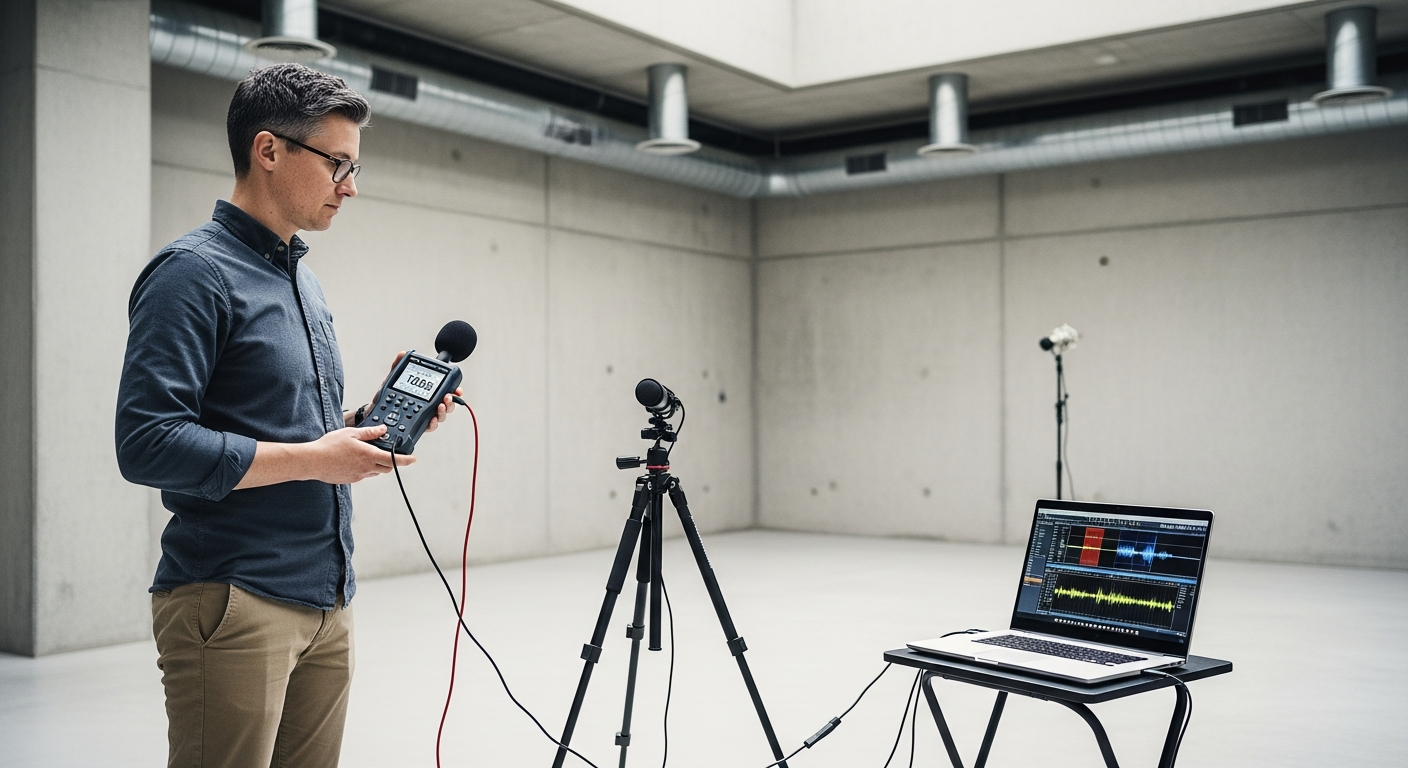
Test your space. Clap loudly. Hear a sharp flutter afterward? That's an echo. Panels help. Hear your neighbor's TV clearly? That's transmission. You need more than panels.
Simple Formula to Calculate Your Acoustic Panel Needs
Enough theory. Let's do math.
Figuring out how much soundproof foam do I need or how many fabric panels to order comes down to a straightforward calculation. Here's the formula we use:
Step 1 - Calculate your treatable surface area.
Measure all four walls. Multiply height by width for each. Add them together. Then add your ceiling area if you're considering ceiling treatment.
Example room: 12 feet × 14 feet with 9-foot ceilings.
Wall 1: 12 × 9 = 108 sq ft
Wall 2: 14 × 9 = 126 sq ft
Wall 3: 12 × 9 = 108 sq ft
Wall 4: 14 × 9 = 126 sq ft
Total walls: 468 sq ft
Ceiling: 12 × 14 = 168 sq ft
Grand total: 636 sq ft
Step 2 - Determine your coverage percentage.
Based on the room purpose:
- Light treatment (home office, living room): 15–20%
- Moderate treatment (podcast room, conference room): 20–30%
- Heavy treatment (recording studio, home theater): 30–40%
Let's say this is a home recording setup. We'll use 30%.
636 × 0.30 = 190.8 sq ft of panels needed
Step 3 - Divide by individual panel size.
Standard panels come in various sizes. Common options include 2×4 feet (8 sq ft) and 2×2 feet (4 sq ft).
Using 2×4 panels: 190.8 ÷ 8 = approximately 24 panels
Step 4 - Adjust for reality.
Windows, doors, and furniture reduce your available wall space. You might not need full calculated coverage if large portions of your walls are already occupied. Conversely, problematic rooms might need more.
This formula gives you a solid starting estimate. From here, professional consultation can fine-tune placement and quantity for optimal results.
Room-by-Room Placement Guide
Numbers mean nothing without proper placement. Where you put your panels matters just as much as how many you install.
Home Office
Your first priority is the wall directly behind your monitor. Sound bounces off this surface and returns to your mic, creating that hollow, echoey quality. Two to four panels here make an immediate difference. Second priority: the wall behind you. Third: side walls at ear level to reduce flutter echo.
Most home offices need between 6 and 12 panels total. Fabric-wrapped panels in 2-inch thickness handle mid and high frequencies where speech lives. You don't need bass traps here. You're making calls, not mixing music.
Recording Studio / Music Room
If you're asking how many acoustic panels do I need for a recording space, prepare for complexity. Start with the first reflection points on the side walls and the ceiling above your listening position. These are non-negotiable.
Next: corners. Low frequencies build up there like water pooling in a drain. Bass traps in at least two corners, preferably all four, solve this problem. Most project studios need 30–40% coverage plus dedicated bass traps. Don't cheap out here. Inadequate treatment costs you in every flawed mix you produce.
Home Theater
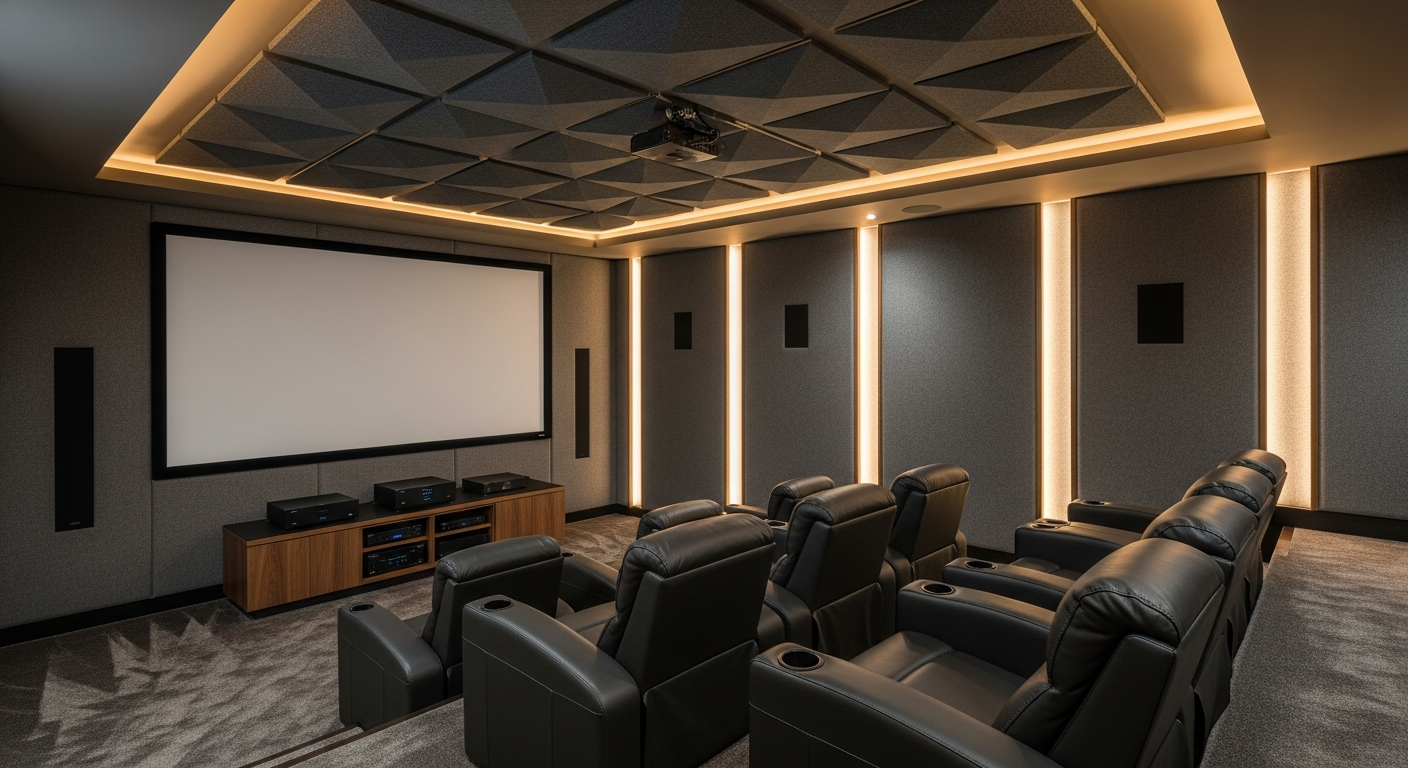
Here's where enthusiastic DIYers often go wrong. They cover every surface and wonder why their theater sounds lifeless. Movies aren't mixed for dead rooms. Film soundtracks expect some ambience.
Ceiling treatment is your highest priority. Treat the front half of the room more aggressively. Leave the rear with lighter treatment to maintain that sense of envelopment. Bass traps in corners tighten up those action movie explosions. Most home theaters do well with 20–25% coverage weighted toward the front.
Conference Room
Conference room acoustics serve one master: speech intelligibility. The ceiling is often your most impactful treatment zone. Ceiling clouds above the conference table make a remarkable difference. We've seen rooms transform from unusable to excellent with ceiling treatment alone.
For a typical 15×20 foot conference room, we recommend 15–25% coverage with emphasis on ceiling panels.
Living Room / Open Plan Space
The question of how much soundproofing I need in a living space comes down to usage and aesthetics. Nobody wants their home looking like a recording studio.
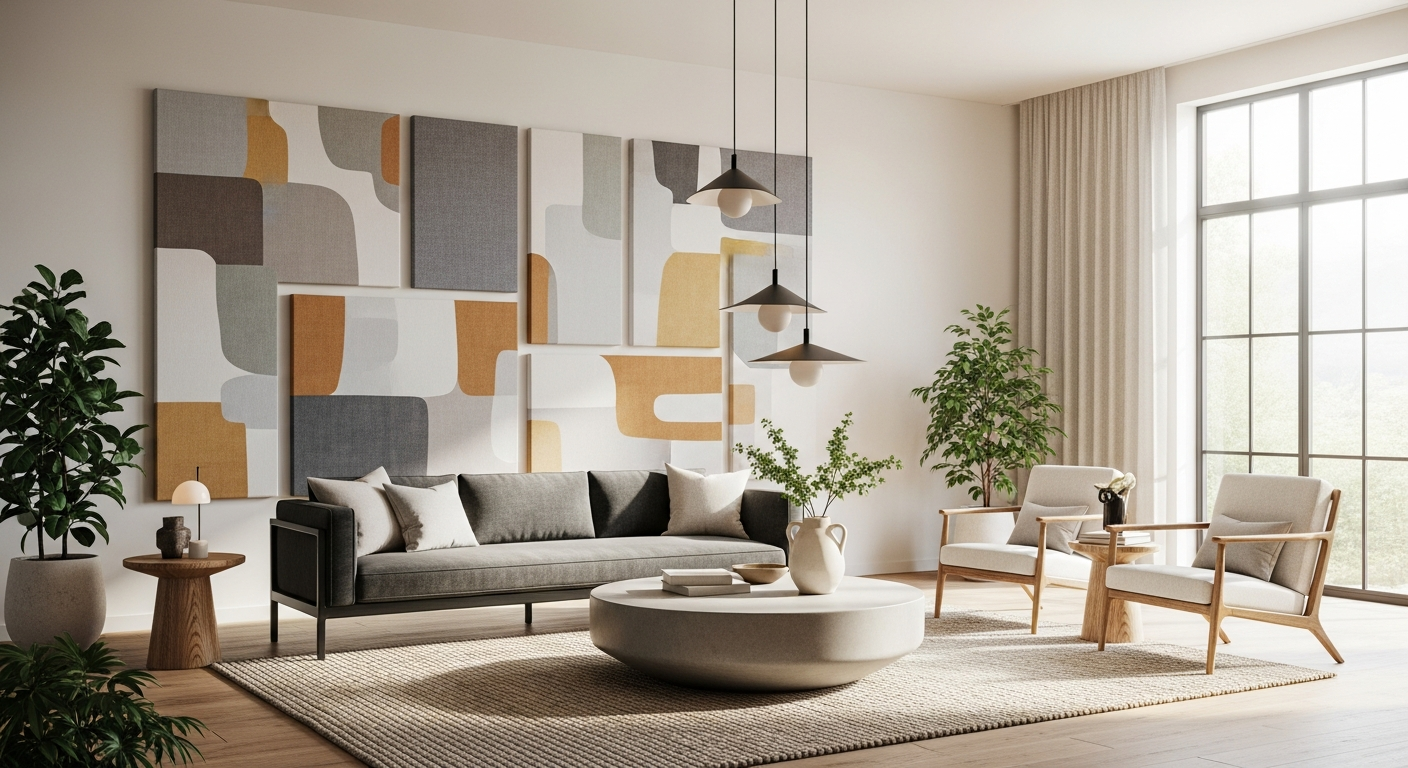
Decorative acoustic panels have improved dramatically. Custom prints, hundreds of fabric colors, wood slat designs. Area rugs and heavy curtains contribute meaningfully too. Most living rooms benefit from 10–20% coverage applied thoughtfully.
When to Call a Professional
Some situations genuinely require expert involvement. Complex room geometry creates unpredictable acoustic behavior. Critical listening requirements demand precision. Noise transmission problems need proper diagnosis since panels won't stop sound from traveling between spaces.
At New York Soundproofing, we offer complimentary consultations. Our experts assess your situation, measure if needed, and provide detailed recommendations with transparent pricing. No obligation.
Ready to get your acoustics right? Contact us today or call (877) 999-2201 for your free consultation.