
Bass noise from a neighbor is one of the most difficult residential noise problems to solve. Unlike high-frequency sounds - voices, TV dialogue, barking - bass penetrates walls, floors, and ceilings with minimal loss, and standard noise-blocking products provide little protection against it. The solutions depend on how loud the bass is, whether you rent or own your home, and how much time and budget you have.
This guide covers the full range of options: personal audio tools you can use tonight, masking techniques that actually work at low frequencies, structural modifications for renters and homeowners, and legal options when the noise exceeds local ordinance limits.
Why Bass Noise Is So Hard to Block
Bass frequencies - roughly 20 to 200 Hz - are far more difficult to block than mid- and high-frequency sounds because of their physical properties. At 60 Hz, the wavelength of sound in air is approximately 18 feet. A standard partition wall is 4 to 6 inches thick. A wall needs to be a significant fraction of the wavelength it blocks to be effective; against an 18-foot-long wave, a few inches of drywall offer almost no resistance.
The second problem is the coincidence effect. At certain frequencies, sound waves cause a wall to flex and vibrate in phase with the incoming wave - essentially turning the wall into a speaker that re-radiates the sound on the other side. For lightweight gypsum drywall assemblies, this coincidence dip often falls between 100 and 200 Hz, directly overlapping with the fundamental frequencies of kick drums and bass instruments.
Above approximately 85-90 dB SPL, bass stops being purely an auditory experience. Sound pressure at low frequencies is transmitted through floors and building structures as vibration, which is perceived through the body, particularly through the chest, feet, and skeletal system. This is why very loud bass from a neighbor's subwoofer can be felt even when earplugs are worn.
These three factors - long wavelength, coincidence flex, and structural vibration - explain why adding a single layer of acoustic foam, a curtain, or even standard insulation does almost nothing against bass from a neighbor.
Immediate Soundproofing Solutions

When structural modification is not possible - because you rent, the noise is intermittent, or you need relief right now - personal audio tools are the most reliable immediate option.
Active noise-canceling (ANC) headphones
ANC technology works by generating an inverse sound wave that cancels the incoming signal. It is most effective precisely where bass is most problematic: below 300-400 Hz. Against a neighbor's subwoofer or bass-heavy music, a quality pair of over-ear ANC headphones can reduce perceived bass by 20-30 dB, which the human ear perceives as roughly four to eight times quieter. ANC headphones are less effective above 500 Hz, where passive ear cup isolation takes over.
Foam earplugs combined with ANC headphones
For very loud bass - a home theater system at high volume or a subwoofer against a shared wall - neither earplugs nor ANC headphones alone are sufficient. Worn together, they address different parts of the frequency spectrum: earplugs provide 25-33 dB of broadband passive attenuation, and the ANC layer specifically targets the low-frequency remainder. This combination represents the maximum achievable personal attenuation without structural intervention.
Sleep headband speakers
For side sleepers who cannot tolerate over-ear headphones through the night, flat-speaker sleep headbands allow brown noise or low-frequency masking audio to be played directly at the ear without pressure on the ear canal or temple. They are less effective than over-ear ANC but significantly more comfortable for sleeping.
Requesting a room change within the unit
Moving to a bedroom on the opposite side of the apartment from the neighbor's wall is a zero-cost structural improvement. Doubling the distance between you and the source reduces sound intensity by approximately 6 dB for each doubling of distance in a reverberant space - a meaningful difference for borderline situations.
How to Use Brown Noise to Mask Bass from a Neighbor
Standard white noise machines do not mask bass noise. Most commercial white noise devices use small speakers with a low-frequency roll-off below 150-200 Hz. The fundamental frequencies of bass-heavy music - kick drum, bass guitar, and subwoofer output - concentrate between 40 and 120 Hz. Because the masking signal cannot reproduce those frequencies, it cannot cover them.
Brown noise (also called red noise) has a spectral slope of −6 dB per octave, meaning its energy increases significantly at lower frequencies compared to white or pink noise. Dark-brown noise emphasizes this slope further. Played through a speaker capable of reproducing frequencies below 80 Hz - a subwoofer, a quality bookshelf speaker, or over-ear ANC headphones - brown noise can effectively mask moderate bass from a neighbor.
The myNoise app (iOS and Android) provides a parametric equalizer that allows precise shaping of the masking signal to match the frequency profile of the intruding bass. The correct approach is to identify which frequencies are most audible - using a free SPL meter app such as NIOSH SLM - and then boost the masking signal in that range.
The critical limitation is volume. Masking noise must be at least as loud as the noise being masked at the relevant frequencies. If the neighbor's bass is genuinely loud, the masking signal must also be loud, which creates its own sleep disruption. At that level, combining brown noise masking with earplugs or ANC headphones is more effective than either approach alone.
Soundproofing Solutions for Renters
Renters cannot attach mass-loaded vinyl to walls, install resilient channels, or replace doors without landlord permission. However, several methods reduce bass transmission without permanent modification.
Heavy furniture and bookshelves against the shared wall
A fully loaded floor-to-ceiling bookshelf adds significant mass to the wall assembly without touching it. Adding mass to the wall's radiating surface increases its impedance and reduces re-radiation at mid- and upper-bass frequencies. This is not a solution for very low frequencies (below 80 Hz), but measurably reduces the 100-200 Hz range where music bass is most annoying. For a permanent result, professional wall soundproofing addresses the full frequency range with decoupled assemblies and mass-loaded materials.
Thick rugs with rubber underlay on shared floors or ceilings
Impact bass - footsteps, dropped objects, and low-frequency vibration - travels through the building structure. A dense area rug (minimum 0.5 inches pile) combined with a rubber or cork underlay beneath it disrupts the surface transmission path. This is most effective when the bass source is in the unit above rather than adjacent. When temporary measures are insufficient, ceiling soundproofing provides a structural solution that blocks both airborne and impact noise from above.
Understanding what acoustic panels do and do not do
Acoustic panels - foam wedges, fabric-wrapped fiberglass, rockwool panels - absorb mid and high-frequency sound reflections inside the room. They reduce reverberation time and echo. They do not block incoming sound from adjacent units and provide no measurable reduction of bass transmission through walls. Installing panels to block a neighbor's bass is a common and ineffective approach.
Temporary MLV placement
Mass-loaded vinyl can be draped over or positioned behind furniture against the shared wall without permanent attachment. It adds approximately 1 lb/sq ft of mass to the wall assembly without any fasteners. The effect is limited compared to a permanently installed MLV, but it is renter-compatible and reversible. Renters dealing with persistent bass problems may benefit from a consultation on apartment soundproofing options that work within lease restrictions.
Sealing flanking paths
Sound flanks around walls through gaps under doors, around window frames, and through electrical outlets on shared walls. Sealing these gaps with removable acoustic putty pads (inside outlet boxes) and door sweep draft stoppers reduces mid-frequency flanking. The effect on deep bass is minimal, but it addresses the full frequency leakage problem comprehensively.
Structural Bass Blocking - What Homeowners and Landlords Can Do

Effective structural bass blocking requires two simultaneous strategies: adding mass to increase the wall's resistance to sound transmission, and mechanically decoupling the new surface from the existing structure to prevent vibration bridging.
Mass-loaded vinyl (MLV)
MLV is a dense barrier material - typically 1 lb/sq ft - installed over existing wall framing before a new drywall layer. At mid-bass frequencies (100-300 Hz), a 1 lb/sq ft MLV layer contributes approximately 3-4 STC points. Its effectiveness decreases below 80 Hz, where wavelengths are too long for mass-based solutions to be primary. MLV works best as part of a layered assembly, not as a standalone solution.
Resilient channels with double-layer drywall
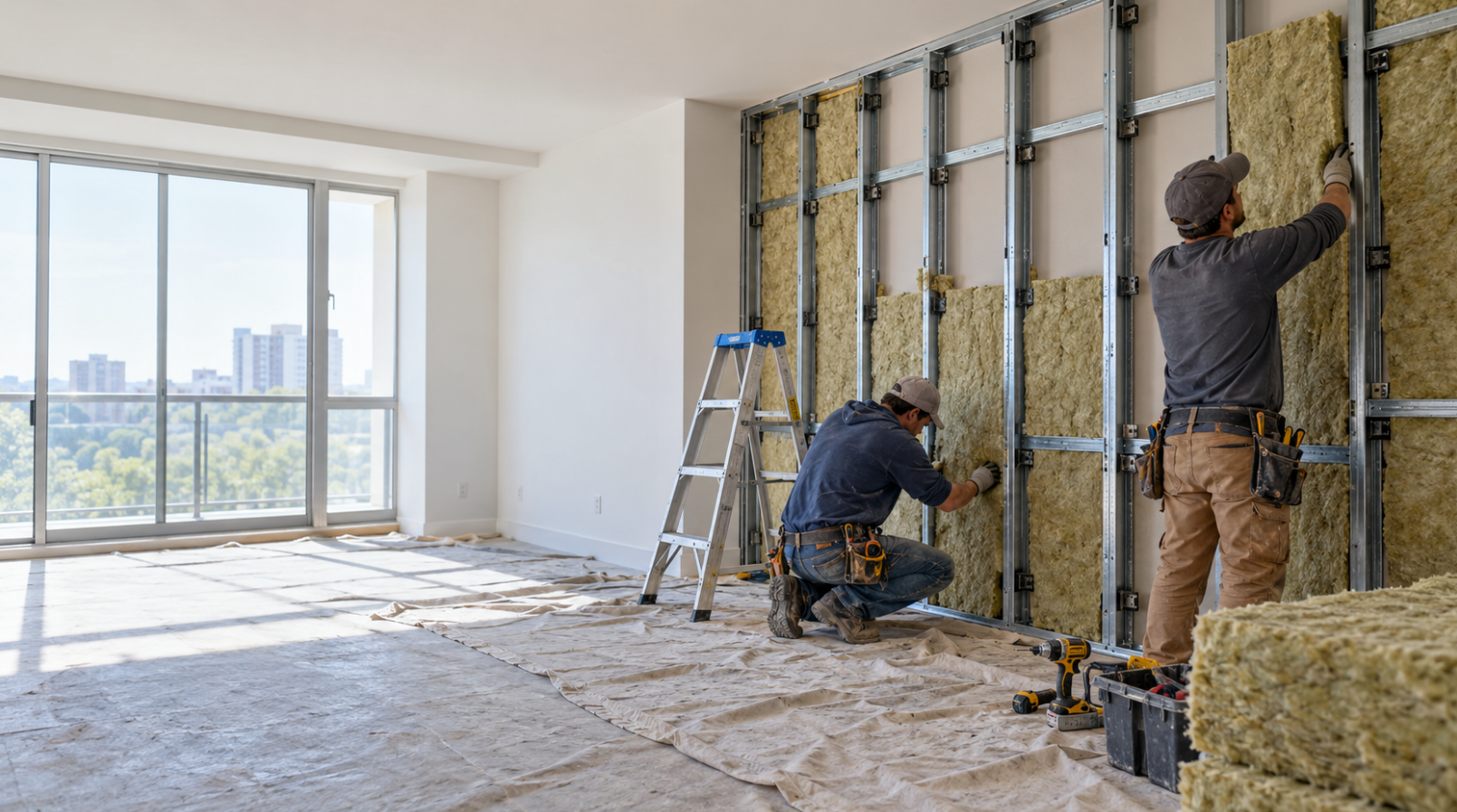
Resilient channels are thin metal brackets that hold a new layer of drywall away from the studs, creating a decoupled assembly. This breaks the direct structural connection through which vibration travels. A standard stud wall (STC 33-37) upgraded with resilient channels, mineral wool cavity fill, and two layers of 5/8" drywall reaches STC 52-58. At STC 55, a neighbor's music at moderate volume becomes inaudible; at STC 58, loud music becomes faint.
Staggered or double-stud wall construction
The highest-performance approach for new construction or full renovation is building a second wall that shares no physical contact with the original - completely eliminating the vibration transmission path. Double-stud walls with mineral wool and MLV reach STC 60-65, providing effective blocking even against subwoofer frequencies at moderate output levels. Because double-stud construction reduces usable floor area and involves significant structural planning, an acoustic consultation and design assessment is the recommended starting point before committing to this approach.
Mineral wool vs. fiberglass insulation in wall cavities
Mineral wool (Rockwool Safe'n'Sound) has a density of 2.5-4 lb/ft³ compared to 0.5-1 lb/ft³ for standard fiberglass batts. The higher density provides better sound absorption across the frequency spectrum, including the upper bass range. For pure low-frequency blocking, however, cavity fill alone - without decoupling - contributes only 2-4 STC points.
Floating floor systems
Impact bass from the unit above is transmitted through the structural slab. A floating floor - finished flooring installed over a resilient underlayment of rubber, cork, or neoprene isolation pads - decouples the floor surface from the structure. Impact Insulation Class (IIC) ratings improve by 15-25 points with a quality floating floor system, significantly reducing footfall and subwoofer vibration from above.
Legal and Administrative Options When Soundproofing Isn't Enough
When bass noise is genuinely excessive and acoustic solutions provide insufficient relief, US residents have several administrative and legal tools available.
Local noise ordinances
Most US cities and counties set maximum permitted noise levels in residential zones, typically 45-55 dB(A) during nighttime hours (10 PM-7 AM) and 55-65 dB(A) during daytime hours. These limits vary by jurisdiction. Your city or county's municipal code is publicly searchable; searching "[city name] noise ordinance residential dB" will locate the applicable standard.
Documenting the noise level
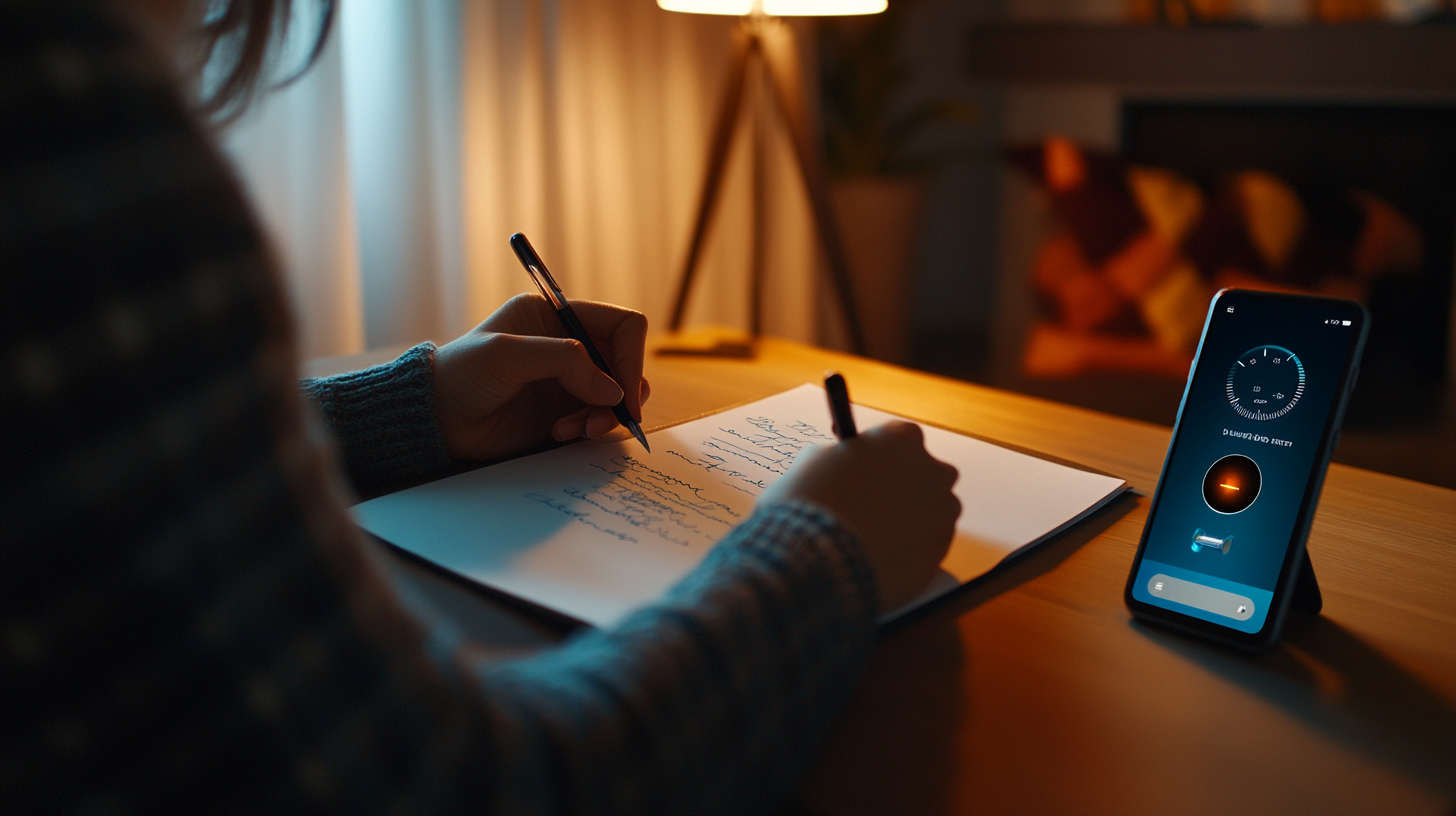
The NIOSH Sound Level Meter app (free, iOS) is developed by the CDC and produces SPL readings in dB(A) that are defensible in complaints and legal proceedings. Record the noise level at the point of impact - your bedroom wall, floor, or door - and note the time and date. Multiple documented measurements significantly strengthen a formal complaint.
Written notice to the landlord (renters)
If you rent, your landlord has a legal obligation to address habitability issues under the implied warranty of habitability. Excessive noise from another tenant, for which a landlord has been formally notified and has failed to address it, may constitute a breach of this warranty in many US states. Notice must be in writing - email is acceptable and creates a timestamp.
311 complaints
Most major US cities operate a 311 non-emergency complaint line for quality-of-life issues, including noise violations. Filing a 311 report creates an official record and, in cities such as New York, Chicago, and Los Angeles, can trigger a noise inspection visit from code enforcement.
Police noise complaint and civil nuisance action
In cases of repeated, documented violations, a police noise complaint (non-emergency line, not 911, for ongoing chronic noise) establishes a law enforcement record. If the situation escalates, a civil nuisance lawsuit in small claims court is available in all US states and does not require an attorney. The documented SPL measurements, written landlord notices, and 311 records serve as evidence.
Choosing the Right Strategy for Your Situation
The right approach depends on two variables: the bass's loudness and your legal authority to modify the space.
For renters dealing with moderate bass - music audible but not physically felt - the ANC headphones plus brown noise combination provides reliable, immediate relief, and placing heavy furniture against the shared wall offers a passive improvement that requires no permissions.
For renters dealing with loud bass that is physically felt, the acoustic options are limited. Administrative action - written landlord notice, 311 complaint, documented SPL records - becomes the primary tool, used in parallel with maximum personal attenuation.
For homeowners, the decoupled wall assembly (resilient channels + mineral wool + double drywall) is the most cost-effective structural intervention for the bass frequency range. Addressing the shared wall first, before floors or ceilings, resolves the majority of airborne bass transmission in apartment and townhouse settings. Professional wall soundproofing delivers this assembly with verified STC performance and minimal disruption to the existing space.