Choosing the wrong fabric for acoustic panels reduces panel NRC regardless of how good the core material is. This guide covers the four main fabric categories used in acoustic panel construction, their acoustic and fire performance data, and a practical test to verify any fabric before purchase.
What Makes Fabric Acoustically Transparent
An acoustically transparent fabric is a fabric with a sufficiently open weave structure to allow sound waves to pass through to the absorptive core of the panel. If the fabric blocks sound at the surface, the panel's NRC drops - a fiberglass core rated at NRC 0.95 covered with an acoustically opaque fabric can perform at NRC 0.55-0.70, a loss of 25-40% of its rated absorption.
The physical property that determines acoustic transparency is air flow resistance, measured in MKS Rayls. Fabrics with air flow resistance below 1,000 MKS Rayls are considered acoustically transparent for panel applications. Most purpose-made acoustic fabrics measure 200-600 MKS Rayls. Dense decorative fabrics measure 2,000-5,000+ MKS Rayls and should not be used as panel covers.
Weave density is the primary factor controlling air flow resistance. Fabrics with fewer threads per inch in both warp and weft directions have more open space between fibers, allowing air - and sound - to pass through. A weave count below 200 threads per inch in each direction is a reliable starting criterion for acoustic transparency, though this must be verified by testing rather than assumed.
Fabric thickness is a secondary factor. Thicker fabrics with tight weaves block more sound than thin fabrics with the same weave count. A single layer of acoustically transparent fabric adds no more than 0.02-0.05 NRC reduction to a well-matched panel assembly.
For commercial panel installations where NRC compliance must be documented, our acoustic treatment service includes material specification and performance verification.
Guilford of Maine FR701 (Industry Standard)
Guilford of Maine FR701 is the most widely specified fabric for acoustic panels in the US commercial market. It is a polyester-blend fabric engineered specifically for acoustic applications, with a tested air flow resistance that reduces panel NRC by no more than 0.02-0.05 compared to a bare core panel of the same material.
FR701 is a 100% post-consumer recycled polyester fabric with a plain weave construction at approximately 22 × 22 threads per inch. Its open weave maintains consistent acoustic transparency across the full audible frequency range, including frequencies below 500 Hz where many tighter fabrics begin to reflect rather than transmit.
FR701 carries an ASTM E84 Class A fire rating, making it compliant with commercial building codes in all US states for use in offices, healthcare facilities, educational institutions, and hospitality spaces. It is also Greenguard Gold certified for low VOC emissions.
The fabric is available in over 150 standard colors and can be custom-ordered in additional colorways. Retail price ranges from $8-$14 per yard, depending on quantity and supplier. For professional acoustic panel installations in commercial spaces, FR701 is the default specification unless budget, sustainability requirements, or aesthetic needs indicate otherwise. For large commercial projects where fabric specification affects overall NRC targets, an acoustic consultation ensures the panel assembly meets the required performance before installation.
Polyester Fabric (Best Budget and DIY Option)
Standard polyester fabric is the most affordable acoustically transparent option for DIY acoustic panels and budget commercial installations. The key selection criterion is weave openness - polyester fabrics with a thread count below 200 threads per inch in both warp and weft directions typically pass the acoustic transparency test and add no more than 0.03-0.08 NRC reduction to a standard fiberglass or mineral wool core.
Polyester fabric suitable for acoustic panels is widely available at fabric retailers under descriptions such as "speaker grille cloth," "acoustic fabric," or "polyester voile." Standard retail price for acoustically transparent polyester ranges from $3-$8 per yard, making it the lowest-cost option for panel fabric.
The acoustic performance difference between budget polyester and FR701 is minimal when the weave is genuinely open. The practical differences are in durability, color fastness, and fire rating. Untreated polyester fabric does not carry an ASTM E84 Class A rating. For residential DIY panels, this is generally not a code requirement. For any commercial installation - offices, restaurants, studios, schools - Class A fire-rated fabric is required by building code in most US jurisdictions.
Fire-treated polyester fabric with Class A or Class B ratings is available from acoustic fabric suppliers at $5-$10 per yard, representing a cost-effective middle ground between budget polyester and premium FR701.
Natural Wool and Wool-Blend Fabrics (Best for High-End Interiors)
Natural wool and wool-blend fabrics combine acoustic transparency with a premium textile aesthetic, making them the preferred choice for executive offices, hospitality interiors, boardrooms, and high-end home theaters where panel appearance is as important as acoustic function.
Wool is inherently flame-resistant to approximately 600°C without chemical treatment. This natural fire resistance means wool fabrics frequently achieve ASTM E84 Class A or Class B ratings without flame-retardant additives, which is an advantage in applications where low chemical emissions are a priority alongside fire compliance.
Acoustically, wool fabrics perform comparably to FR701 when properly selected. Camira Blazer, Kvadrat Divina, and similar commercial wool-blend fabrics designed for upholstered applications maintain open weave structures compatible with acoustic panel use. Thread counts and air flow resistance vary by product - verification testing is required for any wool fabric not specifically rated for acoustic panel use.
Cost is the primary limitation. Commercial wool acoustic fabrics range from $25-$60 per yard, making them 3-6× more expensive than FR701 and 5-15× more expensive than budget polyester. Wool is also moisture-sensitive - it is not suitable for high-humidity environments such as indoor pools, commercial kitchens, or unconditioned spaces.
Stretch Fabric (Best for Seamless and Curved Installations)
Stretch fabrics - typically polyester-spandex blends - are used when a seamless, wrinkle-free finish is required or when panels have curved or irregular edges. The elastic structure of stretch fabric conforms to panel shapes without fold lines, staple shadows, or fabric bunching at corners. Stretch fabrics are standard in fabric track wall systems - see our acoustic upholstery wall and ceiling service for large-format seamless installations.
The acoustic transparency of stretch fabrics depends on the base weave structure in its unextended state. A fabric that is acoustically transparent at rest may become more opaque when stretched, as the fibers compress against each other and reduce the open area between threads. Stretch fabrics should be tested in their installed (extended) state, not flat.
Phifer SheerWeave and similar open-weave stretch products are designed to maintain acoustic transparency under tension. Standard polyester-spandex blends used in apparel are not designed for acoustic applications and must be individually tested before use.
Stretch fabrics are most commonly used in fabric track wall systems - installations where fabric is tensioned across a perimeter track frame rather than stapled to a panel substrate. This system is standard in commercial office fit-outs, conference rooms, and large-format wall treatments where individual panels are impractical.
Fabrics to Avoid for Acoustic Panels
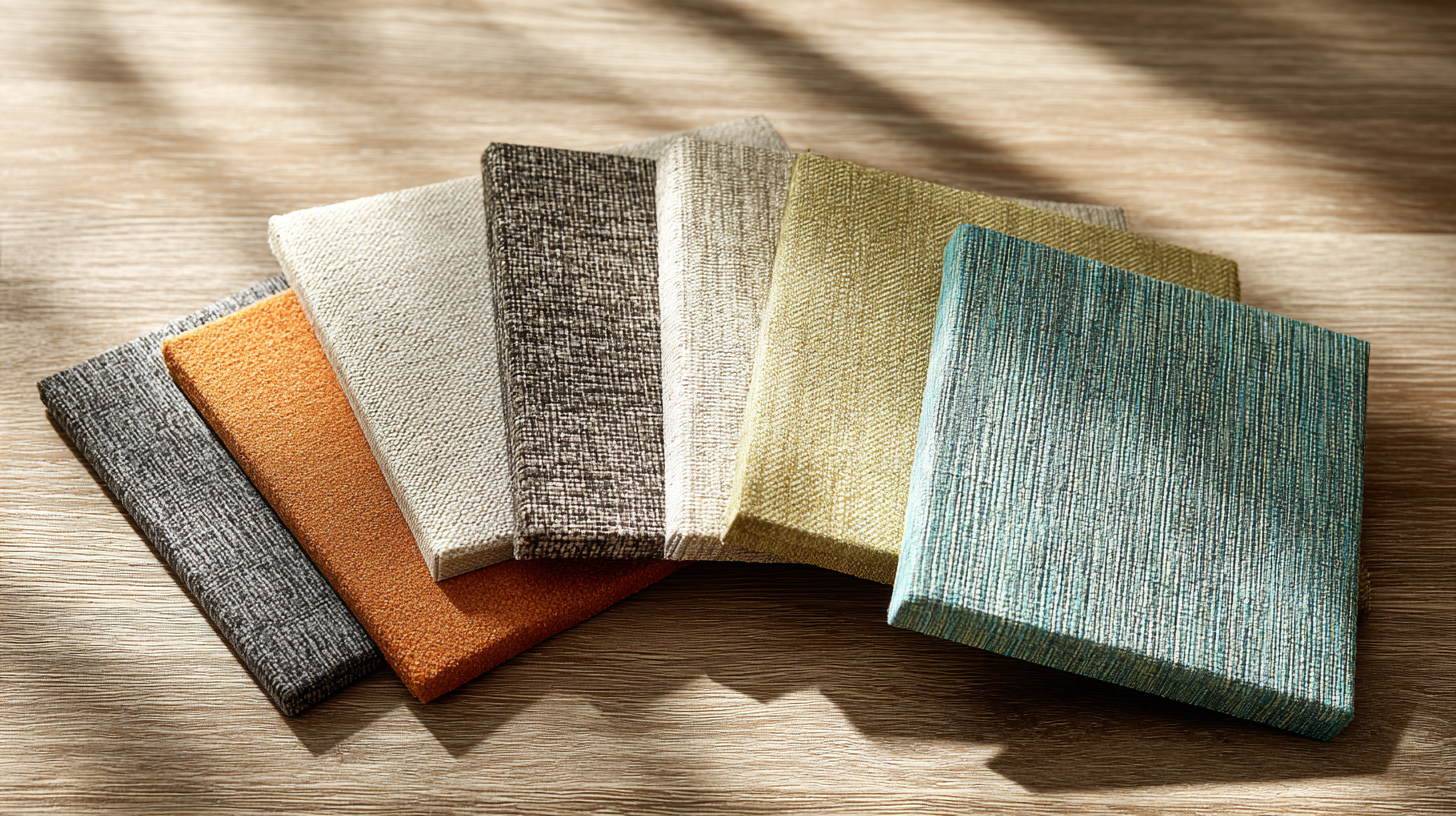
Several fabric types are acoustically opaque - they reflect or block sound rather than allowing it to reach the absorptive core. Using these fabrics reduces panel NRC by 0.15-0.40 regardless of core material, thickness, or installation method.
Canvas and duck cloth are tightly woven cotton fabrics with thread counts of 300-600 per inch. They are commonly used in DIY projects for their low cost and durability, but their dense structure blocks high-frequency sound absorption and significantly reduces mid-frequency absorption. A mineral wool panel rated NRC 0.85 covered with canvas typically measures NRC 0.50-0.65.
Vinyl and faux leather are completely acoustically opaque. They reflect virtually all sound that strikes the panel surface. A panel covered in vinyl functions as a sound-reflective surface, not an absorber - the opposite of its intended purpose.
Decorative upholstery and drapery fabrics vary widely, but most are woven tightly enough to be acoustically problematic. Velvet, chenille, brocade, and jacquard fabrics are consistently poor performers for acoustic panels regardless of appearance.
The most common DIY mistake is selecting fabric based on color or texture without testing acoustic transparency. A fabric that looks thin and open can still be acoustically opaque if the weave is tight. The candle test described in the following section takes less than 30 seconds and prevents this error.
Acoustic Panel Fabric Comparison Table
The table below compares the four primary fabric categories by acoustic transparency, fire rating, typical cost, and best application:
|
Fabric Type |
NRC Reduction |
Fire Rating |
Cost per Yard |
Best Application |
|
Guilford of Maine FR701 |
0.02-0.05 |
ASTM E84 Class A |
$8-$14 |
Commercial: offices, healthcare, studios |
|
Polyester (fire-treated) |
0.03-0.08 |
Class A or B |
$5-$10 |
Commercial budget, DIY with code compliance |
|
Polyester (untreated) |
0.03-0.08 |
None |
$3-$8 |
Residential DIY only |
|
Natural Wool / Wool-blend |
0.02-0.06 |
Class A (natural) |
$25-$60 |
High-end commercial, hospitality |
|
Stretch (polyester-spandex) |
0.04-0.10* |
Varies |
$8-$18 |
Fabric track systems, curved panels |
*NRC reduction for stretch fabrics measured in installed (tensioned) state.
For commercial installations in the US, FR701 or fire-treated polyester covers the majority of applications at the best cost-to-performance ratio. Wool is the correct choice when premium aesthetics are required, and the budget allows. Stretch fabric is specified when the installation method or panel geometry requires it.
How to Test Any Fabric for Acoustic Transparency
Acoustic transparency can be verified with two simple tests that require no equipment and take under one minute.
Test 1 - Candle flame test
Hold a lit candle approximately 6 inches from one side of the fabric. Blow a short, sharp breath from the other side. If the candle flame moves, the fabric allows air - and sound - to pass through. If the flame is unaffected, the fabric is acoustically opaque and should not be used for acoustic panels.
Test 2 - Breath resistance test
Hold the fabric flat against your lips and attempt to breathe through it normally. Acoustically transparent fabric offers minimal resistance - breathing through it feels similar to breathing through open air. If you feel significant resistance or must force air through, the fabric will block sound.
Both tests are qualitative, not quantitative. They reliably distinguish acoustically transparent from acoustically opaque fabrics in field conditions. For professional commercial installations where NRC compliance must be documented, air flow resistance measurement in MKS Rayls is the correct verification method, performed in an acoustics laboratory or with a handheld flow resistance meter.
A fabric that passes both informal tests and has a thread count below 200 per inch in each direction will perform acceptably for acoustic panel applications. A fabric that fails either test should be rejected regardless of appearance.
Choosing the Right Fabric for Acoustic Panels
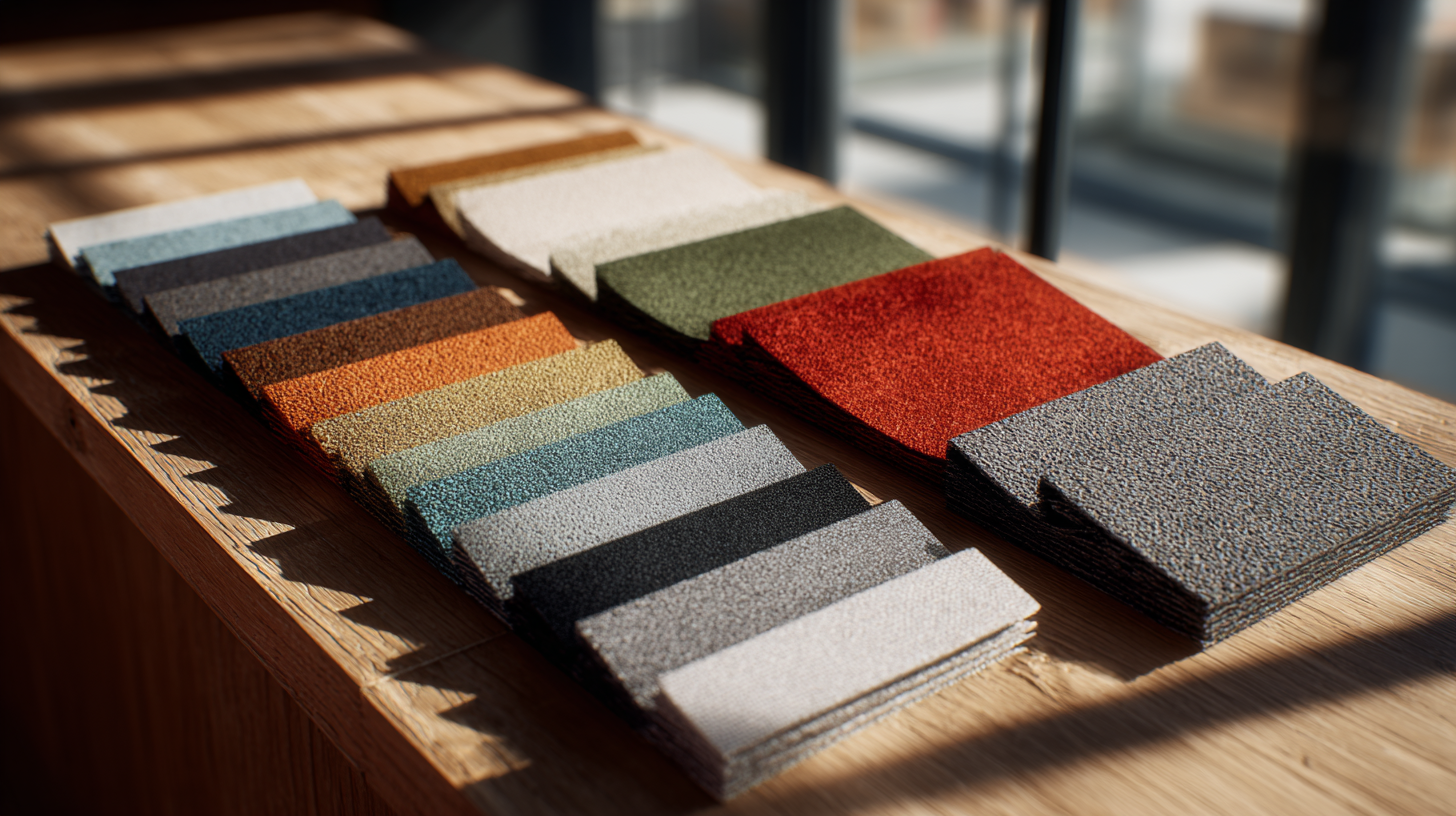
The correct fabric for acoustic panels is determined by three factors: acoustic transparency, fire rating requirement, and budget. For commercial installations, Guilford of Maine FR701 or fire-treated polyester with ASTM E84 Class A rating covers the majority of applications. For high-end interiors where aesthetics are the priority, natural wool blends provide equivalent acoustic performance with a premium appearance. For DIY residential panels, any polyester fabric that passes the candle test and has a thread count below 200 per inch performs adequately.
The single most important rule: verify acoustic transparency before purchasing. A fabric that blocks sound turns an acoustic panel into a sound-reflective surface - the candle test takes 30 seconds and prevents the most common and costly mistake in acoustic panel construction.