Fence Soundproofing
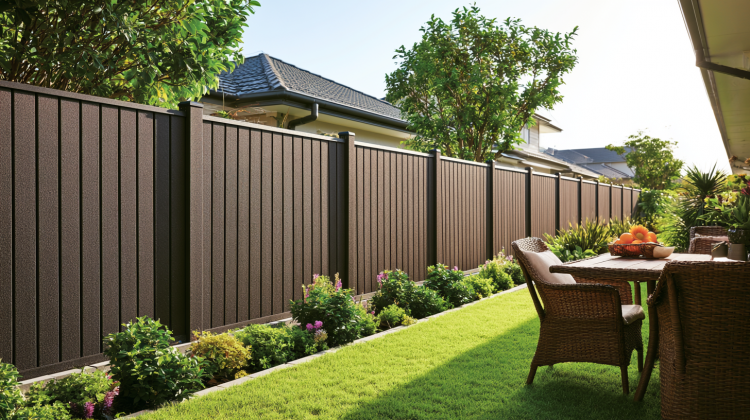
Fence soundproofing is the process of reducing the amount of outdoor noise that passes over and through a boundary fence by adding dense mass to the structure, sealing gaps, and increasing its effective height. It targets noise from road traffic, neighbors, pool and HVAC equipment, and commercial yards.
Fence soundproofing reduces sound rather than eliminating it. A well-built acoustic fence lowers perceived noise at the property line by roughly 6-12 dB when it fully blocks the line of sight between the noise source and the listener.
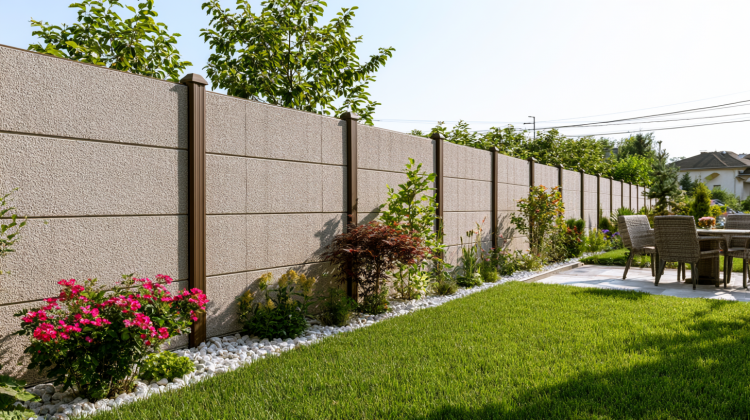
Reduce Outdoor Noise with Fence Soundproofing
Fence soundproofing solves a specific problem: a standard fence marks a boundary but does little to stop sound, because sound is controlled by mass and airtightness, not by visual privacy. Most residential fences are too light and too full of gaps to block meaningful noise.
The most common noise sources it addresses are steady traffic, HVAC condensers and pool pumps, barking dogs, and activity from adjacent commercial or industrial lots. Each of these carries different frequencies, which is why the right treatment depends on the noise, not just the fence.
A realistic outcome is a noticeable drop in loudness, not silence. A reduction of about 10 dB is perceived by the human ear as roughly half as loud, which is why even a 6-12 dB improvement changes how a yard feels.
How Fence Soundproofing Works
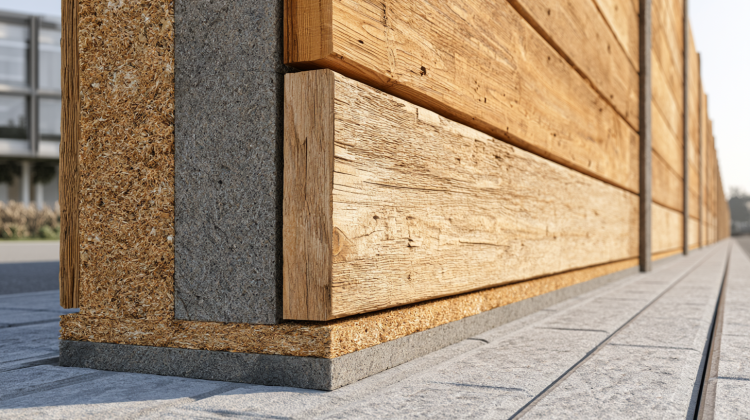
Fences let noise through for three reasons: low mass, open gaps, and insufficient height. Thin wood, chain-link, and hollow vinyl have too little mass to block sound; gaps between boards and under the fence let sound leak directly, and a fence shorter than the line of sight lets sound travel straight over the top.
Fence soundproofing works by correcting all three at once through three levers.
The first lever is mass. Heavier, denser barriers block more sound, and roughly doubling the mass of a barrier surface adds several decibels of attenuation at a given frequency.
The second lever is airtightness. Any gap acts as a direct sound path, so sealing the bottom, the posts, and the joints between panels is as important as the material itself.
The third lever is height and line of sight. A barrier only performs when it blocks the direct line between the source and the listener, and raising the effective height adds attenuation because sound must bend farther over the top.
Our Fence Soundproofing Services
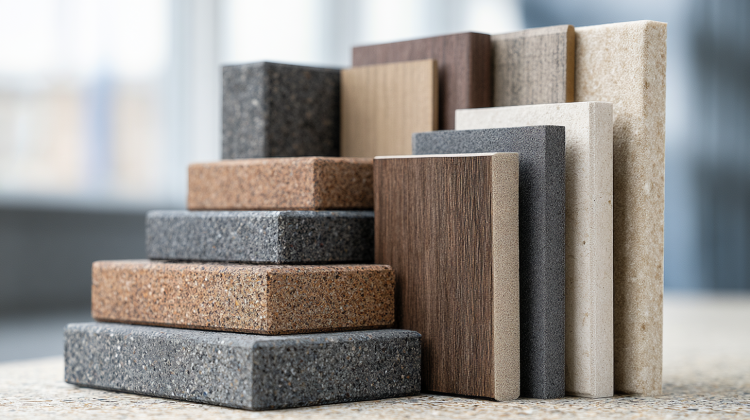
Our fence soundproofing services cover both retrofits of existing fences and the construction of full acoustic barriers, matched to the noise type and the target reduction. Each option below reflects a different balance of performance, cost, and site conditions.
Mass-Loaded Acoustic Fence Panels
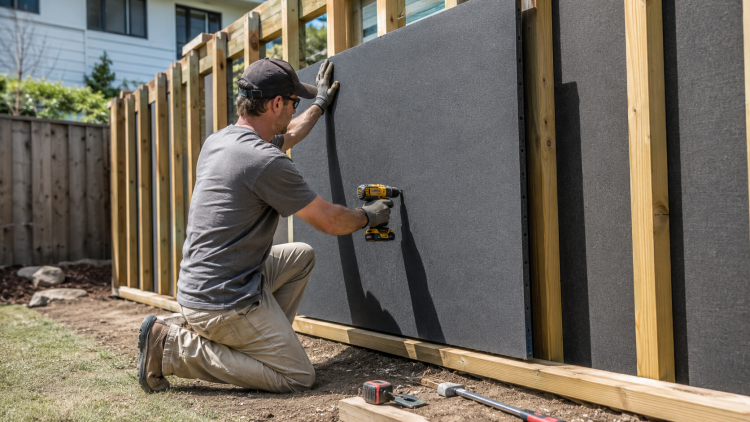
Mass-loaded acoustic panels are flexible, dense barrier materials rated for outdoor use, typically achieving STC 27-32 and roughly 24 dBA of attenuation at 100 Hz. They mount to an existing fence frame or chain-link fence to add the mass a standard fence lacks, and they also block visual privacy.
Existing Fence Retrofit and Gap Sealing
A retrofit upgrades an existing fence by adding a mass layer and sealing every acoustic leak. This is the most cost-effective option when the fence structure is sound and only its acoustic performance needs improvement.
Acoustic Barrier Wall Installation
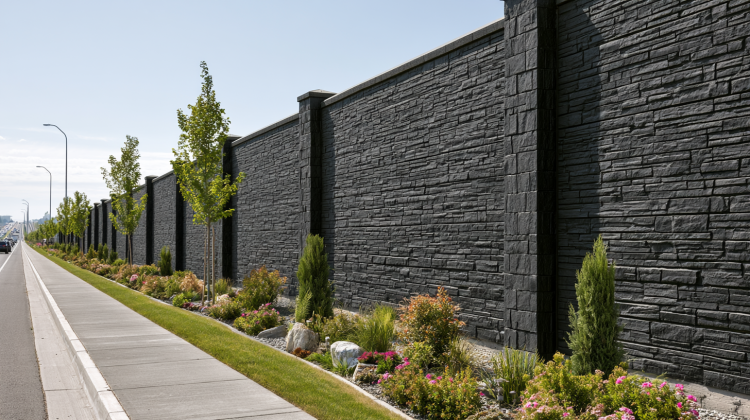
An acoustic barrier wall made of masonry or a dense composite delivers the highest noise reduction of any fence-type solution due to its mass and rigidity. It is the appropriate choice for severe traffic exposure or commercial noise sources where panels alone are not enough.
Combined Barrier and Absorptive Treatment
Combined treatment pairs a solid barrier with sound-absorptive facing on the source side to reduce reflections. It is used where hard surfaces such as walls or pavement bounce sound around a yard, and a barrier alone would leave an echo.
Why Choose Our Fence Soundproofing Company
Effective fence soundproofing depends on matching the barrier's mass, height, and sealing to the measured noise, and on setting an honest target for how much reduction is achievable on-site.
Licensed Installers with Decades of Acoustic Experience
Our installers are licensed and have spent decades on soundproofing and acoustic projects across residential and commercial properties. That experience covers exterior barriers as well as interior soundproofing, so the fence solution is designed with correct acoustic principles rather than guesswork.
Realistic dB Targets, Not Overpromises
We specify a target decibel reduction based on the fence type, noise source, and site geometry before work begins. Setting a measurable goal prevents the common problem of a "soundproof" fence that looks solid but underperforms because gaps or height were ignored.
In-House Manufactured Acoustic Materials
We manufacture acoustic materials in New York City and select the barrier product to suit each project, rather than forcing a single product on every job. This control over materials lets us match STC performance to the noise level at hand.
NYC-Metro Installation and Nationwide Material Shipping
We install fence soundproofing throughout the New York City metro area and ship acoustic barrier materials nationwide for projects outside our installation radius. This gives homeowners and contractors access to the same materials whether we install them or not.
Our Fence Soundproofing Process
Our process moves from measurement to verified result in four stages, so the barrier is designed for the actual noise rather than assumed conditions.
On-Site Noise and Fence Assessment
We measure the noise at the property line and inspect the existing fence for mass, gaps, and height. This establishes the baseline decibel level and identifies the dominant frequencies to block.
Barrier Design and STC Target Selection
We select the material and design the barrier to hit a defined STC and height target for the site. The design accounts for line of sight, so the finished barrier interrupts the direct sound path.
Installation and Gap Sealing
We install the barrier and seal every acoustic leak at the base, posts, and panel joints. Sealing is treated as a core step because an unsealed gap undermines even a high-mass barrier.
Verification and Sound Measurement
We measure noise at the property line after installation and compare it to the baseline. This confirms the real-world reduction achieved rather than relying on a material's lab rating alone.
How Much Noise Reduction to Expect
Fence soundproofing reduces noise by a measurable amount, but the result depends on material mass, gap sealing, height, and distance, not on the word "soundproof." Understanding the ceiling of what a fence can do prevents disappointment.
A solid, well-sealed barrier that blocks the line of sight typically achieves a perceived reduction of about 6-12 dB at the property line. Because a 10 dB drop sounds roughly half as loud, that range represents a clearly audible improvement.
Low-frequency noise is the hardest to block. Traffic rumble and large equipment produce long sound waves that bend around and over barriers, so a fence reduces this noise less than it reduces higher-pitched sounds like voices or barking.
STC ratings are a useful comparison tool, but an indoor lab metric. Outdoor performance is always lower than the lab number because of diffraction over the top of the fence, ground reflections, and any remaining gaps.

Schedule Your Fence Soundproofing Today
Fence soundproofing starts with an on-site noise assessment that establishes a realistic reduction target for your property. From there, we design, install, and verify a barrier matched to your specific noise source.
📞 Call Now to book your assessment, or Request Your Free Quote to get a fence soundproofing plan for your property.
FREQUENTLY ASKED QUESTIONS
Will a soundproof fence block traffic noise?
It reduces traffic noise but does not remove it. Low-frequency traffic rumble diffracts over and around barriers, so a fence lowers the sharper components of traffic noise more than the deep rumble.
Does fence height affect noise reduction?
Yes. A barrier only works when it blocks the direct line of sight between the noise source and the listener. Increasing effective height forces sound to bend farther over the top, which adds attenuation.
Can I soundproof an existing fence without replacing it?
Yes, if the existing fence is structurally sound. A retrofit adds a mass-loaded layer and seals gaps at the base, posts, and joints, upgrading acoustic performance without full replacement.
What is the best material to soundproof a fence?
Dense, high-mass materials perform best. Mass-loaded acoustic panels (around STC 27-32) work well as retrofits, while a masonry or dense composite barrier wall provides the highest reduction where noise exposure is severe.
How much noise can a soundproof fence block?
A well-built acoustic fence that fully blocks the line of sight usually cuts perceived noise by roughly 6-12 dB. Since a 10 dB reduction sounds about half as loud, this is a clearly audible change, though the exact result depends on height, mass, and sealing.
Does soundproofing a fence actually work?
Yes, within limits. Adding mass, sealing gaps, and blocking the line of sight reduce perceived noise at the property line, typically by about 6-12 dB. It lowers loudness noticeably but does not create silence.

New York's Soundproofing Experts
We specialize in creating highly-customized sound environments such as home offices, recording studios, home studios and music rooms, conference & teleconference rooms, bars and clubs, offices, restaurants, temples, churches, school auditoriums and much more.