
HVAC Soundproofing in New York City
HVAC soundproofing is the process of reducing the noise an HVAC system sends into living and working spaces. It addresses two separate paths: airborne noise that travels through ductwork and air openings, and structure-borne vibration that the equipment transmits through floors, walls, and ceilings.
New York Soundproofing diagnoses, treats, and tests HVAC noise across New York City, including ductwork lining, equipment vibration isolation, and mechanical room treatment, with virtual consultations and nationwide product shipping for clients outside the metro area.
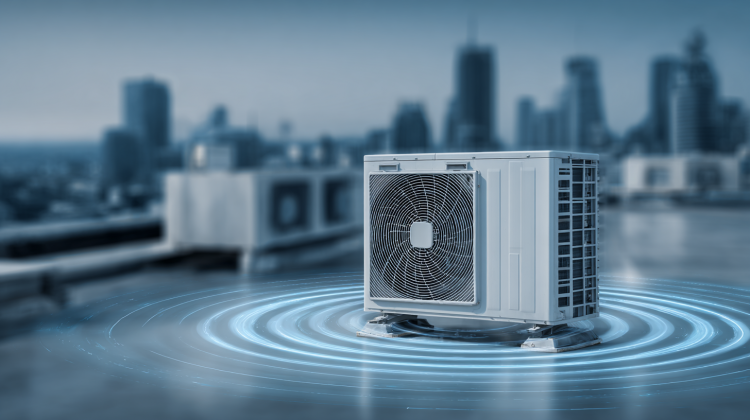
What HVAC Soundproofing Involves
HVAC soundproofing reduces system noise by controlling both the airborne and the structure-borne paths through which that noise reaches a room.
Airborne noise is the sound carried by moving air and through duct openings - the hum, hiss, and airflow noise you hear from vents. It is treated by lining ducts, adding mass to duct walls, and using baffles or silencers.
Structure-borne noise is vibration from the equipment itself, transmitted through the building's structure to surfaces that then radiate sound. It is treated by isolating the equipment with springs, pads, or isolation hangers so the vibration never reaches the structure.
Most HVAC noise problems involve both paths, which is why treating only one - for example, lining ducts while ignoring equipment vibration - often leaves the room nearly as noisy as before.
Common Sources of HVAC Noise
HVAC noise comes from specific points in the system, and identifying the source determines the correct treatment. The main sources are below.
The condenser or compressor - usually the outdoor unit - produces low-frequency hum and mechanical noise that travels both through the air and into any structure it is mounted on. Outdoor units near windows or shared walls are a frequent source of complaint.
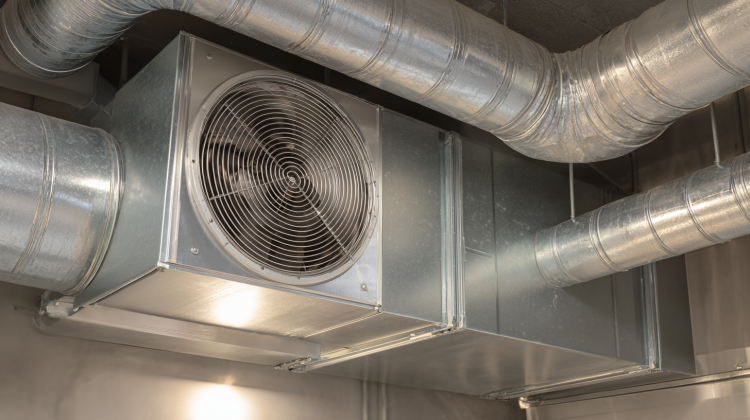
The blower or air handler generates noise at the point where air enters the duct system. This noise then enters the ductwork and travels to every vent the duct serves.
Ductwork acts as the distribution path for noise. Air movement, turbulence at bends, and sound traveling along the metal carry noise from the equipment to rooms far from the unit, and rigid ducts also transmit vibration.
Structure-borne vibration occurs when equipment is bolted directly to floors, slabs, or framing. The vibration travels through the structure and is re-radiated as sound by walls, ceilings, and floors elsewhere in the building.
Our HVAC Soundproofing Services
Effective HVAC noise control requires treating the air path, the vibration path, and the room housing the equipment. We provide each of the following as a standalone service or as part of a complete treatment.
Ductwork Soundproofing & Acoustic Duct Lining
Ductwork is the main route HVAC noise takes to reach occupied rooms. We line ducts with acoustic duct liner to absorb sound traveling inside them, add mass to duct walls where needed, and use lined bends and baffles, since each 90-degree turn in a lined duct reduces the noise that passes through it.
Vibration Isolation for HVAC Equipment
Vibration isolation stops equipment noise from entering the building structure. We mount units on spring isolators, isolation pads, or isolation hangers so the vibration is decoupled from floors and framing rather than transmitted through them - the step DIY product kits most often miss.
Mechanical & Equipment Room Soundproofing
Mechanical and equipment rooms concentrate HVAC noise in one space, which then leaks to adjacent areas. We treat the room's walls, ceiling, door, and any duct penetrations to contain the noise at its source instead of chasing it room by room.
Outdoor Unit & Condenser Noise Control
Outdoor condensers and compressors produce noise that affects nearby windows, walls, and neighboring properties. We control it with sound barriers, equipment enclosures, and mass-loaded materials that block the airborne noise without restricting the airflow the unit needs to operate.

Why Choose Our NYC HVAC Soundproofing Company
What sets our HVAC work apart is that we treat the airborne and structure-borne noise paths together, so the system is quieter in the room rather than only on paper. The points below explain what that means for your project.
Certified Technicians with 10+ Years of Experience
Our technicians have over a decade of field experience in mechanical and HVAC noise control. They locate the actual source of the noise before treating anything, which avoids the common mistake of lining ducts when the real problem is equipment vibration.
Airborne + Structure-Borne Noise Handled Together
We address both the air path and the vibration path in one project. This prevents the typical outcome of a treated duct or an enclosed unit that stays noisy because the vibration through the structure was never isolated.
Trusted by Leading NYC Brands & Institutions
Organizations including Sony, Microsoft, Uber, NYU, and The Met have chosen us for their acoustic projects. This record reflects consistent results in buildings where mechanical noise affects occupants and operations.
On-Site & Virtual Consultations Nationwide
We provide free on-site assessments throughout the greater NYC area and virtual consultations for clients elsewhere. Our soundproofing products ship nationwide, so projects outside New York can apply the same solutions with remote guidance.

Our HVAC Soundproofing Process
Our process starts by measuring the noise and identifying its source, so each treatment targets the real problem instead of applying a generic fix.
Step 1: Noise Source Assessment & Measurement
We inspect the system on-site or virtually and measure the noise to determine whether it is airborne, structure-borne, or both, and to identify its source. This step decides which treatments are required.
Step 2: Custom Solution & Written Proposal
We prepare a written solution specifying the duct treatment, vibration isolation, room treatment, or outdoor measures needed, with materials, expected results, and budget. You see the full plan before any work begins.
Step 3: Installation (Lining, Isolation, Enclosures)
We install the duct lining, vibration isolators, mechanical room treatment, and outdoor enclosures as specified, without restricting the airflow the system needs to run correctly. Work is scheduled to limit disruption.
Step 4: Final Testing & Follow-Up
After installation, we measure the result against the original readings to confirm the noise reduction. We also offer follow-up support and maintenance to keep the treatment effective over time.

Schedule Your HVAC Soundproofing Assessment Today
Get a free assessment of your HVAC noise problem and a written plan that treats both the airflow and the vibration causing it. We serve all of New York City and ship our soundproofing products nationwide.
📞 Call Now - (877) 999-2201 | Request Your Free Quote
FREQUENTLY ASKED QUESTIONS
How much does HVAC soundproofing cost?
The cost depends on the noise source, the length of ductwork treated, whether vibration isolation or a mechanical room treatment is required, and the materials used. A written proposal after the assessment gives an accurate figure for your specific system.
Is HVAC noise airborne or structure-borne?
It is usually both. Airflow and duct-borne sound are airborne, while equipment vibration through the building is structure-borne. Lasting quiet usually requires treating both paths, which is why diagnosing the source first is essential.
How do you reduce outdoor AC or condenser noise?
Outdoor unit noise is controlled with sound barriers, equipment enclosures, and mass-loaded materials placed to block the airborne noise while leaving the required airflow and service access. Vibration isolation is added if the unit is mounted on a structure that transmits its hum.
Can you soundproof an HVAC unit without reducing airflow?
Yes. Properly designed treatments - acoustic duct liner, lined baffles, vibration isolators, and ventilated enclosures - reduce noise while preserving the airflow and clearance the system needs. Restricting airflow would harm performance, so treatments are selected to avoid it.
Why does my HVAC vibrate through the walls or floor?
This is structure-borne noise, caused by equipment bolted directly to the building structure. The vibration travels through floors and framing and is re-radiated as sound elsewhere. It is fixed by isolating the equipment with springs, pads, or isolation hangers, not by treating the ducts.
How do you quiet noisy ductwork?
Line the inside of the ducts with acoustic duct liner to absorb traveling sound, add mass to thin duct walls, and use lined 90-degree bends or a baffle box. Each 90-degree turn in a lined duct reduces the noise that passes through while still allowing air to flow.

New York's Soundproofing Experts
We specialize in creating highly-customized sound environments such as home offices, recording studios, home studios and music rooms, conference & teleconference rooms, bars and clubs, offices, restaurants, temples, churches, school auditoriums and much more.