
Micro Perforated Acoustic Panel Installation Services
New York Soundproofing provides micro perforated acoustic panel installation for ceilings and walls in offices, lobbies, restaurants, auditoriums, and homes. These panels look like a smooth wood, metal, or gypsum finish, yet thousands of tiny holes let sound pass into an absorptive layer behind the face. We measure the room, select the system, install it, and measure again, so you get one contractor responsible for both the finish and the acoustics.
Our crews work across New York City, New Jersey, Greater Philadelphia, and Chicago, and we ship panels nationwide. Every project starts with a free on-site assessment and a written quote.
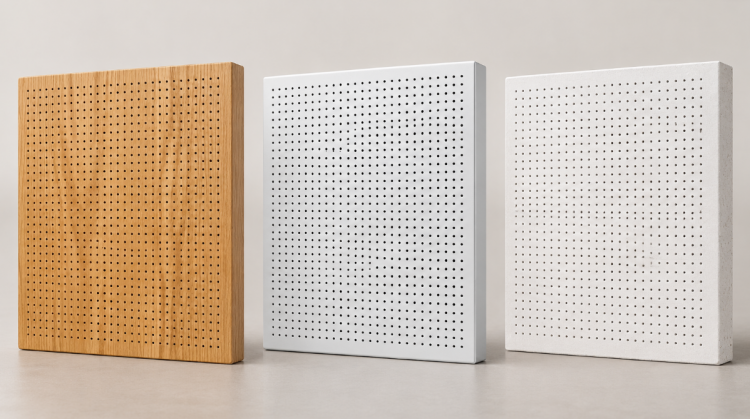
Micro Perforated Panel Systems We Install
Perforated acoustic panels come in three main materials, and each one suits different rooms. We choose the material based on how the space should look, how much moisture and wear it sees, and whether the panels go on a ceiling, a wall, or both.
Micro Perforated Wood Panels
Micro perforated wood panels use a veneer face with holes around 0.5 mm across. From a normal viewing distance the surface reads as solid wood, which is why architects choose them for lobbies, boardrooms, and high-end residences. Manufacturers back the panels with acoustic fabric, and ceiling systems can take extra acoustic infill for more absorption. We install perforated wood panels and acoustic wood ceiling panels in flat runs, as feature walls, and as full ceilings.
Perforated Metal Acoustic Panels
Perforated metal acoustic panels are made from aluminum or steel, usually with a powder-coated finish and a sound-absorbing layer behind the face. Metal handles moisture well, and stainless steel is an option for humid rooms, so these panels work in pools, commercial kitchens, transit areas, and other spaces where wood would struggle. Perforated metal ceiling panels and tiles are also a common choice for corridors and open offices with heavy foot traffic.
Perforated Gypsum Boards
Perforated gypsum board looks like a standard drywall ceiling with a regular pattern of holes, backed by an acoustic layer. It suits rooms where the design calls for a plain painted ceiling, such as classrooms, offices, and public buildings. We install perforated drywall on ceilings and walls and plan the board layout so the perforation pattern stays aligned across joints.
Micro Perforated Stretch Ceilings
Stretch ceiling membranes are also available with micro perforation. The membrane is tensioned across a perimeter frame and works with an absorptive layer above it, which makes it an option for large ceilings that need to look seamless. We'll tell you during the assessment whether an acoustic stretch ceiling or panels make more sense for your room.

Why Choose Us as Your Micro Perforated Panel Contractor
We've spent more than 20 years improving the sound of offices, studios, restaurants, schools, and homes. A micro perforated panel only performs as well as the system behind it, so we treat the backing, the air gap, and the mounting as part of the job, along with the visible face. Our team measures reverberation with calibrated equipment before work starts and again after the last panel goes up.
Perforated panels often share a ceiling with lighting, sprinklers, and ductwork. We coordinate with your general contractor, electrician, and mechanical trades so cutouts, access panels, and fixtures are planned before installation. We also install fabric panels, felt, acoustic plaster, and soundproofing systems, so if perforated panels aren't the right fit for your space, we'll recommend what is.

Where Micro Perforated Panels Work Best
Micro perforated panels earn their place in rooms where the finish matters and hard surfaces make speech hard to follow. Many of these spaces also need noise blocked between rooms, which is a separate job:
Conference rooms and boardrooms
A wood ceiling or wall keeps the room looking formal while making speech clearer. For private discussions, add conference room soundproofing.
Open offices
Perforated metal or gypsum ceilings cut reflected conversation across a floor, and office soundproofing handles noise coming through walls and doors.
Lobbies and corridors
Durable metal or wood panels control echo in high-traffic areas, while commercial soundproofing covers noise across the wider building.
Restaurants and hospitality venues
Panels lower background noise during busy service. If sound reaches neighbors, look at restaurant soundproofing.
Auditoriums, churches, and classrooms
Treated ceilings help listeners follow speech and music. See church soundproofing and classroom soundproofing for noise from outside the room.
Indoor pools
Moisture-tolerant metal panels reduce the echo that builds up over water, and indoor pool soundproofing addresses noise traveling to other areas.
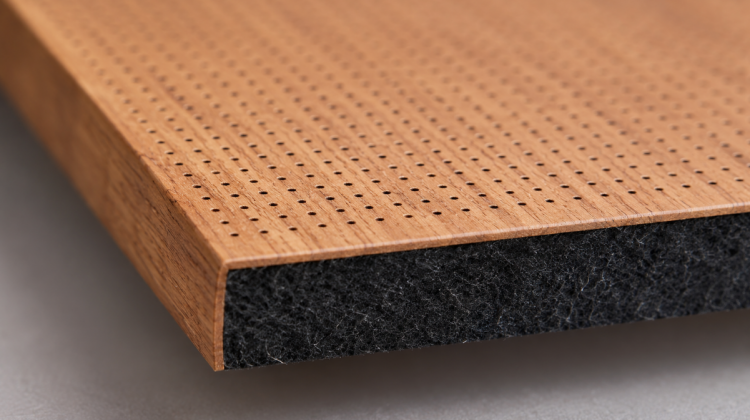
How Micro Perforation Absorbs Sound
The holes in a micro perforated panel do the visible work, but absorption happens behind the face. Understanding this explains why two panels with the same finish can perform very differently once installed.
Hole Size and Panel Backing
Sound passes through the perforations and loses energy as it moves through the absorptive layer behind the panel, typically acoustic fabric, mineral wool, or fiberglass. On micro perforated wood ceiling systems, one major manufacturer publishes a Noise Reduction Coefficient (NRC) of 0.70 with standard backing and up to 0.85 with optional acoustic infill. The backing you choose sets the ceiling on what the panel can achieve.
Why the Air Gap Behind the Panel Matters
The space between the panel and the wall or deck adds to the absorption. Manufacturers recommend leaving roughly 30 to 40 mm behind panels for the highest absorption classes. When we plan the mounting method, we account for that depth, because a panel fixed flat with no cavity absorbs less than the same panel spaced away.
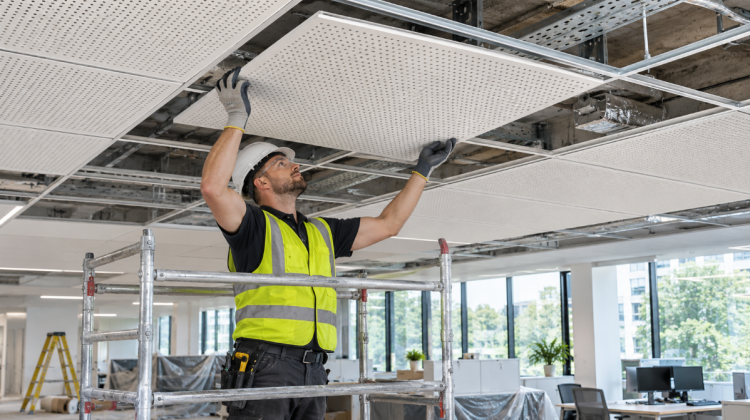
Ceiling and Wall Mounting Options
The mounting method affects absorption, appearance, and how easily you can reach services above the ceiling later. We base the choice on the structure, the room's height, and what has to stay accessible.
Suspended Grid Ceilings
Many perforated acoustic ceiling panels drop into a standard suspended grid. It's a practical route for offices and schools, since the grid already gives access to the plenum and the cavity above adds absorption.
Direct-to-Deck and Concealed Ceiling Systems
When the design calls for a continuous ceiling without a visible grid, panels can mount directly to the deck or to a concealed framing system. We map lights, sprinklers, diffusers, and access points before the framing goes up so the panel layout works around them.
Wall Panels With Concealed Fasteners
Wall panels typically hang on aluminum mounting profiles with hidden fasteners. Some systems use tongue-and-groove edges, which hide the joints and give a wall the look of a single surface.
Curved and Custom Panels
Some manufacturers produce flat and curved micro perforated wood panels for custom ceilings and walls. Curved work takes longer to detail and fabricate, so we confirm the geometry and lead times during design.
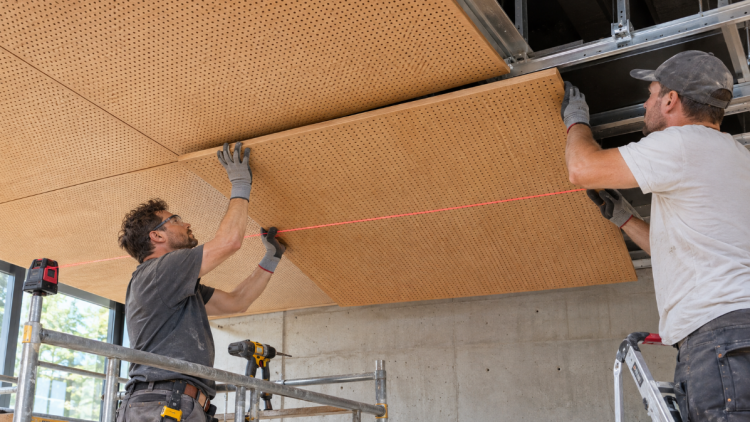
Our Micro Perforated Panel Installation Process
Each project moves through five stages. The sequence keeps the design tied to measured results and helps us avoid rework on site.
Site Assessment and Sound Measurements
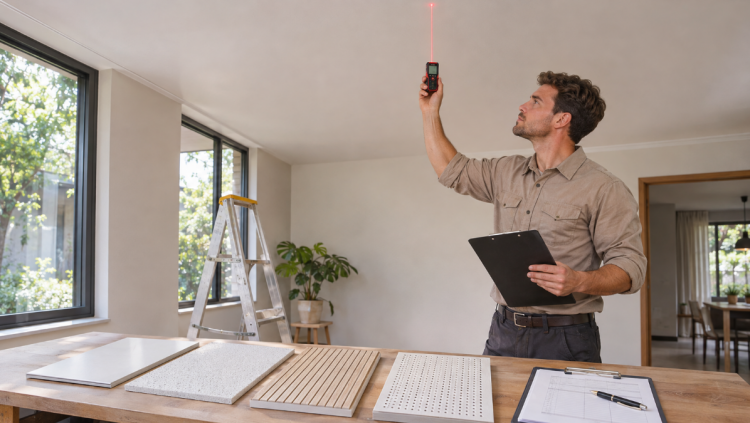
We visit the space, measure its current reverberation, and inspect the ceiling, walls, and structure. We also note lighting, sprinklers, ducts, and anything else the panels have to work around.
Material and System Selection
Based on the measurements, we choose the material, perforation pattern, backing, and cavity depth that will reach the target performance. Moisture, impact, and the look of the room all factor into whether wood, metal, or gypsum is the better choice.
Substrate and Framing Preparation
The grid or framing has to be level and securely anchored before panels go up. Wet trades should be finished, and we confirm conditions with your general contractor before scheduling our crew.
Installation
Our installers set the panels, keep the perforation pattern and joints aligned, and cut openings for fixtures. In occupied buildings, we plan the work around your hours.
Final Measurement
We test the room again with the same equipment and compare the results with the original assessment, so the improvement in reverberation is documented.
Micro Perforated Panel Installation Cost – What Affects Your Quote
We price each project individually because material, mounting, and site conditions change the amount of work involved. These factors have the most effect on the final number.
|
Factor |
How it changes the quote |
|
Material |
Wood veneer, metal, and gypsum systems differ in material cost and installation time |
|
Total area |
More coverage means more panels and labor, and partial coverage can reduce both when the room allows it |
|
Mounting method |
Concealed framing and direct-to-deck systems take more preparation than panels set into an existing grid |
|
Backing and infill |
Higher absorption targets call for thicker backing or added acoustic infill |
|
Ceiling height and access |
High ceilings may require lifts or scaffolding |
|
Curves and custom sizes |
Curved panels and custom cuts add fabrication and detailing time |
|
Schedule |
After-hours work in occupied buildings affects how the crew plans the job |
You'll receive a written quote after the on-site assessment, once the system and scope are clear.

Request a Micro Perforated Panel Installation Quote
Planning a wood ceiling, a perforated metal ceiling, or a treated feature wall? Call (877) 999-2201 or fill out the form below to book a free on-site assessment and receive a written quote for your micro perforated acoustic panel installation.
FREQUENTLY ASKED QUESTIONS
How long does installation take?
The schedule depends on the material, the area, the mounting system, and ceiling height. Curved or custom panels add fabrication time. We confirm the timeline in your written quote.
Do the panels need insulation behind them?
Yes. The panels rely on an absorptive layer such as acoustic fabric, mineral wool, or fiberglass, and an air gap behind the face. Without them, a perforated panel absorbs much less sound.
Can micro perforated panels go into an existing drop ceiling grid?
Many ceiling panels are made to fit a standard suspended grid. We check the grid's condition, layout, and load capacity during the assessment before confirming this option.
Should I choose wood, metal, or gypsum panels?
Metal suits humid rooms and areas with heavy wear. Wood works well where the finish is a design feature, though it needs moisture-resistant treatment in damp spaces. Gypsum fits rooms that call for a plain painted ceiling. We'll recommend a material after seeing the space.
Can you see the perforations?
On micro perforated wood panels, the holes are around 0.5 mm across and become hard to see from a normal viewing distance. Standard perforated metal and gypsum panels use larger holes that stay visible as a pattern.
Do micro perforated panels soundproof a room?
No. Micro perforated panels absorb sound inside a room and reduce echo, but they don't stop noise from passing through walls, floors, or ceilings. If you need to keep sound in or out, ask us about soundproofing.
How much does micro perforated acoustic panel installation cost?
Cost depends on the material, area, mounting method, backing, ceiling height, and any custom shapes. We provide a written quote after visiting the space and confirming the scope.

New York's Soundproofing Experts
We specialize in creating highly-customized sound environments such as home offices, recording studios, home studios and music rooms, conference & teleconference rooms, bars and clubs, offices, restaurants, temples, churches, school auditoriums and much more.