

To reduce HVAC noise, first work out where the sound starts. A rattling blower, a whistling vent and a humming outdoor compressor each need a different fix. Many noise problems come from maintenance issues such as a clogged filter or a loose panel, and those are the cheapest to solve. After that, isolating vibration, lining or treating ductwork, adjusting vents and screening the outdoor unit handle most of what remains. When the equipment runs normally but the sound still travels through the house, soundproofing the mechanical room or closet is the next step.
This guide follows that order, from diagnosis to the fixes that suit each source, for houses, condos and apartments.
Identify Where the Noise Comes From
Good HVAC noise reduction starts with naming the sound. Stand near the indoor unit, then near a few supply vents and returns, then outside by the condenser. Note where the noise is loudest and when it happens: at startup, during the whole cycle or at shutdown.
The table below links common sounds to their usual sources. Use it as a starting point for a conversation with a technician rather than a diagnosis on its own.
|
What you hear |
Likely source |
First step |
|
Rattling or buzzing at the indoor unit |
Loose access panels, screws, or ductwork straps |
Tighten panels and fasteners |
|
Low hum or drone through floors and walls |
Vibration from the blower or compressor reaching the structure |
Check isolation pads and duct connections |
|
Whistling at vents |
High air speed through small, dirty, or partly closed registers |
Replace the filter and open registers fully |
|
Rushing air at every vent |
Blower speed set high or ducts too small for the airflow |
Ask a technician to check airflow and fan speed |
|
Popping or banging in ducts |
Sheet metal ducts expanding and contracting with temperature |
Have ducts inspected and reinforced |
|
Grinding, squealing, or scraping |
Worn motor bearings, belt, or a fan hitting its housing |
Turn the system off and call a technician |
|
Loud hum or clatter outside |
Compressor and fan in the outdoor condenser |
Check the unit's pad, panels and fan |
The table shows something useful about noise reduction in HVAC systems: the fix depends almost entirely on the path the sound takes. Airborne noise from the cabinet, vibration through the frame, and air noise in the ducts all need different treatment.
Start With Maintenance and Simple Repairs
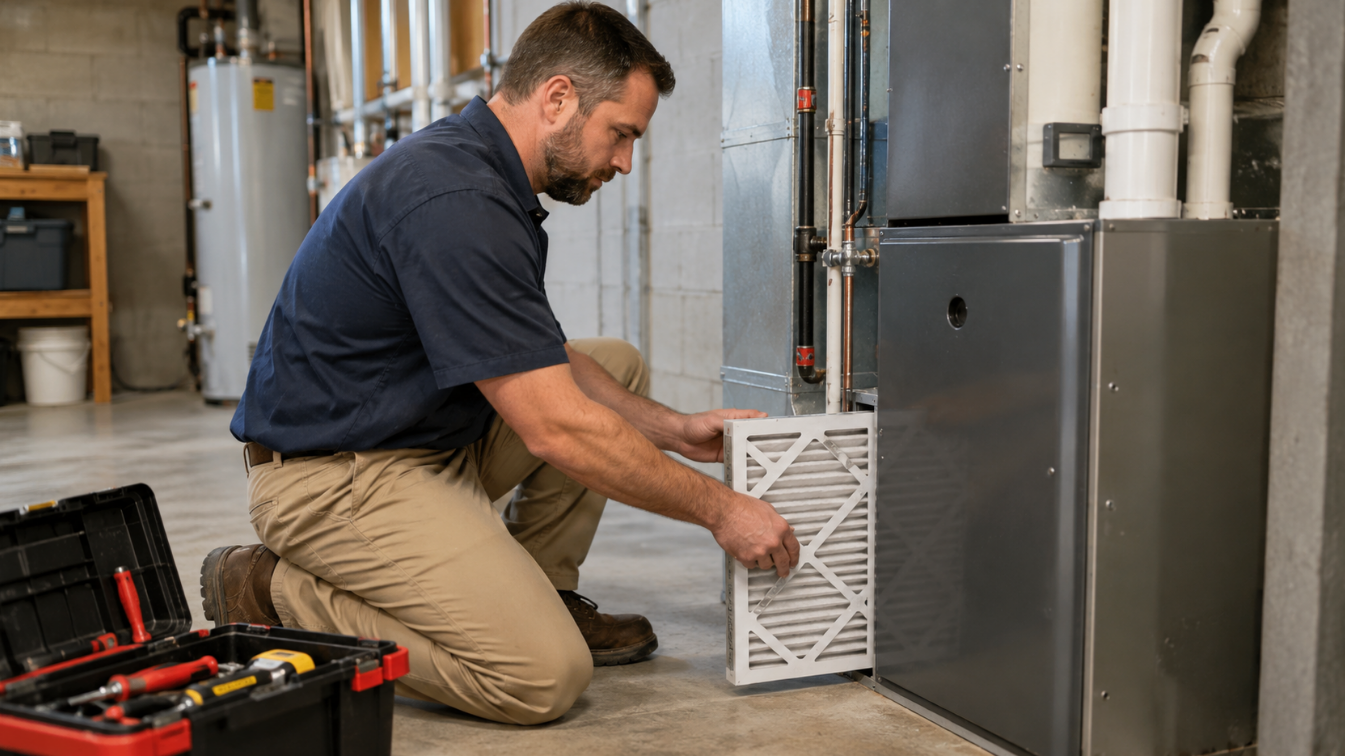
Routine maintenance quiets more systems than any soundproofing product. A clogged filter forces the blower to work against higher resistance, which raises both fan noise and whistling at the vents. Replacing it on schedule is the easiest step in any furnace noise reduction plan.
Loose parts cause a large share of rattles. Access panels, screws, duct hangers and the metal straps that hold ductwork can work loose over time. Each one then becomes a small noise source whenever the blower runs. With the power off at the switch or breaker, tighten what you can reach and add foam weatherstrip where a panel buzzes against the cabinet.
Some furnace blower noise reduction work belongs to a technician. A wheel coated with dust can fall out of balance, and worn bearings or a failing motor produce grinding or squealing that gets worse over time. A technician can clean the blower wheel and check the motor. Where the duct system allows it, they can also set the fan to a lower speed for heating or cooling. Anything involving refrigerant, gas lines or electrical components should go to a licensed professional.
Popping or banging in the ducts usually comes from sheet metal flexing as it heats up and cools down. A technician can stiffen the affected sections, add support or fix undersized returns that make the duct pressure swing.
Quiet the Indoor Unit
Once the equipment is in good order, the next goal is to stop its sound from spreading into living spaces. The indoor unit produces airborne noise from the cabinet and vibration that travels into floors, walls, and ducts. Central air uses the same blower and ducts as the furnace, so these steps also answer how to reduce AC noise inside the house.
Isolate Vibration
Vibration isolation keeps the unit's movement from passing into the structure. Anti-vibration pads made of rubber or cork placed under a furnace, air handler, or heat pump absorb part of the motion before it reaches the floor. Units hung from ceiling joists can use spring or rubber hangers for the same purpose.
The connection to the ductwork matters just as much. A flexible fabric connector between the unit and the main supply and return ducts breaks the metal-to-metal path. Less vibration then travels through the duct system into every room. If you can hear a hum through the walls far from the unit, check this connection first. Pipes and refrigerant lines that touch framing can also carry vibration, and padded clamps solve that.
Soundproof the Closet or Mechanical Room
When an air handler sits in a hallway closet or a utility room next to a bedroom, the room around it becomes the main barrier. A solid-core door with full perimeter seals blocks far more sound than a hollow louvered door. Insulation in the surrounding walls and a second layer of drywall add mass, and an acoustic liner on the inside surfaces cuts echo within the closet.
There's an important limit. Gas furnaces and water heaters need a supply of combustion air, and every system needs a return air path, so a closet can't simply be sealed shut. Lined transfer ducts or acoustically treated grilles let air move while reducing the sound that comes with it. Have an HVAC technician confirm the air requirements before you change a door or close openings. This is a safety matter as well as a comfort one.
Reduce Noise in Ducts and Vents
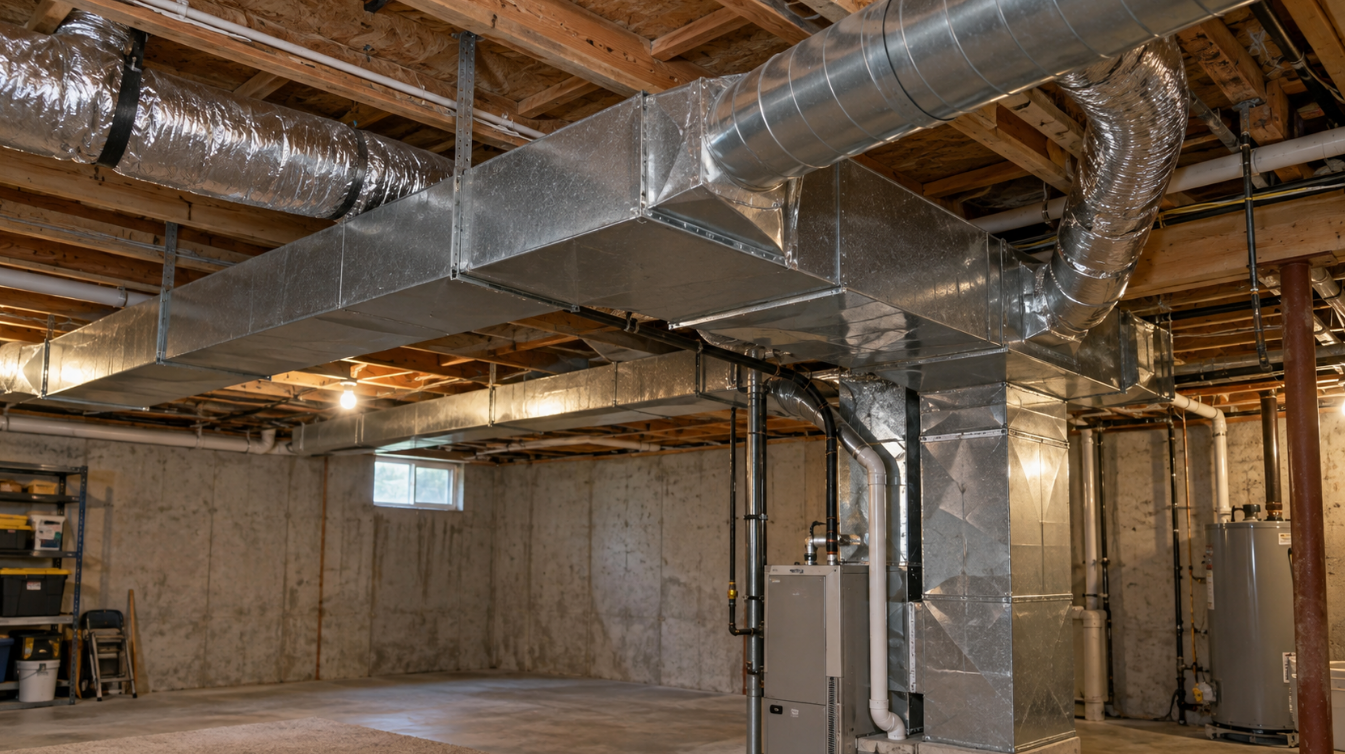
Ductwork carries sound as well as air. Fan noise travels along the ducts and comes out at every register, and air moving too quickly creates its own rushing or whistling sound. Treating both is the core of hvac duct noise reduction.
Lined Ducts and Duct Silencers
Acoustic duct liner applied to the inside of sheet metal ducts absorbs fan noise as air passes over it, especially in the first sections after the unit. In homes, the same effect often comes from insulated flexible duct used for the final runs to each room. That's where duct insulation noise reduction works best, because the lined surface sits right in the sound path.
For stronger fan or equipment noise, a duct silencer can be installed in the main trunk. These devices use absorptive material inside a perforated casing and work much like a muffler on a car. Lined elbows at turns near the unit add more absorption at little cost in space.
Ducts can also carry sound between rooms. Voices from a bedroom can travel through a shared duct and come out of a register in the next room. Lined duct sections or a few extra bends between the two registers reduce that crosstalk.
Whistling Vents and Registers
Whistling usually means air is moving too fast through a narrow opening. Common causes include partly closed registers, dirty filters, undersized returns and supply registers too small for the airflow they carry. Fully opening registers, replacing the filter and checking that furniture or rugs don't block returns solve many cases.
If the noise continues, quiet hvac vents usually come from larger registers or grilles with smoother, wider openings, which let the same air through at lower speed. A technician can also balance the system so that no single run carries more air than it should. Simple hvac vent noise reduction like this often makes a bigger difference than treating the ducts themselves.
Quiet the Outdoor AC Unit
The outdoor condenser holds the compressor and a large fan, the two loudest parts of a split system. Outdoor ac unit noise reduction focuses on vibration, the cabinet and the path between the unit and your windows or your neighbor's.
Pads, Blankets and Barriers
Start with the base. The condenser should sit level on a solid pad. Anti-vibration feet or pads under it reduce the hum that reaches the house through the ground and wall. Check for loose panels, bent fan blades, and debris inside the cabinet, since each can add clatter.
Many people ask how to reduce AC compressor noise specifically. A compressor sound blanket wraps the compressor inside the cabinet and absorbs part of its sound. Some manufacturers offer blankets for their units, and using an approved one protects the warranty and avoids heat problems.
A sound barrier fence or acoustic panels placed between the unit and the house can lower the noise at windows and patios. The barrier must leave the clearance the manufacturer specifies around the unit, because blocked airflow makes the system work harder, run louder, and wear out sooner. A quiet air conditioner outside unit is often the result of these small steps combined. When the equipment is due for replacement, a spot farther from bedrooms is worth planning in.
Window and Wall Units in Apartments
Renters often ask how to reduce AC noise in apartment buildings where the only option is a window or through-the-wall unit. Check that the unit sits level and rests on a solid support, since a sagging bracket lets the case vibrate against the window frame. Foam strips around the frame stop air leaks and rattles at the same time.
Inside the room, cleaning the filter and coils reduces fan strain, and many units have a low fan or sleep setting that cuts noise at night. If a unit grinds, rattles from inside the case or gets louder month by month, report it to the landlord, because those sounds usually mean worn parts.
When to Call a Professional
Two different specialists can help, depending on the cause. An HVAC technician handles mechanical faults such as bearings, fan balance, airflow, and refrigerant issues. A soundproofing specialist handles the path that sound takes through ducts, walls, floors, and the mechanical room once the equipment is running correctly.
If you're unsure which applies, sound measurements can show where the noise comes from and how it reaches the rooms where it bothers you. New York Soundproofing works on HVAC soundproofing, mechanical room soundproofing, and outdoor soundproofing for condenser and equipment noise. An acoustic consultation is a practical way to plan the right fix before any work begins.