
Footstep noise from upstairs is impact noise: each step hits the floor above, and the floor-ceiling assembly carries that energy straight into your room. The most effective way to reduce footstep noise from upstairs is to soften the impact on the upstairs floor with dense rugs, pads or acoustic underlayment. From below, only a ceiling that's mechanically separated from the joists makes a real difference. Until one of those happens, low-frequency sound masking and well-fitted hearing protection make the thuds far easier to live with.
This guide explains why the sound gets through and what to fix first. It also sorts the options for renters, condo owners and anyone living under a busy second floor in a house.
Why Footsteps Come Through the Ceiling
Footsteps travel through the building's structure, which is why they reach you even when the ceiling looks solid. When a heel lands on the floor above, the subfloor and joists flex slightly and pass the vibration down to your ceiling. Your ceiling then radiates it into the room as sound.
That makes footsteps a different problem from voices or a TV. Airborne noise starts as sound in the air and has to push through a wall or ceiling, so added mass and tight seals slow it down. Impact noise skips that step and enters the structure directly. Soundproofing that handles a neighbor's music well can do very little against their walking.
Pitch adds a second difficulty. Heavy footsteps produce mostly low-frequency energy, the dull thump you feel as much as hear. Low frequencies pass through light materials with little loss, and they're also the hardest range to cover with background sound.
Construction matters as well. Wood-frame apartment buildings and houses, common across much of the US, have joists that behave a bit like a drum skin under hard flooring. Concrete slabs resist that flexing better, yet tile or wood laid directly on concrete still sends a sharp click into the unit below. Many older buildings have also swapped their original carpet for laminate or hardwood over thin padding, which removed the layer that used to soften every step.
Before you buy anything, listen to what kind of sound it is. Deep thuds that seem to come from the whole ceiling point to impact noise through the floor assembly. Sounds that are clearer near a vent, a recessed light, or a wall usually mean the noise is taking a side route. Acousticians call this a flanking path, and it changes where your effort should go.
Stop the Impact at the Source - The Floor Upstairs
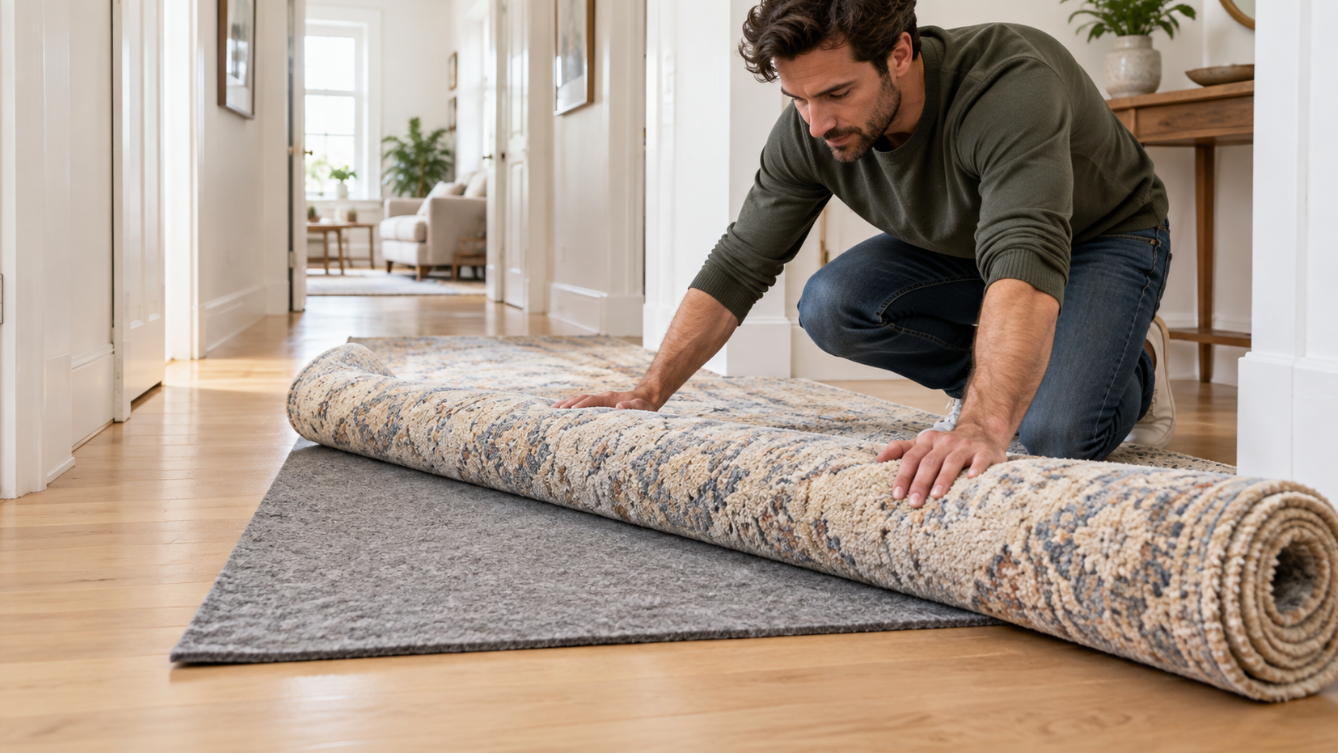
Softening each step on the floor upstairs does more than any other fix, because it removes the vibration before it reaches the structure. A thick rug with a dense pad above your bedroom often helps the apartment below more than an expensive ceiling job. That floor belongs to someone else, though, so this section covers both the fixes and how to get them done.
Rugs, Rug Pads and Underlayment
Area rugs help most when they sit on a dense pad. Felt or rubber-and-felt pads add a cushioning layer that absorbs the heel strike, while a thin decorative rug on its own changes little. Start with hallways, the space beside the bed and any route people walk often, especially the area directly above your bedroom.
When hard flooring is being installed or replaced, impact noise reduction underlayment is the more permanent answer. It goes between the subfloor and the finished floor and isolates the two layers, so much less of each impact reaches the structure. Floor assemblies are tested for impact sound and given an IIC rating (Impact Insulation Class), and a higher number means better control of footstep noise. Many condo associations set a minimum rating for floors installed over other units, so check the building rules before any renovation.
A floating floor, which rests on the underlayment without being nailed or glued down, adds further separation. Small habits upstairs count too:
- felt pads or rubber cups under chair and table legs
- soft-soled house shoes in place of hard heels
- a thick mat under a treadmill, exercise bike or kids' play area
- moving loud activities away from the spot above your bedroom
Getting Your Neighbor or Landlord on Board
Most upstairs neighbors don't realize how loud they are, since their own floor sounds quiet to them. A calm conversation with one specific request usually goes further than a general complaint. Ask them to lay a rug with a dense pad in the hallway and in the room above your bedroom. That's a clear, affordable step, and some neighbors agree more readily if you offer to share the cost.
If you rent, read your lease and the building's house rules. Some leases require tenants to cover part of their floors with rugs, which gives the landlord or management company a reason to step in. Condo owners can raise the issue with the association, which may already have flooring rules on record. For many people, this route is the most practical way to reduce noise from upstairs neighbors without touching their own ceiling.
It helps to record noise from your upstairs neighbor before any of these conversations. Use a voice recorder app at its highest quality setting and note the date and time of each clip. Play the clips back through headphones, because small phone speakers can't reproduce the low thuds that keep you awake. A simple log of when the noise happens shows a landlord, a board, or a soundproofing specialist the pattern at a glance.
Soundproofing the Ceiling From Below
If you own your home or can renovate, the ceiling is the part of the assembly you control. Work from below can reduce walking noise from upstairs floors, provided it changes how the ceiling is attached and how much mass it carries. Add-ons that sit on the surface have little effect on footsteps.
Why Acoustic Panels and Foam Won't Stop Footsteps
Acoustic panels and foam absorb sound that's already in your room. They shorten echo and make speech clearer, which has real value, yet they add almost no mass and do nothing about vibration moving through the joists. With foam glued to the ceiling, the thuds stay about as loud as before. That's why sound absorption and sound blocking are planned as two separate jobs.
Decoupling, Mass and Damping
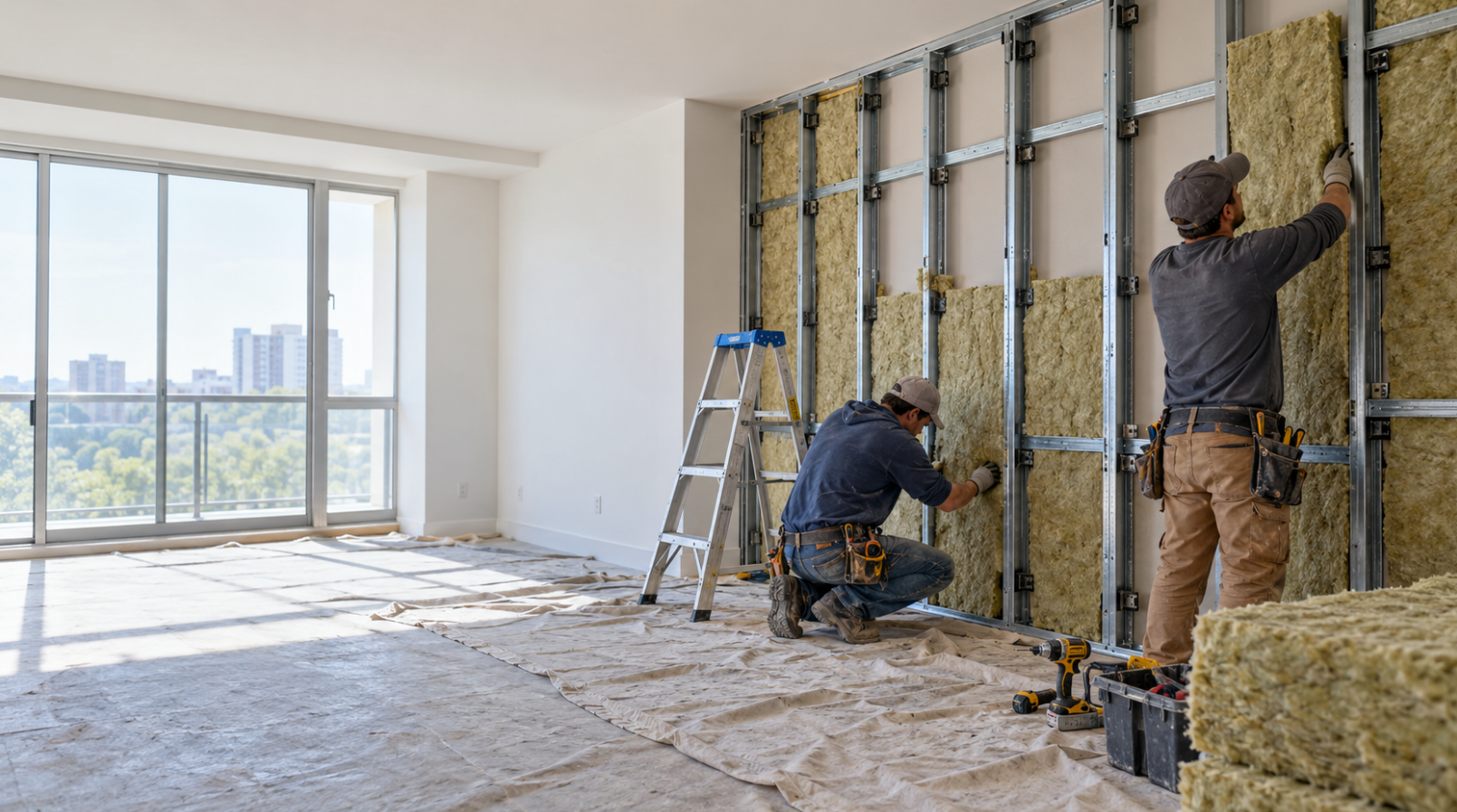
The method that works against impact noise from below is decoupling, which means hanging a new ceiling so it no longer touches the joists directly. Resilient channels, or sound isolation clips with hat channel, hold the drywall on a flexible connection, and far less vibration passes into the room. Installation decides the result. One screw driven through a resilient channel into a joist creates a rigid link that lets vibration bypass the whole system.
Mass and damping strengthen a decoupled ceiling. Two layers of drywall with a damping compound between them convert part of the vibration into a tiny amount of heat. Acoustic insulation in the joist cavity cuts resonance in the empty space above. Combined, these elements are the standard way to soundproof a ceiling from upstairs noise. They're also the most reliable way to block noise from upstairs neighbors on your side of the floor. A drop ceiling with insulation above it adds some separation too, though it usually handles heavy footsteps less well than a properly decoupled drywall ceiling.
Sealing Gaps and Flanking Paths
A new ceiling only performs if sound can't go around it. Recessed lights, ceiling fans, ductwork, plumbing penetrations, and gaps along the edges all let noise slip through. Seal the perimeter with acoustic sealant, choose airtight or covered fixtures, and check whether the walls tied into the floor above are carrying sound as well. In some buildings, much of the noise travels through the walls, and a ceiling-only project leaves that part of the problem in place.
Quick Fixes When You Rent

Renters usually can't change the ceiling or the floor upstairs, so the aim shifts to making the thuds less noticeable. If you want to drown out noise from upstairs neighbors without construction, the four steps below cost little and need nobody's permission.
Mask the Low Frequencies
Most white noise machines have small speakers that can't produce enough bass to cover footsteps, so the thuds still cut through. Brown or deep brown noise works better because more of its energy sits in the low range where footsteps live.
The speaker matters as much as the sound. A bookshelf system, a larger Bluetooth speaker or a subwoofer can reproduce those low frequencies at a level that actually covers the impacts. Keep the volume as low as the masking allows, and aim the speaker away from your head rather than straight at the pillow.
Fit Foam Earplugs Properly
Against low-frequency noise, foam plugs work best when they're rolled tight and inserted as deep as is comfortable, then held for a few seconds while they expand. A shallow fit lets the deep thumps through even when other sounds are muffled. Wax and silicone plugs tend to block less in the bass range.
Earplugs and masking work best together. The plugs lower the overall level, and steady background sound fills the quiet gaps where a sudden thud would otherwise stand out.
Try Noise-Canceling Headphones
Active noise cancellation performs best at low frequencies, which makes it a good match for walking noise during work hours. Over-ear models give the strongest effect but are awkward for side sleepers, so many people use them at the desk and switch to earplugs at night.
Rearrange the Room
Footsteps tend to follow the same routes upstairs, often a hallway, a kitchen or the path to a bathroom. Moving your bed or desk away from the area under that route can make a clear difference at no cost. If one room is consistently quieter, swapping the room you sleep in is the simplest fix of all.
Comparing Your Options
Each method acts at a different point between your neighbor's foot and your ear. The table shows who can carry it out and how it handles the deep thuds that make footsteps so disruptive.
|
Method |
Who can do it |
Effect on footstep thuds |
Work involved |
|
Rugs with dense pads upstairs |
Upstairs neighbor |
High |
Minimal |
|
Acoustic underlayment under hard floors |
Upstairs owner |
High |
Floor replacement |
|
Decoupled ceiling with mass and damping |
Owner below |
High |
Ceiling renovation |
|
Drop ceiling with insulation |
Owner below |
Moderate |
Moderate renovation |
|
Sealing lights, vents and gaps |
Owner below |
Supports other fixes |
Small |
|
Acoustic panels or foam on the ceiling |
Anyone |
Minimal |
Small |
|
Low-frequency sound masking |
Anyone |
Covers the sound you hear |
None |
|
Earplugs or noise-canceling headphones |
Anyone |
Lowers the sound you hear |
None |
When to Call a Soundproofing Professional
Bringing in a specialist makes sense once rugs, masking and conversations with neighbors haven't been enough and you're weighing construction. The work usually starts with sound measurements. They show whether noise comes through the ceiling, the walls or a flanking path, so the budget goes to the part of the building that's actually failing.
From there, a specialist can design the ceiling or floor assembly around your building's structure. Careful installation matters just as much, since small mistakes undo good materials. New York Soundproofing works on ceiling soundproofing, floor soundproofing and apartment soundproofing projects. An acoustic consultation is a practical way to find out what your space needs before any work begins.