Smart film usually costs $25 to $75 per square foot for material. Installation labor adds $15 to $40 per square foot, and power and controls add $200 to $800 per control zone. At average prices, a 20-square-foot window comes to about $2,060 installed. These are national planning figures drawn from published supplier and installer prices, and your local quote may differ.
Smart Film Cost per Square Foot
A single smart film price per square foot rarely tells you what you'll pay, because material, labor, and electrical work are charged separately. Add all three and you get a budget you can compare with real quotes.
| Cost item | Typical range | Average used in this guide |
| Film material | $25 to $75 per sq ft | About $50 per sq ft |
| Installation labor | $15 to $40 per sq ft | About $28 per sq ft |
| Power supply and controls | $200 to $800 per zone | About $500 per zone |
Those averages add up to about $78 per square foot plus $500 for each control zone. One Los Angeles installer quotes $75 to $175 per square foot all in, using a higher material range of $50 to $120. Expensive metropolitan markets can sit well above the national average.
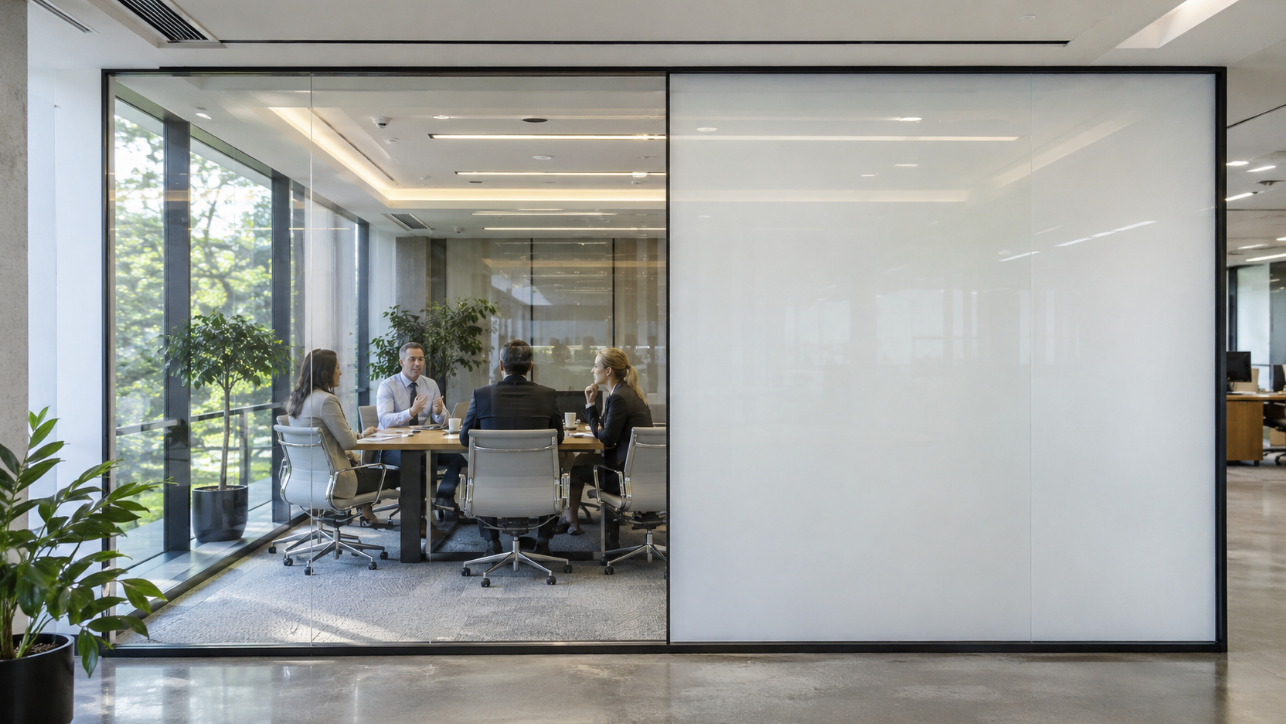
Material prices depend on film quality, color, size, order quantity and lead time. Orders over 100 square feet usually move toward the low end of the range, while small custom pieces land near the top. This pricing applies to self-adhesive PDLC film, the switchable film that turns from opaque to clear when powered. Generic names such as smart tint, switchable film, and privacy film usually describe the same product.
Smart Film Installation Cost
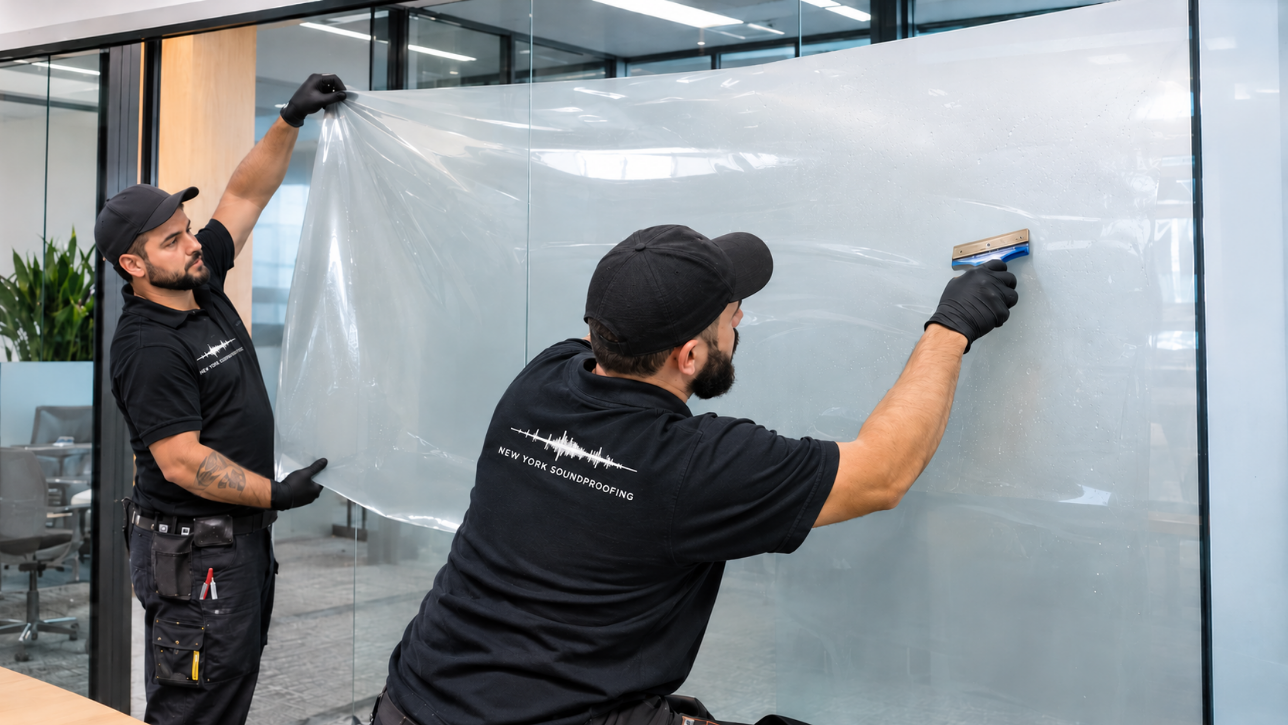
Smart film installation cost typically runs $15 to $40 per square foot, or $50 to $75 per hour when the installer bills by time. Commercial work with lifts, coordination, and basic wiring can run higher, and one published estimate puts it at $30 to $75 per square foot.
| Glass area | Labor at $15 to $40 per sq ft | Labor at the $28 average |
| 12 sq ft | $180 to $480 | About $340 |
| 20 sq ft | $300 to $800 | About $560 |
| 40 sq ft | $600 to $1,600 | About $1,120 |
| 60 sq ft | $900 to $2,400 | About $1,680 |
| 80 sq ft | $1,200 to $3,200 | About $2,240 |
What the Labor Price Covers
Installers measure the glass, clean it thoroughly, apply the film and connect the busbars, the thin conductive strips that carry power into it. They then mount the power supply, connect the controls and test the switching. Professional smart film installation keeps this work under one scope, which makes it simpler to resolve any fault afterward.
What Raises the Labor Cost
Access drives most of the increase. High, multi-story or hard-to-reach glass takes more time and may need a lift, and removing old film adds preparation before any new film goes on.
Working conditions matter too. Occupied offices may require off-hours scheduling, and unusual shapes or tight frames slow the application. Small jobs often cost more per square foot, because setup time and travel get spread over less glass.
Smart Film Cost by Project
Smart film projects usually cost $1,400 to $6,700 at average prices, depending mostly on glass area and the number of control zones. The estimates below assume one zone and add material, labor and electrical work together.
| Project | Area | Low | Average | High |
| Bathroom window | 12 sq ft | $680 | $1,440 | $2,180 |
| 48 × 60 inch window | 20 sq ft | $1,000 | $2,060 | $3,100 |
| Shower enclosure | 40 sq ft | $1,800 | $3,620 | $5,400 |
| Conference room partition | 60 sq ft | $2,600 | $5,180 | $7,700 |
| Large office partition | 80 sq ft | $3,400 | $6,740 | $10,000 |
The average cost per square foot falls as the area grows, from about $120 on the bathroom window to about $84 on the large partition. Fixed electrical costs explain that drop.
Published installer examples sit in the same range. One lists a 12-square-foot bathroom window at $1,000 to $1,800, and another puts a 60-square-foot partition at $4,500 to $10,500 in Los Angeles. Add a separate zone for each area you want to switch on its own.
Power Supply, Controls and Wiring Costs
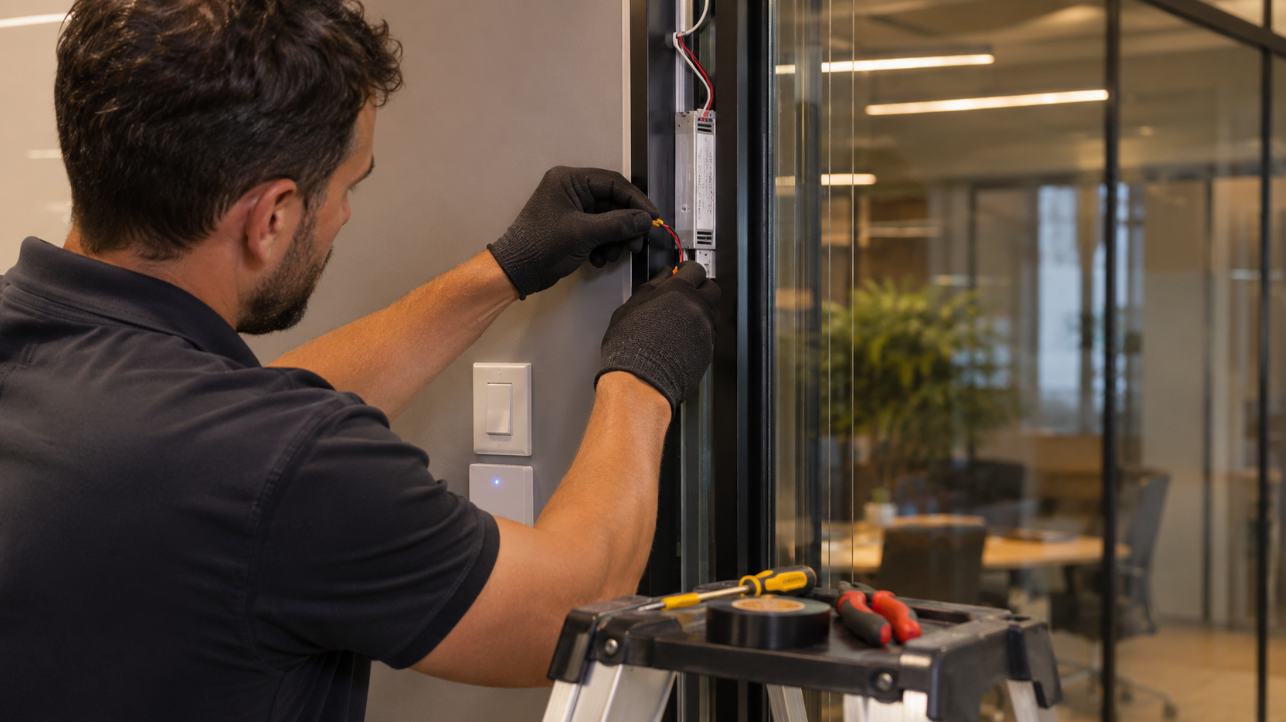
Every smart film system requires a power supply, a control method and a wiring route. These items add $200 to $800 per zone in most projects, and new electrical work can push the total higher.
Transformers and Controllers
A transformer steps household voltage down to the level the film needs, and its size depends on the area it serves. A standard wall switch remains the least expensive option. Remote controls, smart home integration, scheduling and occupancy sensors all cost more, and each extra zone needs its own control.
New Wiring
Running new wiring can add $500 to $2,000 or more, especially inside walls or frames. A nearby electrical outlet eliminates much of that work.
Running Costs
Smart film draws about 5 to 7 watts per square meter while clear and no power while opaque. One installer estimates $5 to $10 per year for 50 square feet kept clear about 2,500 hours annually.
Smart Film vs Smart Glass Cost
Smart glass typically costs $70 to $150 per square foot installed, with an average near $100, and it replaces the existing pane. Self-adhesive film goes onto the glass you already have, which is where the savings come from.
| Factor | Self-adhesive smart film | Laminated smart glass |
| Typical price | $25 to $75 per sq ft, material only | $70 to $150 per sq ft, installed |
| Existing glass | Stays in place | Removed and replaced |
| Delivery | About $100 to $150 | About $300 to $1,200 |
| Warranty | 1 to 5 years, depending on the seller | About 3 years at one seller |
| Weak points | Scratches, moisture, busbar damage | Heavier, and it needs a glazing crew |
Published prices overlap on small jobs, so film doesn't always win per square foot. It usually pays off when the current glass is sound, since you skip the removal, framing work and disruption of a glass replacement.
Factory glass makes more sense in new construction and in moisture-prone or high-traffic spots, because the switchable layer sits sealed between two sheets of safety glass. If you're pricing laminated smart film for an existing opening, include the cost of taking out the old pane.
DIY Kits vs Professional Installation
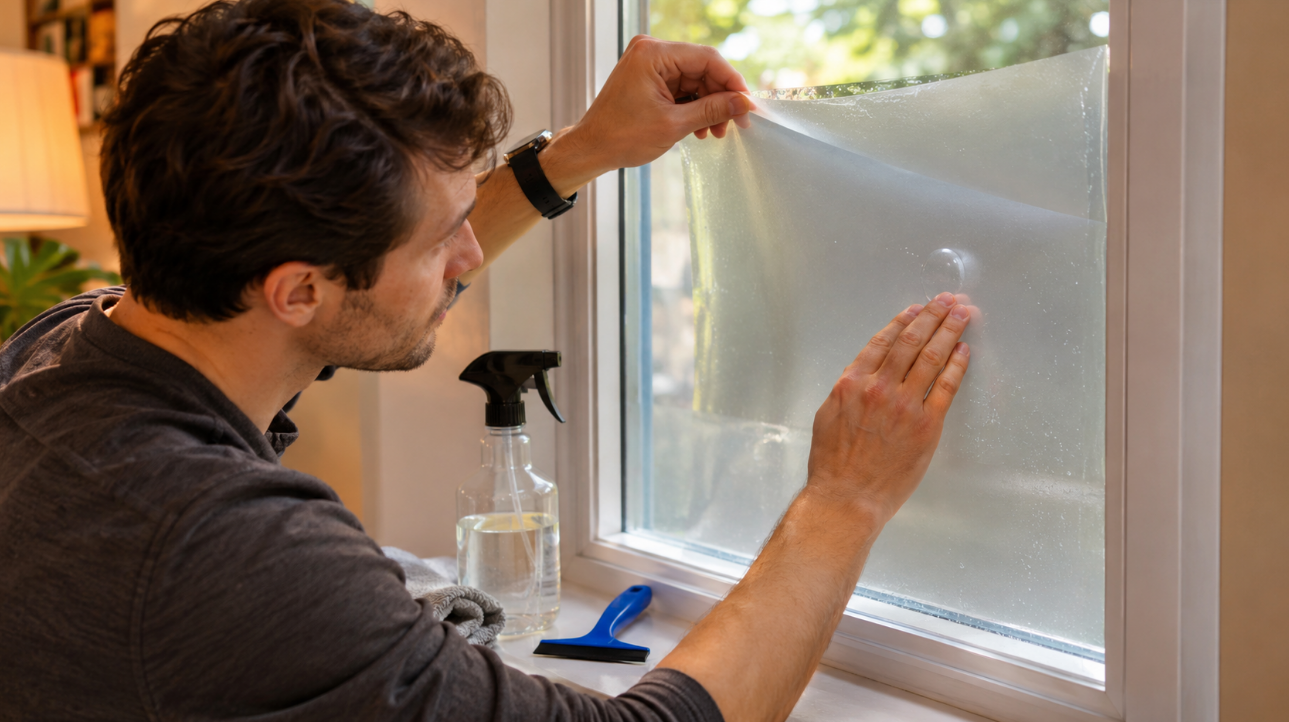
A DIY kit saves the labor charge, but it leaves the risk with you. One 48 × 60 inch self-adhesive kit has been listed at $900, or about $45 per square foot, against about $560 in average labor for the same area.
Material waste decides whether that saving holds. Bubbles, misaligned edges and a damaged busbar can ruin a sheet that costs several hundred dollars, and busbars are the most delicate part of the film. Delamination also becomes more likely with poor trimming or weak adhesive.
Small, flat, easy-to-reach panes suit a careful DIY install. Multiple panes, tall glass or hidden wiring are safer with a professional glass film installation crew, and any new line-voltage wiring belongs with a licensed electrician.
Is Smart Film Worth the Cost?
Smart film pays off where you need privacy on demand and also want the view or daylight back. Quality PDLC film is commonly rated for 50,000 to 100,000 switching cycles and an expected life of 10 to 15 years. At that lifespan, a $2,060 window works out to under $210 per year over a decade.
Simpler options cost far less if you only need fixed privacy. Standard non-electric window film runs about $8 to $15 per square foot installed, and smart blinds or curtains average about $500 per window.
Offices and conference rooms should budget for one limit. Smart film changes what people can see, and it doesn't meaningfully reduce what they can hear. Speech privacy calls for separate conference room soundproofing.
How to Get an Accurate Smart Film Installation Quote
An accurate quote starts with exact glass sizes and a clear split between material, labor and electrical work. Measure each pane and note its height from the floor, then photograph the frames and the nearest outlet.
Tell the installer how many zones you want and how you plan to control them. Ask for separate lines covering film, labor, transformers, controls, new wiring, old film removal and delivery, and confirm the warranty term for both the film and the workmanship.
Compare two or three itemized bids. Lead times matter as well, because film is usually made to measured sizes after drawings are approved.