
To soundproof a shared wall, start by sealing the gaps and openings that let sound slip through. Then add mass and damping to the existing wall with a second layer of drywall and a damping compound. The biggest improvement comes from a decoupled wall built in front of the old one, so the two surfaces no longer touch. If you rent and can't change the wall, heavy furniture, dense soft materials, and sound masking take the edge off what comes through.
The right mix depends on what you hear, who owns the wall, and how much work you're willing to take on. The sections below go from the simplest fixes to full construction.
How Sound Gets Through a Shared Wall
Sound crosses a shared wall in two ways: through the air, by leaking through gaps and openings, and through the structure, by shaking the wall itself. A neighbor's voice makes the drywall on their side vibrate slightly. That vibration passes through the studs and screws to the drywall on your side, which then sends it into your room.
Most interior walls in US apartments, townhouses, and duplexes are built with wood or metal studs, with drywall screwed directly to both faces. Because both sides share the same framing, the wall acts as one connected piece and passes vibration easily. Walls between units are often built to a higher standard, yet older buildings and conversions don't always meet it.
Different sounds behave differently. Voices and TV dialogue sit in the middle frequencies and leak through any gap, so sealing and added mass handle them well. Bass from music, home theaters, and subwoofers carries much more energy at low frequencies and passes through light walls with little loss. If you can hear neighbors through the wall mostly as a low hum or thump, expect to need heavier work.
Wall assemblies are tested for airborne sound and given an STC rating (Sound Transmission Class), where a higher number means the wall blocks more sound. Every gap lowers the real-world result, which is why sealing comes first.
Before spending money, find where the sound is strongest. Put your ear near the outlets, the baseboard, the corners, and the ceiling line. Hearing the neighbor's TV through the wall far more clearly at an outlet or along the floor points to a leak. Fixing it costs much less than rebuilding the wall.
Seal the Gaps First
Sealing is the cheapest step in soundproofing a shared wall, and it often makes the most noticeable difference per dollar spent. Sound behaves like water in this respect: wherever air can pass, sound will follow. A wall with heavy layers and an open gap still leaks.
Check these spots on the shared wall:
- electrical outlets and light switches, especially where two outlets sit back to back in the same stud bay
- the gap between the drywall and the floor, usually hidden behind the baseboard
- the joint where the wall meets the ceiling
- pipes, cable runs and anything else that passes through the wall
- heating or air vents that connect to the neighbor's side
Use acoustic sealant for the gaps. It stays flexible after it cures, so it keeps the seal as the building moves, while ordinary caulk can harden and crack. Remove the baseboard to seal the bottom edge properly, then reinstall it. Foam gaskets made for outlets and switch plates fit behind the cover in minutes, and putty pads wrapped around the electrical box seal it more thoroughly. Turn off the power at the breaker before working on any outlet.
Soundproof an Existing Wall Without Removing Drywall
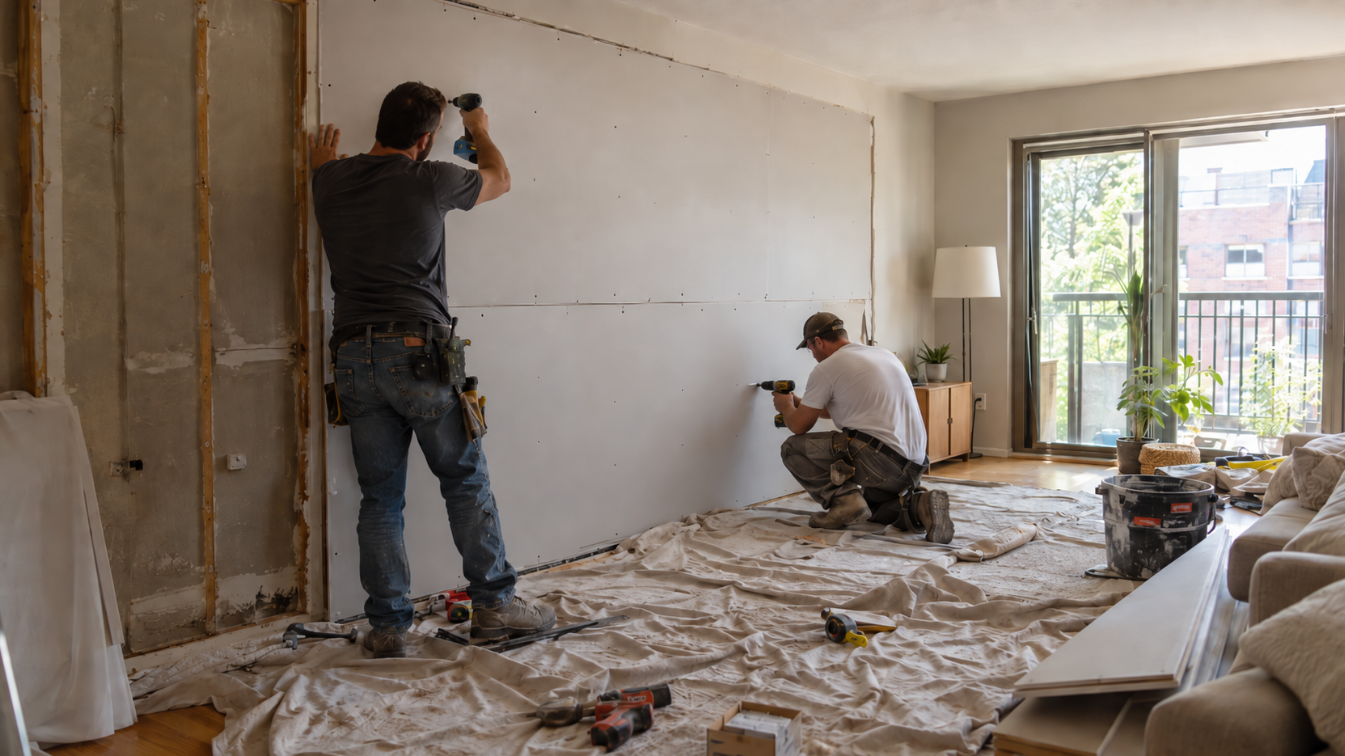
Most people want to know how to soundproof a wall without removing drywall, and building onto the existing surface does exactly that. Adding mass and damping on your side makes the wall heavier and harder to set in motion. This approach works well against voices and TV, keeps the original wall in place, and loses very little floor space.
Add Mass With a Second Layer of Drywall
A second layer of drywall screwed over the existing one adds weight, and a heavier wall vibrates less in response to sound. Thicker or denser boards add more mass per layer, and some manufacturers make drywall designed for sound control. The new layer needs its own sealed perimeter. Run a bead of acoustic sealant around every edge before you finish the joints.
Outlets and switches on the wall will need box extenders so they sit flush with the new surface. Door and window trim may need adjusting too, so plan the job before the boards go up.
Damping Compound Between the Layers
A damping compound spread between the old drywall and the new layer turns part of the vibration into a tiny amount of heat. Mass alone makes the wall harder to move. Damping takes energy out of the movement that still gets through, which matters most for voices and music.
Used together, the two methods reinforce each other. Most contractors rely on this pairing to soundproof an existing wall between apartments or townhouse units. Follow the manufacturer's coverage and curing instructions, because the compound only works when it fills the space between the sheets as specified.
Why Acoustic Panels Won't Block a Neighbor's Noise
Acoustic panels absorb sound inside your room. They cut echo, make speech clearer and can make a space feel calmer, so they have a place in many homes. They add very little mass to the wall, though, and do almost nothing to stop sound passing through it. Products sold as the best wall panels for soundproofing shared walls still leave the neighbor's TV about as audible as before when they're used on their own. Use panels to fix echo, and use mass, damping, and sealing to block sound.
Building a Decoupled Wall for Maximum Isolation
A decoupled wall separates your surface from the shared structure, so vibration has no solid path into your room. Decoupling is the most effective approach when you need to soundproof a party wall in a townhouse or duplex, or when bass is the main problem.
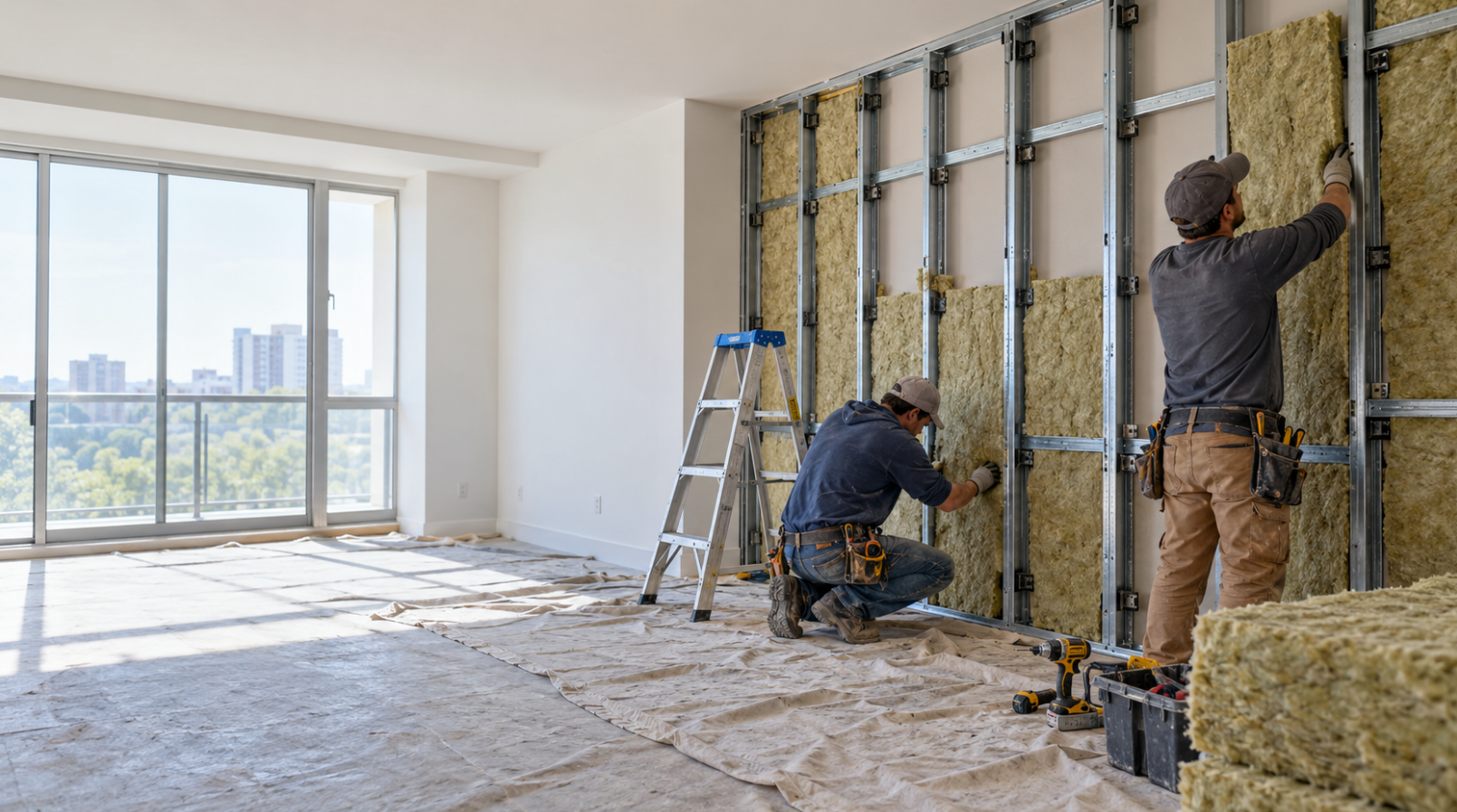
There are two common ways to do it. Sound isolation clips attach to the existing studs and hold metal hat channel. The new drywall is screwed only to the channel, so it hangs on a flexible connection. A more thorough option uses a separate stud wall built in front of the old one, with an air gap between them. The two walls then share nothing but the floor and ceiling.
Fill the cavity of the new wall with mineral wool or another acoustic insulation to reduce resonance inside the space. Finish with two layers of drywall and a damping compound for added mass, and seal every edge with acoustic sealant.
Decoupled walls take up some floor space and require moving outlets, switches and sometimes trim. Installation also decides the result. A single screw that reaches through the channel into a stud creates a rigid link and lets vibration bypass the system. A shelf bolted through the new wall into the old one does the same. In a condo or townhouse, check the association's rules and any permit requirements before work starts, since a new wall can affect fire separation details.
Options for Renters

Renters usually can't add drywall or build a new wall, so the goal shifts to reducing what reaches your ears while leaving the structure alone. These steps can't match construction. Combined, they still soften everyday noise when you can't soundproof the wall between apartments yourself.
Put Heavy Furniture Against the Wall
A full bookshelf against a shared wall adds mass and blocks part of the sound path, especially for voices and TV. Wardrobes and tall dressers work the same way. Fill the shelves completely with books or stored items, since an empty bookcase is mostly air and does very little.
Hang Dense Soft Materials
Heavy sound-absorbing blankets or thick lined curtains hung across the shared wall reduce echo in your room and soften some mid and high frequencies. They work best when they cover the whole wall and hang close to it. Expect a modest change in how loud the neighbor seems, with little effect on bass.
Change the Room Layout and Add Background Sound
Moving your bed or desk to an inside wall, away from the neighbor's living room or bedroom, is free and often makes a clear difference. Background sound helps with whatever still comes through. A fan or white noise machine fills the quiet, so voices and TV dialogue stand out less, particularly at night.
Ask Your Landlord About Sealing
Outlets on a shared wall are a common leak, and foam gaskets behind the covers are cheap and easy to remove later. Check your lease before installing anything, though, because some landlords want to handle electrical fixtures themselves. If the noise is constant, raise it with the landlord directly. Some will seal outlets, fix gaps at the baseboard or add insulation, especially when more than one tenant has reported the same problem.
Comparing Your Options
Each method addresses a different part of the problem. The table shows who can carry it out and how it handles everyday sounds compared with bass.
|
Method |
Who can do it |
Voices and TV |
Bass and music |
Work involved |
|
Sealing gaps and outlets |
Anyone, with lease approval |
Moderate |
Low |
Small |
|
Second drywall layer with damping compound |
Owner |
High |
Moderate |
Moderate renovation |
|
Decoupled wall with insulation |
Owner |
High |
High |
Major renovation |
|
Acoustic panels |
Anyone |
Minimal |
Minimal |
Small |
|
Bookshelves and heavy furniture |
Anyone |
Low to moderate |
Low |
None |
|
Sound-absorbing blankets or curtains |
Anyone |
Low |
Minimal |
Small |
|
Sound masking |
Anyone |
Covers the sound you hear |
Low |
None |
When to Call a Soundproofing Professional
A specialist is worth involving once sealing and furniture haven't solved the problem, and you're planning construction. The process usually starts with sound measurements. They show whether the noise comes through the wall itself, an outlet, the floor, or the ceiling, so the budget goes to the path that's actually leaking.
From there, a specialist can design the wall assembly around your building and handle the installation details that decide how well it performs. New York Soundproofing works on wall soundproofing, apartment soundproofing, and condo soundproofing projects. An acoustic consultation is a practical way to find out what your wall needs before any work begins.