The best sound-absorbing materials are soft, porous, and fibrous: rigid fiberglass and mineral wool lead the field with NRC ratings of 0.90–1.0, followed by PET felt, recycled cotton, wood wool, and acoustic foam. Hard, flat surfaces — drywall, glass, concrete — reflect sound instead of absorbing it, which is exactly why untreated rooms sound echoey and harsh. This guide compares the top materials by their measured absorption ratings and explains which one fits which room, so you can treat echo and reverb with the right product the first time.
What Makes a Material Good at Absorbing Sound
A material absorbs sound when its structure lets sound waves enter and lose energy inside. Porous, fibrous materials convert sound energy into heat through friction as the waves penetrate the fibers — the wave goes in, rubs against millions of tiny fibers or open cells, and comes out dramatically weaker.
That's the answer to what materials and surfaces are better for absorbing sound waves: soft and porous beats hard and smooth, every time. A concrete wall reflects nearly all the sound energy that hits it. A thick fibrous panel traps most of it.
Absorption is measured by the Noise Reduction Coefficient, or NRC. The scale runs from 0 to 1, where 0 means the surface reflects all sound and 1 means it absorbs all the sound that reaches it — an NRC of 1.0 means total absorption. Some lab results even exceed 1.0 because panel edges absorb sound beyond the panel's face area. As a practical benchmark: anything above 0.85 is a serious acoustic material, and anything below 0.5 is a supporting player.
Thickness matters as much as the material itself. Two-inch panels absorb across the full speech and music range, while one-inch panels work for speech but lose effectiveness below 500 Hz. For maximum absorption, including bass, four-inch panels or two-inch panels with an air gap behind them perform significantly better.
Sound Absorption vs Soundproofing

Sound absorption and soundproofing solve two different problems. Absorption reduces echo and reverberation inside a room. Soundproofing blocks sound from traveling between rooms. The materials in this guide do the first job, not the second.
This distinction saves people from the most common acoustic mistake: covering a shared wall with foam panels and expecting the neighbor's TV to disappear. It won't. Absorptive materials are light and porous, and blocking sound requires the opposite — mass and airtight construction. If voices from the next room are the problem, you need soundproofing. If your own room sounds hollow, boomy, or echoey, absorption is the fix.
Many projects need both. A home theater, for example, gets soundproofing in the walls to contain the volume and absorption inside the room to make the audio crisp.
The Best Sound-Absorbing Materials Compared
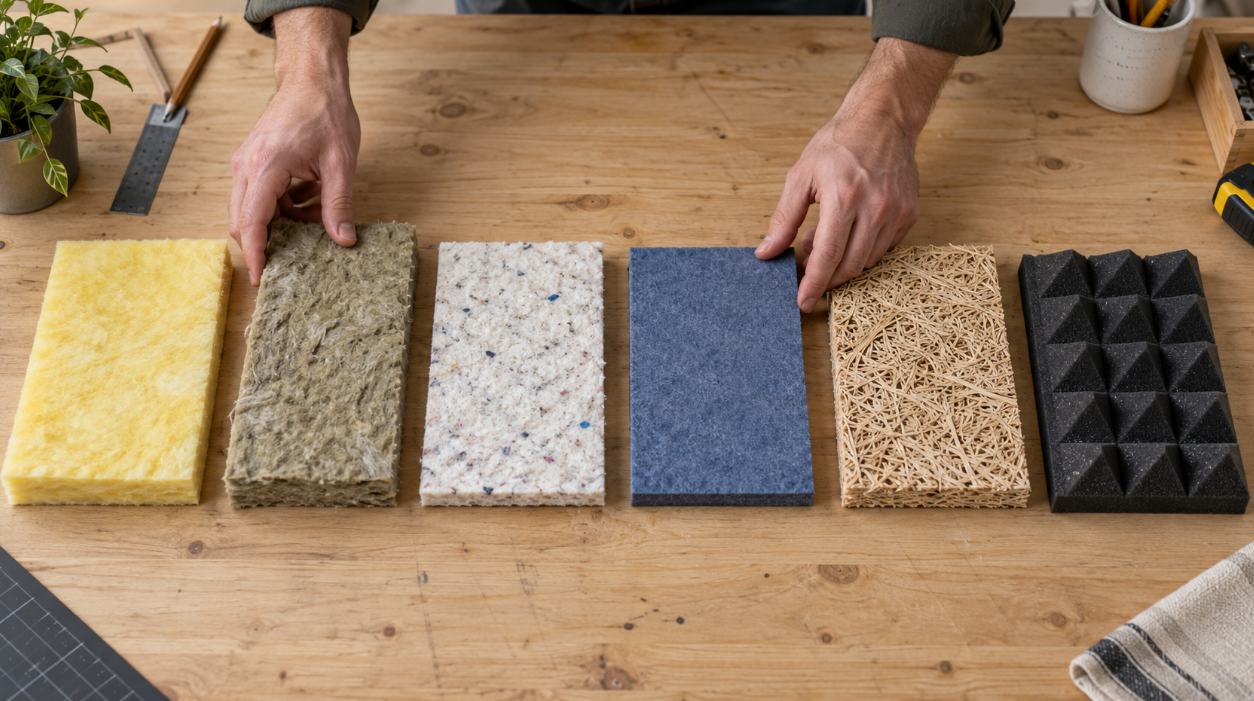
If you're asking what material absorbs sound the best, the short answer is rigid fiberglass — it offers the highest NRC ratings per inch of thickness and absorbs broadly across the frequency spectrum, with dense mineral wool right behind it. The full picture by the numbers:
|
Material |
Typical NRC |
Key strength |
Best for |
|
Rigid fiberglass |
0.90 – 1.0 |
Highest absorption per inch |
Studios, offices, home theaters |
|
Mineral wool |
0.85 – 0.95 |
Fire resistance, low-frequency strength |
Commercial spaces, bass traps |
|
Recycled cotton |
0.65 – 1.0 |
Eco-friendly, no fiber irritation |
Schools, gyms, green projects |
|
PET felt (polyester) |
0.80 – 1.0 |
Durable, printable, DIY-safe |
Offices, schools, design interiors |
|
Wood wool |
0.70 – 0.90 |
Natural exposed aesthetic |
Restaurants, lobbies |
|
Acoustic foam |
0.25 – 0.50 |
Cheap, lightweight |
Budget setups, high frequencies only |
Rigid Fiberglass
Rigid fiberglass is the industry standard core for professional acoustic panels. High-density boards absorb evenly from low-mid to high frequencies, and because the material is semi-rigid, panels can be built frameless — absorbing on the face and edges at once. Nearly all fabric-wrapped custom acoustic panels you see in offices and studios are fiberglass at the core, and commercial-grade versions reach NRC 0.85 to 1.0 with Class A fire ratings.
Mineral Wool
Mineral wool performs nearly identically to fiberglass and beats it in two areas. Dense mineral wool batts outperform fiberglass in the 125–500 Hz range, which makes them the preferred fill for bass traps placed in room corners. The material is also naturally fire-resistant, so commercial installations often specify it for fire code compliance. The trade-off: mineral wool is loose rather than semi-rigid, so panels need a frame to hold their shape.
Recycled Cotton
Bonded acoustical cotton is the strongest eco option in the lineup. Panels made from 100% recycled cotton reach NRC ratings up to 1.0, and the material handles like fabric — no glass fibers, no protective gear needed during installation. It's a common pick for school gyms, classrooms, and cafeterias, where light weight and safe handling matter as much as performance.
PET Felt (Polyester)
PET felt panels are compressed polyester fiber, usually made from recycled bottles. NRC ratings run from 0.80 to 1.0 depending on thickness and density, and the panels are lightweight, cut cleanly, carry no fiber hazard, and accept direct printing — which is why designers reach for them in offices and schools. They come as wall tiles, suspended baffles, and desk dividers.
Wood Wool
Wood wool — wood fibers bonded with cement — is the choice when the acoustic treatment is meant to be seen. NRC ratings fall between 0.70 and 0.90 depending on thickness and mounting, and the natural texture appeals to architects in restaurants, lobbies, and modern offices where exposed treatment is part of the design. It absorbs less than fiberglass but doubles as a finished surface.
Acoustic Foam
Acoustic foam is the most recognizable absorber and the weakest one. Most consumer open-cell foam tests between NRC 0.25 and 0.50, and the low density that makes it cheap and light also means it absorbs mid and high frequencies adequately but offers almost no low-frequency absorption, and it degrades over time. Foam has a place in tight-budget setups and as ceiling clouds where weight matters, but it can't be the backbone of a serious treatment plan.
Supporting Materials - Curtains, Carpets, and Upholstery
Textiles reduce sound reflections, but they don't replace acoustic panels. Regular curtains, rugs, and sofas absorb some high-frequency energy, which is why a furnished room always sounds calmer than an empty one — and why none of it is enough when a room has a real echo problem.
The exception is products engineered for acoustics. Dense, heavy acoustic curtains with absorptive backing perform far beyond decorative drapes and make sense where panels can't go — over windows and glass walls. Fabric-covered wall and ceiling upholstery works the same way, turning large surfaces into absorbers without visible panels.
Treat textiles as the finishing layer: they take the edge off remaining reflections after the primary absorption is in place, not before.
How to Choose the Right Material for Your Space

The right material depends on which frequencies cause your problem and what the room is used for.
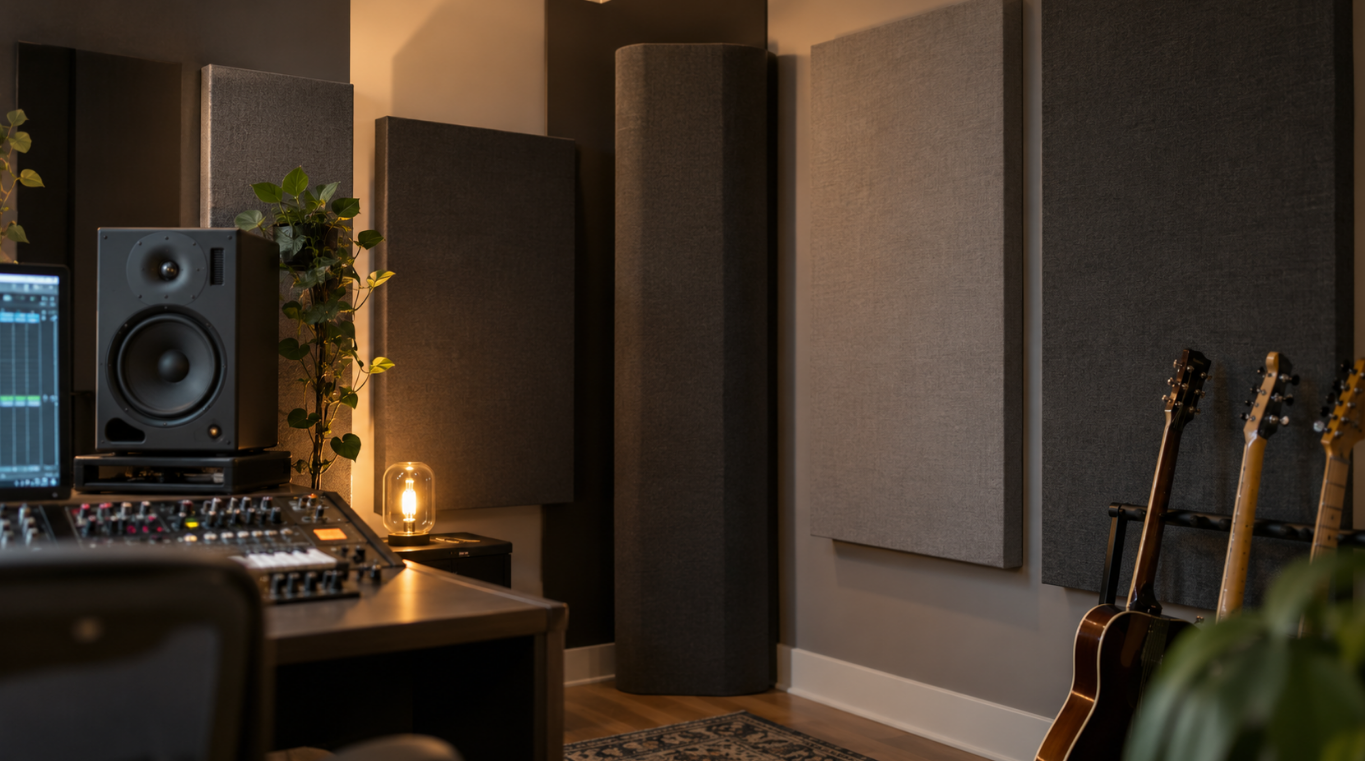
For home theaters and music rooms, low frequencies are the challenge. Thick fiberglass panels on the walls plus mineral wool bass traps in the corners cover the full spectrum; thin foam alone will leave the room boomy.
For offices and conference rooms, the target is the speech range. Two-inch fiberglass or PET felt panels on walls handle it, and PET desk dividers add absorption right where voices originate. Speech clarity improves fast because the problem frequencies are exactly where these materials perform best.
For restaurants and open commercial spaces, walls are usually taken, so the ceiling does the work. Suspended baffles, clouds, and absorptive ceiling panels cut the roar of overlapping conversations without touching the interior design. Wood wool fits here too when the treatment should be part of the look.
For living rooms and bedrooms, aesthetics lead. Printed PET panels, fabric-wrapped panels in custom colors, acoustic curtains, and upholstered surfaces deliver absorption that reads as decor rather than equipment.
How Much Absorption Does a Room Need
A useful starting point is to treat 15–30% of a room's wall and ceiling surface area with absorptive material — echo-prone rooms with hard floors and big windows sit at the top of that range, furnished carpeted rooms at the bottom. The number is a rule of thumb, not a spec: two rooms with identical dimensions can need very different treatment depending on surfaces, furniture, and use.
Placement matters as much as quantity. Panels at first-reflection points — the spots on walls and ceiling where sound bounces once between the source and the listener — do several times the work of the same panels placed randomly.
When the room is large, oddly shaped, or the problem persists after a first round of treatment, measurements beat guesswork. An acoustic consultation with on-site testing pinpoints which frequencies are the problem and how much material actually solves it — usually cheaper than buying panels twice.