Drop ceiling installation cost ranges from $4 to $20 per square foot installed, depending on the tile type and material. Most standard projects land between $9 and $13 per square foot for labor and materials combined, and the national average for a full room sits around $2,200, with typical totals between $1,073 and $3,333. The numbers below break that range down by room size, tile material, and labor so you can estimate your own project before requesting quotes.
A quick note on terminology: a suspended ceiling and a drop ceiling are the same system, so suspended ceiling cost per square foot follows the same ranges you'll see throughout this guide.
How Much Does It Cost to Install a Drop Ceiling?
The cost to install a drop ceiling has three main components: the grid, the tiles, and the labor. Materials alone run $1 to $13 per square foot depending on tile type, with the grid rails themselves accounting for $1.50 to $2.25 per square foot before installation. Professional drop ceiling installation adds labor on top, which brings the installed total to the $4–$20 per square foot range.
Where your project falls in that range depends mostly on the tiles. A basement finished with basic white fiberboard panels sits near the bottom. Decorative metal or wood tiles, integrated lighting, and insulation push the price to install a drop ceiling toward the upper end — in some cases up to $28 per square foot with high-end materials and add-ons.
Drop Ceiling Cost by Room Size
Room size sets the baseline for your budget: more square footage means more grid, more tiles, and more hours of work. At the standard rate of $9–$13 per square foot installed, typical rooms break down like this:
|
Room size |
Square footage |
Standard cost ($9–$13/sq ft) |
Full range ($4–$20/sq ft) |
|
10×10 bedroom or office |
100 sq ft |
$900 – $1,300 |
$400 – $2,000 |
|
10×12 room |
120 sq ft |
$1,080 – $1,560 |
$480 – $2,400 |
|
12×12 room |
144 sq ft |
$1,296 – $1,872 |
$576 – $2,880 |
|
15×20 living area |
300 sq ft |
$2,700 – $3,900 |
$1,200 – $6,000 |
|
20×25 basement |
500 sq ft |
$4,500 – $6,500 |
$2,000 – $10,000 |
Larger areas often cost slightly less per square foot. Professional installers frequently reduce the per-square-foot rate on bigger projects because materials purchased in bulk come cheaper. That's worth keeping in mind if you're pricing a full basement or an open commercial floor rather than a single room.
Cost by Ceiling Tile Type and Material
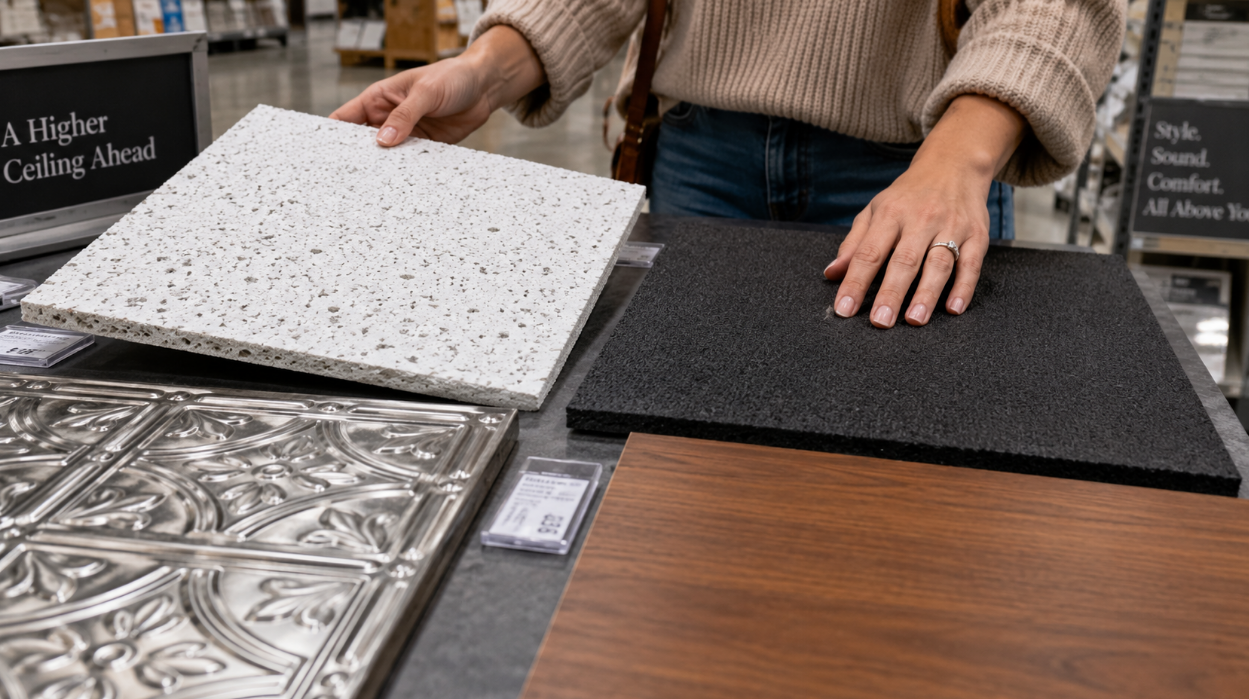
Tile material is the second biggest price driver after room size. Drop ceiling prices for materials alone span $1 to $13 per square foot, and the gap between a budget fiberboard panel and a decorative wood tile can be tenfold.
|
Tile material |
Cost per sq ft (materials only) |
Notes |
|
Mineral fiber / fiberboard |
$1 – $7 |
Most common; good sound absorption; prone to moisture stains |
|
Black acoustic |
$2 – $7 |
Popular for theaters and gaming rooms |
|
Plastic / PVC |
$5 – $9 |
Moisture-resistant; easiest for DIY |
|
Metal (tin) |
$12 – $20 |
Decorative; heavy; pro installation recommended |
|
Wood |
$10 – $70 |
Premium look; the most expensive option |
The cost to install an acoustic ceiling with mineral fiber tiles stays on the affordable end, which is one reason they dominate offices and basements. If sound control is the main goal, the tile choice matters as much as the price: acoustic ratings vary widely between products, and pairing the right ceiling panels with insulation above the grid changes how much noise the assembly actually blocks. A drop ceiling also works as part of a broader ceiling soundproofing setup when footstep noise or sound transfer between floors is the problem you're solving.
Labor Cost to Install a Drop Ceiling
The labor cost to install a drop ceiling averages $1.50 to $5.00 per square foot, or $50 to $150 per hour. Labor typically makes up 20% to 25% of the total project cost. For a 300-square-foot room, that means roughly $450 to $1,500 of your budget goes to the crew.
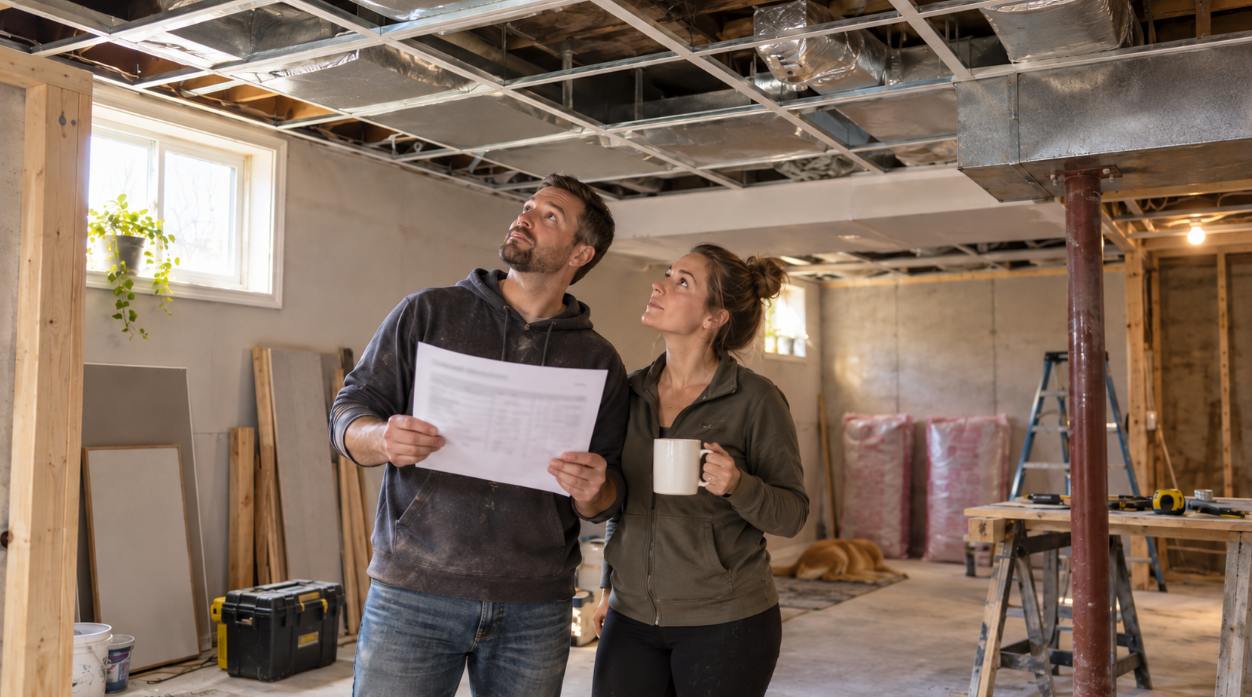
Drop ceiling labor cost climbs when the job gets complicated. Installers charge more when they have to work around furnaces, water heaters, and pipes, and prep work — measuring the space and mapping the grid layout around beams, light fixtures, and smoke detectors — is billed time too. High ceilings that require scaffolding and rooms with irregular shapes add hours as well.
Rates also vary by region. Labor in major metropolitan areas runs higher than the national averages, so expect quotes in large cities to sit in the upper half of these ranges. The most reliable way to pin down the cost to install a suspended ceiling in your area is to collect three or more itemized bids and compare the labor lines directly.
What Affects the Final Price
Beyond size, material, and labor rates, several factors move the final number up or down.
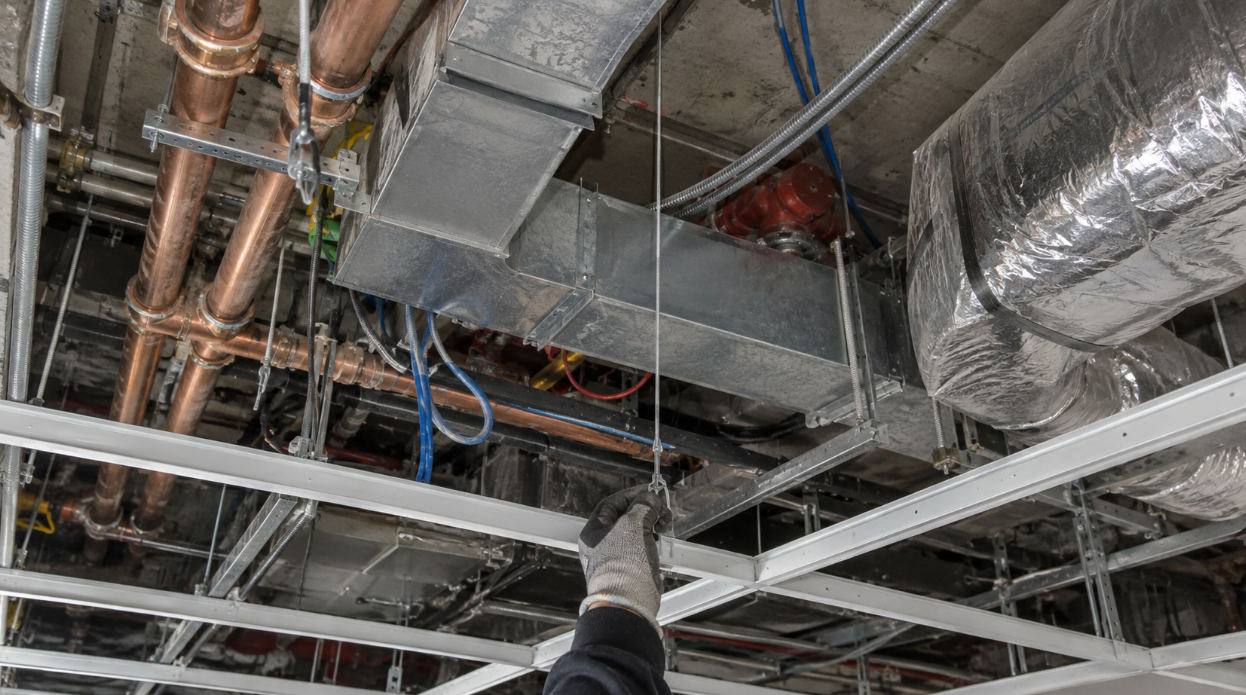
The biggest variable is what's hiding above the grid. Dense runs of pipes, wiring, and ductwork slow installation and add billable hours. Noisy ductwork is also worth addressing before the ceiling goes up — HVAC soundproofing is far easier to do while everything is still exposed.
Ceiling height matters too. Building codes require a minimum ceiling height in most areas, which can limit your options in low basements and affect how deep the grid can drop and how it's planned.
Permits and demolition add their own line items. Some states require a building permit before installation and an inspection once the work is complete, and tearing out an existing drop ceiling costs $1 to $7 per square foot on top of the new installation.
Two costs catch people off guard. Buildings with in-ceiling sprinklers need heat-sensitive drop-out tiles, which add $1.10 to $1.50 per square foot for the affected panels. And sales tax on materials and labor can add 5% to 10% to the total, depending on your local rate.
Additional Costs to Plan For
A base quote usually covers the grid, standard tiles, and installation — and not much else. The add-ons below are the most common reasons a final invoice comes in higher than the initial estimate.
Lighting is the most frequent one. Light panels that fit into the grid cost $20 to $50 per panel, including materials and installation, and most rooms need several.
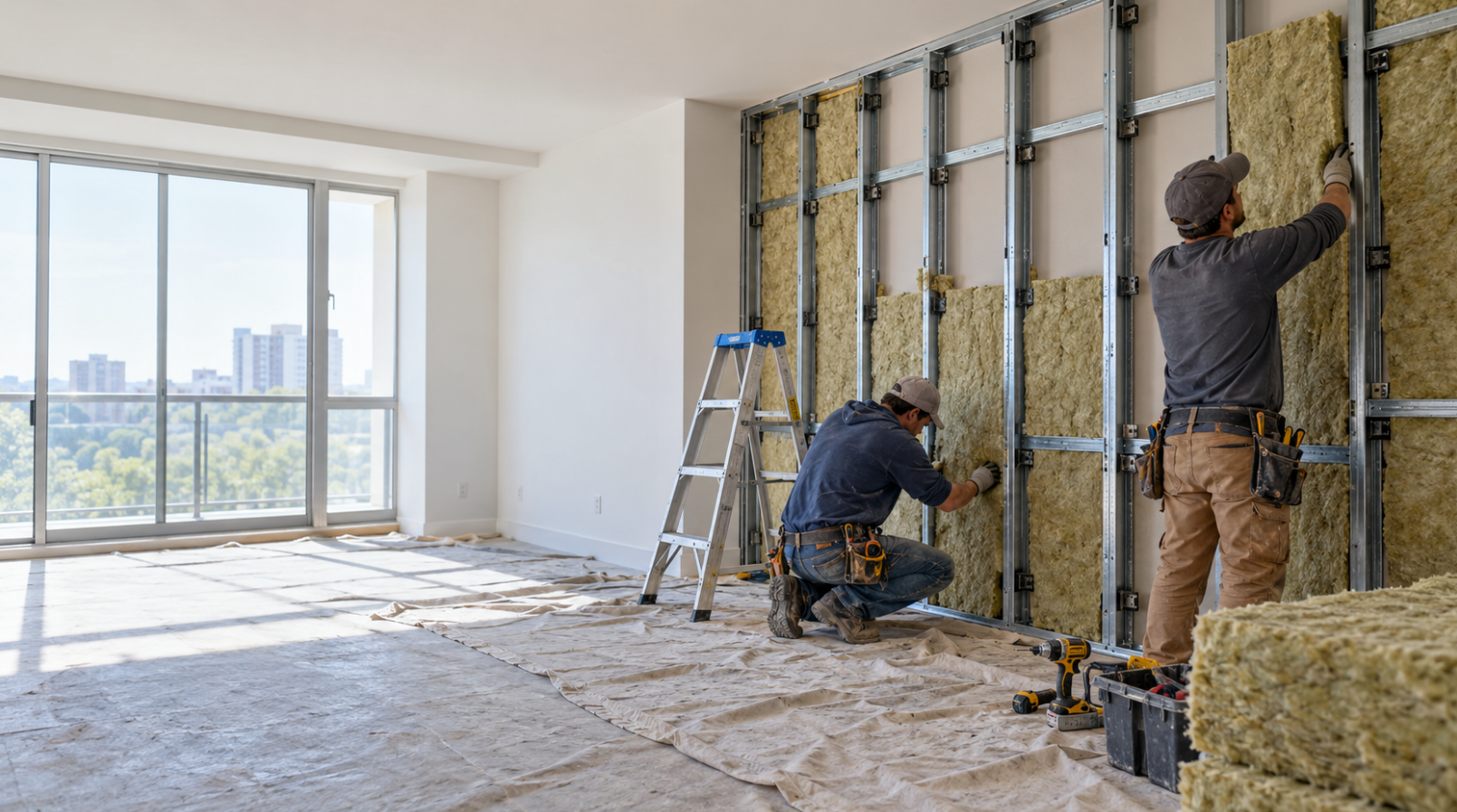
Insulation comes next. Insulation panels laid behind the ceiling tiles run $1.50 to $2.50 per square foot and improve both thermal performance and sound transfer between floors — a worthwhile add-on if noise from the room above is part of why you're installing the ceiling.
Tile upgrades and hardware round out the list. Moisture- and mold-resistant tiles carry a 10–20% premium, which pays off in bathrooms, kitchens, and damp basements. Suspension wires, connectors, and clips add roughly $0.10 to $0.50 per square foot.
Ask every contractor to itemize these in the bid. A cheap base rate with vague line items often ends up costing more than a complete quote that looked pricier upfront.
DIY vs Hiring a Contractor
Installing a drop ceiling yourself means paying only for materials — usually $2 to $8 per square foot for standard tiles and grid. On a 300-square-foot room, that's a potential saving of $450 to $1,500 in labor. The trade-off is precision: the grid has to be perfectly level across the entire span, and errors show in every tile edge.
DIY makes sense for a small, rectangular room with an uncluttered ceiling and standard 2×2 or 2×4 tiles. Hiring a professional is the better call when the layout involves ductwork, sprinklers, or integrated lighting, when the tiles are heavy metal or wood, or when the ceiling is part of a soundproofing project where gaps and flanking paths undo the result. If you're not sure which side your project falls on, an acoustic consultation can settle the question before you spend anything on materials.