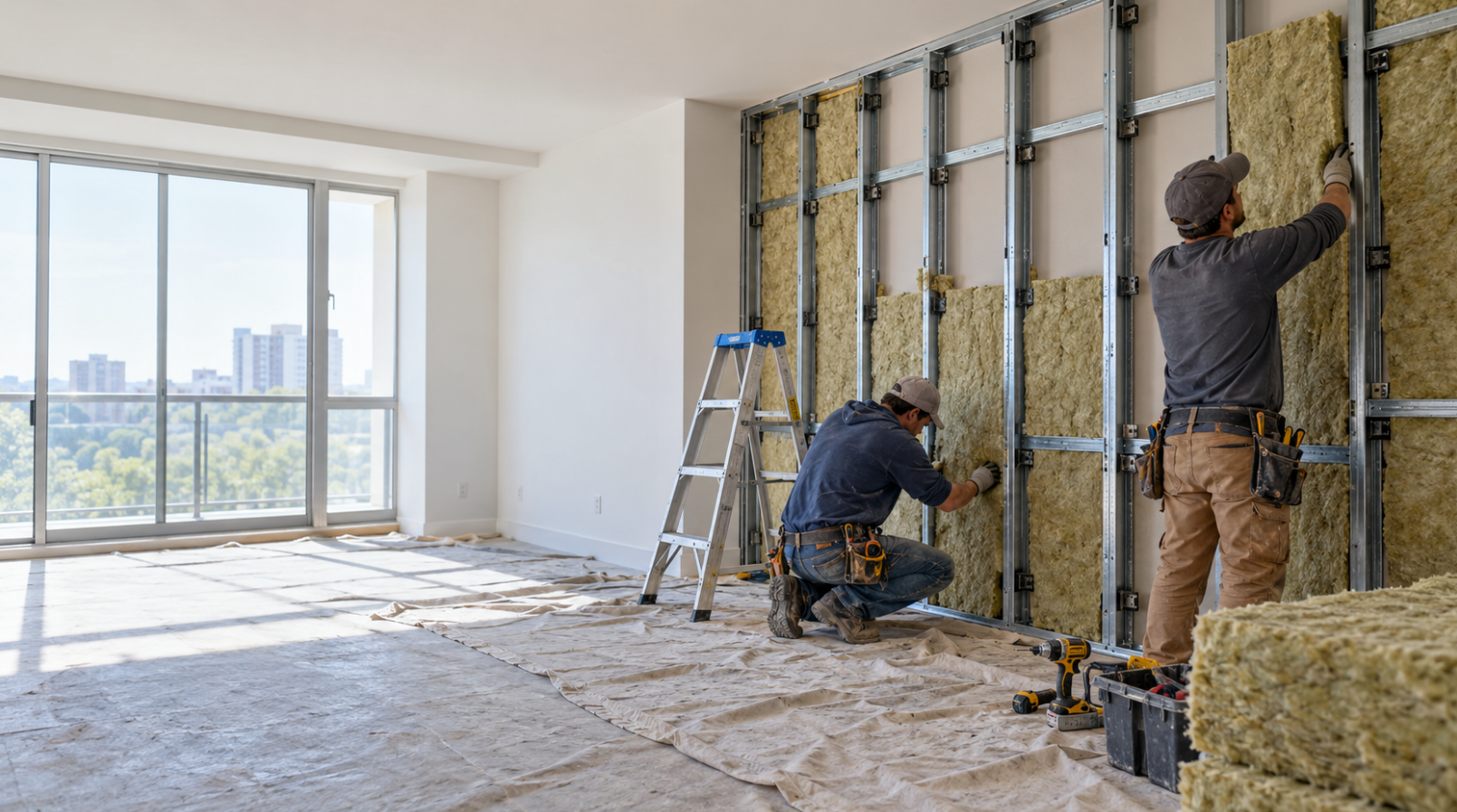
Yes, insulating an interior wall reduces airborne noise like voices and television, typically improving the wall's Sound Transmission Class by about 3 to 5 points. It is a partial measure that works best with added mass and sealed gaps, and it does little against footstep noise or bass. The sections below cover how much it helps, what it cannot fix, and when the effort is worth it.
Does Insulating Interior Walls Help With Sound? (The Short Answer)
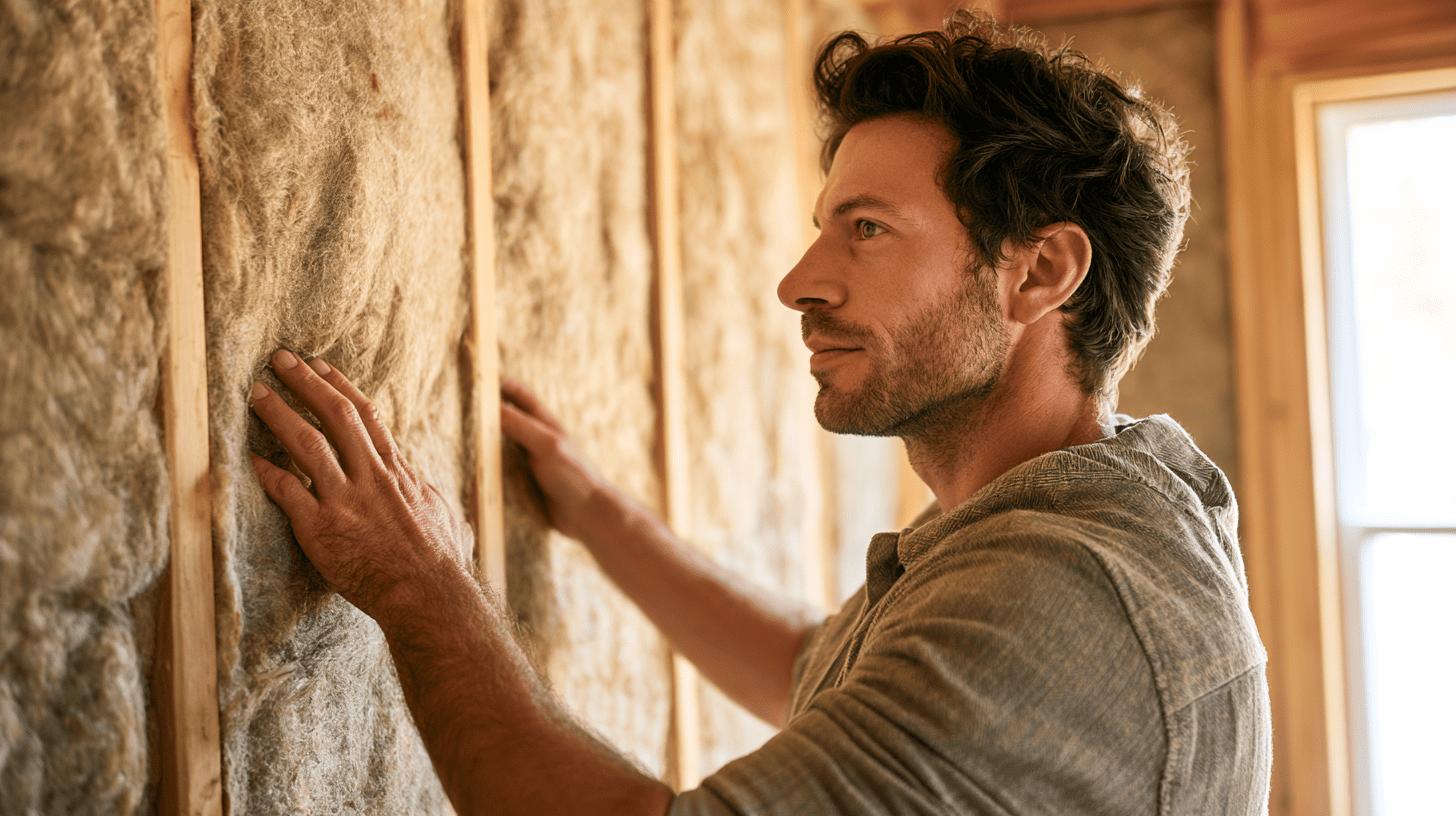
Insulating an interior wall helps with airborne sound, the kind carried through the air, such as speech, music, and TV. Batt insulation, the standard fiberglass or wool panel that fits between studs, fills the hollow wall cavity. This raises a standard interior wall's Sound Transmission Class (STC) by roughly 3 to 5 points. Clearly audible speech drops to a muffled murmur.
Insulation on its own does not make a wall soundproof. It absorbs energy within the cavity and adds almost no mass to the wall surface, which is what blocks most of the sound. The strongest results come from combining insulation with heavier drywall and tight sealing.
The honest answer is "yes, modestly." Insulation earns its place when a wall is open. Treating it as a standalone soundproofing solution leads to disappointment.
How Insulation Reduces Sound Inside a Wall
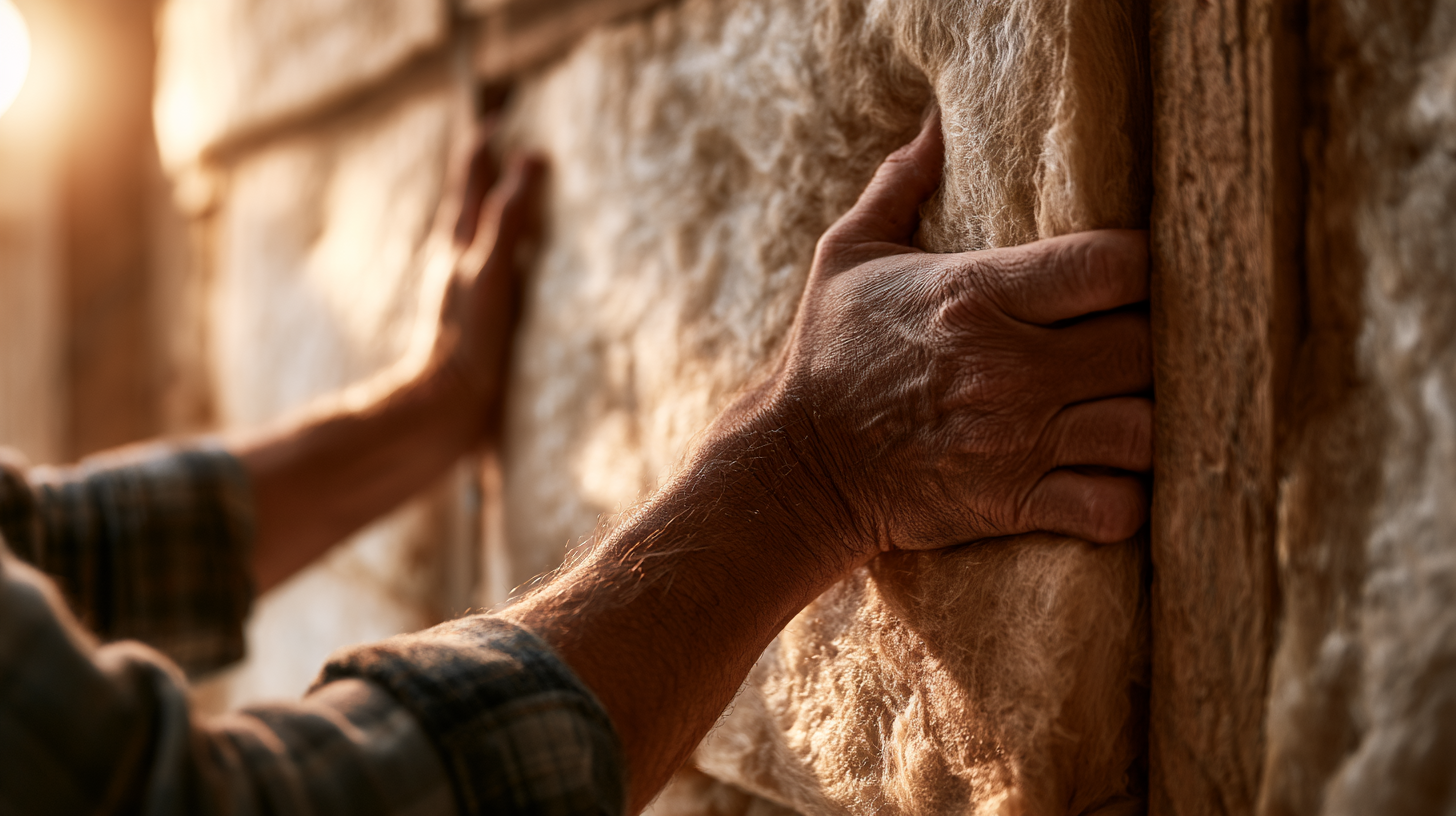
Insulation reduces sound by absorbing airborne vibrations that would otherwise resonate within the empty wall cavity. An uninsulated stud wall has a hollow air pocket between its two drywall faces. That pocket behaves like a drum, letting sound energy bounce across and pass through to the other side.
Dense fibrous material fills that pocket and dampens the resonance. As sound waves move through the fibers, friction turns part of the vibration into tiny amounts of heat. Less energy then reaches the opposite drywall face.
The effect is strongest on mid and high frequencies, where speech and TV dialogue sit. That is why a conversation or a television next door becomes noticeably quieter once the cavity is filled.
How Much Difference Does It Make, and What Changes It

An empty 2x4 interior wall with half-inch drywall on both sides rates around STC 33 to 35, where normal speech is clearly audible through it. Filling the cavity with fiberglass or mineral wool batts lifts that to roughly STC 36 to 39.
A few STC points are a real but limited change. Every 10-point rise in STC sounds roughly half as loud, so a 3 to 5 point gain softens voices without silencing them. Bass and loud impacts still come through.
There are bigger moves than insulation. Adding a second layer of drywall with a damping compound pushes a wall into the STC 45 to 52 range. Mounting the drywall on resilient channel, a springy metal strip that separates the drywall from the studs, does the same. Decoupling means separating the two wall faces so vibration cannot cross, and along with mass, it shifts the STC far more than insulation alone. That larger job is where professional wall soundproofing combines cavity insulation, added mass, and decoupling into one system.
How much the insulation helps also depends on the installation. The cavity must be filled completely, with no gaps around outlets or pipes. The batts should sit snugly without being crushed, since compressed or gapped insulation loses much of its value.
What Insulation Does Not Fix
Insulation does little against impact noise, low-frequency bass, or sound that leaks around the wall through the surrounding structure. Knowing these limits prevents wasted effort.
Impact noise travels through the building frame rather than through the air. Footsteps overhead, a slammed door, or a knock against a shared wall move through studs, floors, and joists, and cavity insulation barely touches this path. Footstep noise from above is a floor and ceiling problem, handled by ceiling soundproofing rather than wall batts.
Low frequencies are the hardest sounds to stop. Bass from a subwoofer or a passing car has long wavelengths that slip through insulation, and even through added mass, with relative ease.
Flanking paths, where sound travels around the wall instead of through it, undo much of the work. Noise slips through back-to-back electrical outlets, gaps around a door, and the shared floor and ceiling. A door set in the wall is often the weakest point, and soundproofing the door can matter more than the insulation behind the drywall.
Does the Type of Insulation Matter for Sound?
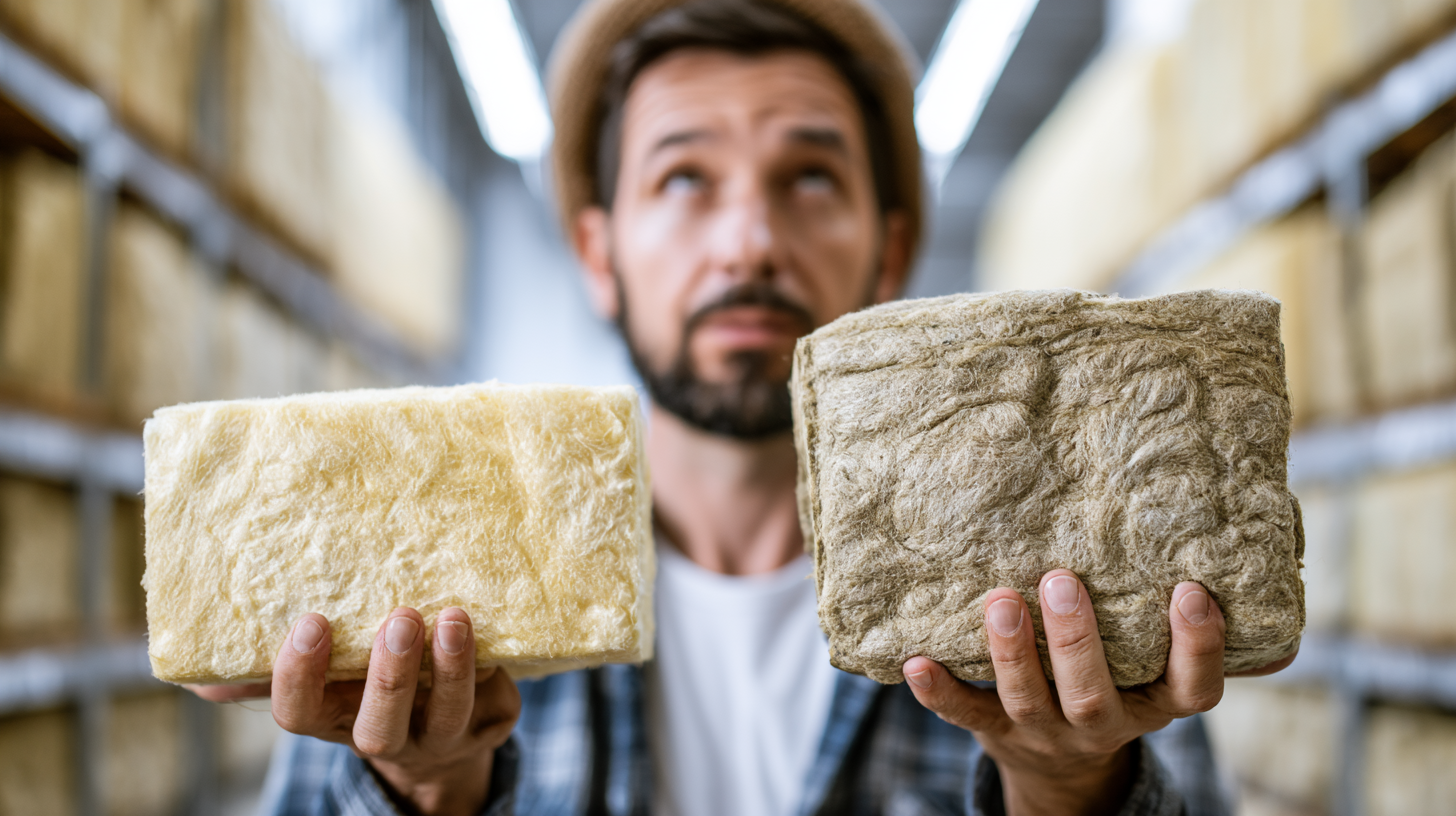
For sound control, how completely the cavity is filled matters more than the specific material. Fiberglass, mineral wool, cellulose, and recycled denim all perform similarly when installed to fully fill the cavity.
Fiberglass is the cheapest option and works well when it fills the stud bay without gaps. Mineral wool is denser and cuts to a snug fit, adding a small acoustic edge plus fire resistance. Cellulose and denim are dense, made from recycled content, and perform close to mineral wool.
One number in product marketing deserves a second look. NRC (Noise Reduction Coefficient) measures how much sound a material absorbs inside a room, while STC measures how well an assembly blocks sound between rooms. A batt with a high NRC is good at absorption, and that alone does not prove strong blocking. Absorbing echo inside a space is the job of acoustic treatment, a separate goal from stopping sound through the wall.
When It's Worth Insulating an Interior Wall
Insulating an interior wall pays off most when the wall is already open during a renovation, or when it divides a noisy area from a quiet one. Adding batts to an exposed stud bay costs little and takes minutes per cavity.
The walls are worth the material in bedrooms, home offices, media rooms, and bathrooms, where privacy or plumbing noise justifies it. New stud walls are the ideal moment, since the cavity is open before the drywall goes up.
Opening a finished wall just to add insulation rarely pays off, because demolition and repair cost more than a 3 to 5 STC gain returns. When the wall has to stay closed, surface mass and gap sealing deliver more per dollar. For a shared wall between units or a noisy neighbor, apartment soundproofing treats the whole assembly and beats insulation alone.
The Bottom Line
Insulating an interior wall gives a modest, predictable cut in room-to-room airborne noise. It does not make the wall soundproof. The best result comes from pairing insulation with added mass and sealed gaps, so the cavity, the wall surface, and the leak points all work together.
Insulation earns its place when the wall is open, or when it divides a loud room from a quiet one. For a stubborn noise problem or a shared wall between units, an acoustic consultation can pinpoint where sound actually leaks and which mix of measures the wall needs.