Sound enters through a glass door along two paths: air gaps around the perimeter and the glass panel itself. Sealing the gaps costs $20-60 and removes the largest leaks; adding mass over or into the glass costs $200-2,000 and handles the rest. The working methods, in order of escalation: acoustic caulk, weatherstripping, a door sweep, soundproof curtains, an acrylic or glass insert, laminated or double glazing, and full door replacement.
Find Where the Sound Gets In
Diagnose the entry path before buying anything. Airborne noise (traffic, voices, music) slips through perimeter gaps between the door, its frame, and the wall; the glass panel transmits what remains. Structure-borne noise (footsteps above, slamming somewhere in the building) travels through the walls and floor, so no door treatment reduces it.
Run two quick checks. At night, turn off the lights inside and have someone shine a flashlight around the closed door from outside: every visible ray marks an air leak. Then slide your hand along the frame, the meeting stile, and the bottom track on a windy day; a draft means a gap that passes sound.
Gaps come first because their effect is disproportionate. An opening covering about 1% of a door's area can pass roughly half of the incoming sound energy, which means upgraded glass behind an unsealed frame delivers almost nothing. Seal the perimeter, re-test by ear, and only then invest in the glass.
Seal the Gaps
Perimeter sealing delivers the best noise reduction per dollar of any method on this list. Three products cover the three leak zones, and a full glass door takes an afternoon.
Acoustic Caulk for the Frame-to-Wall Joint
Acoustic caulk seals the static joint where the frame meets the wall. Unlike regular caulk, it stays flexible for years without cracking, so the seal survives seasonal movement. Cut out any old dried caulk first; a $10-15 tube covers a standard doorway.
Weatherstripping for the Door-to-Frame Gap
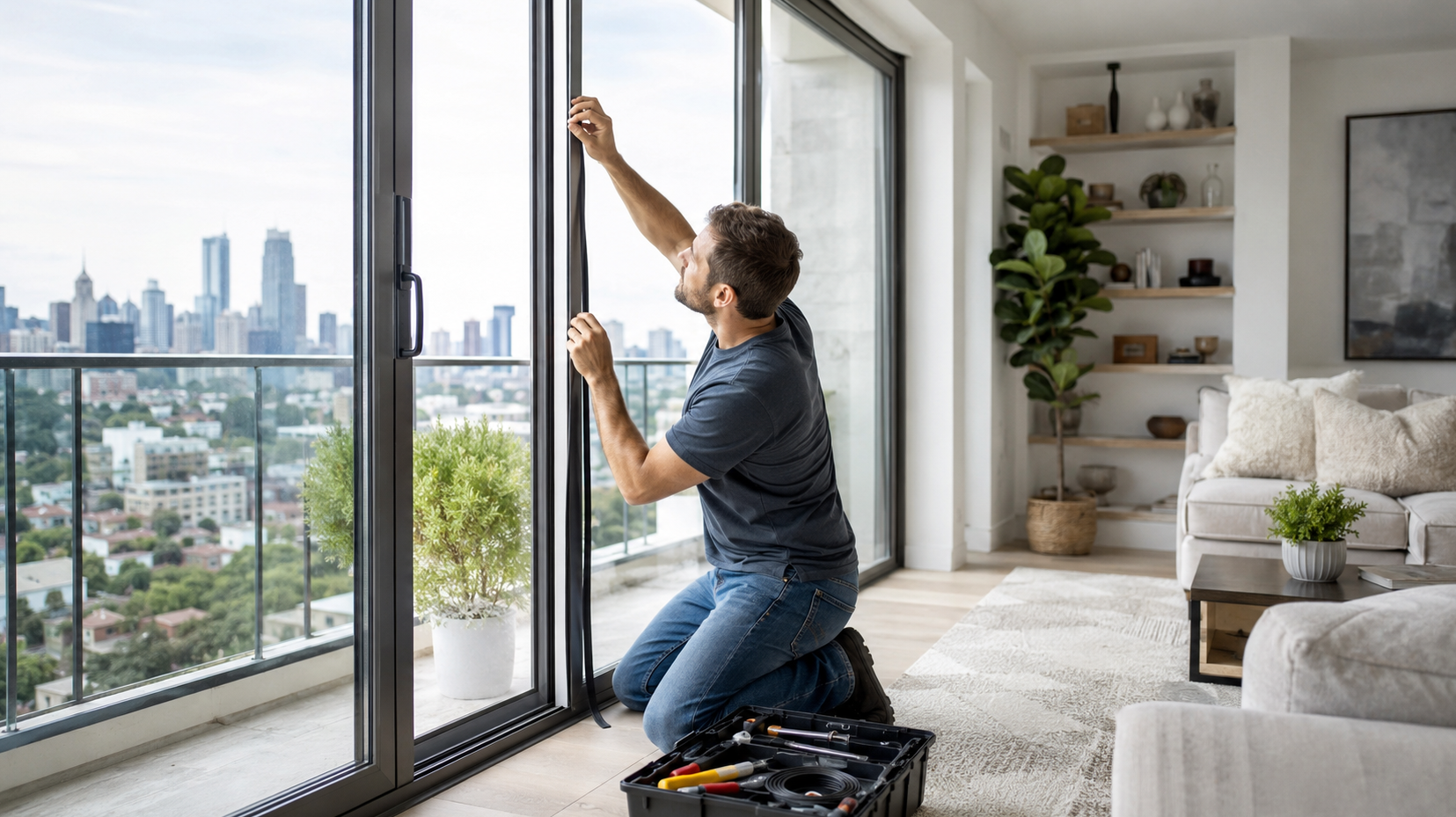
Weatherstripping closes the gap where the door meets the frame or, on sliding doors, where the panel meets the jamb and the meeting stile. Silicone or rubber bulb profiles outperform foam tape, which compresses flat within a year. Fin seals handle the vertical edges of sliding panels. Budget $15-30 per door.
Door Sweep or Track Seal for the Bottom Gap
A door sweep or track seal blocks the bottom gap. Hinged French and single glass doors take a screw-on sweep with a rubber or brush blade; sliding doors take brush seals along the track sides, since a rigid sweep would jam the rollers. Expect $15-25.
Why All Three Zones Matter
Sealing works as a system: one open zone drains the effect of the other two. This is the reason professional door soundproofing treats the full perimeter in one pass, including the meeting stile and track details that DIY jobs usually miss. Done thoroughly, sealing alone typically cuts perceived noise by 3-5 dB, which the ear registers as a clear reduction.
Add Mass Over the Glass
Once the perimeter is tight, the glass becomes the main transmitter, and the fix is added mass in front of it. Three options cover the budget range.
Soundproof Curtains
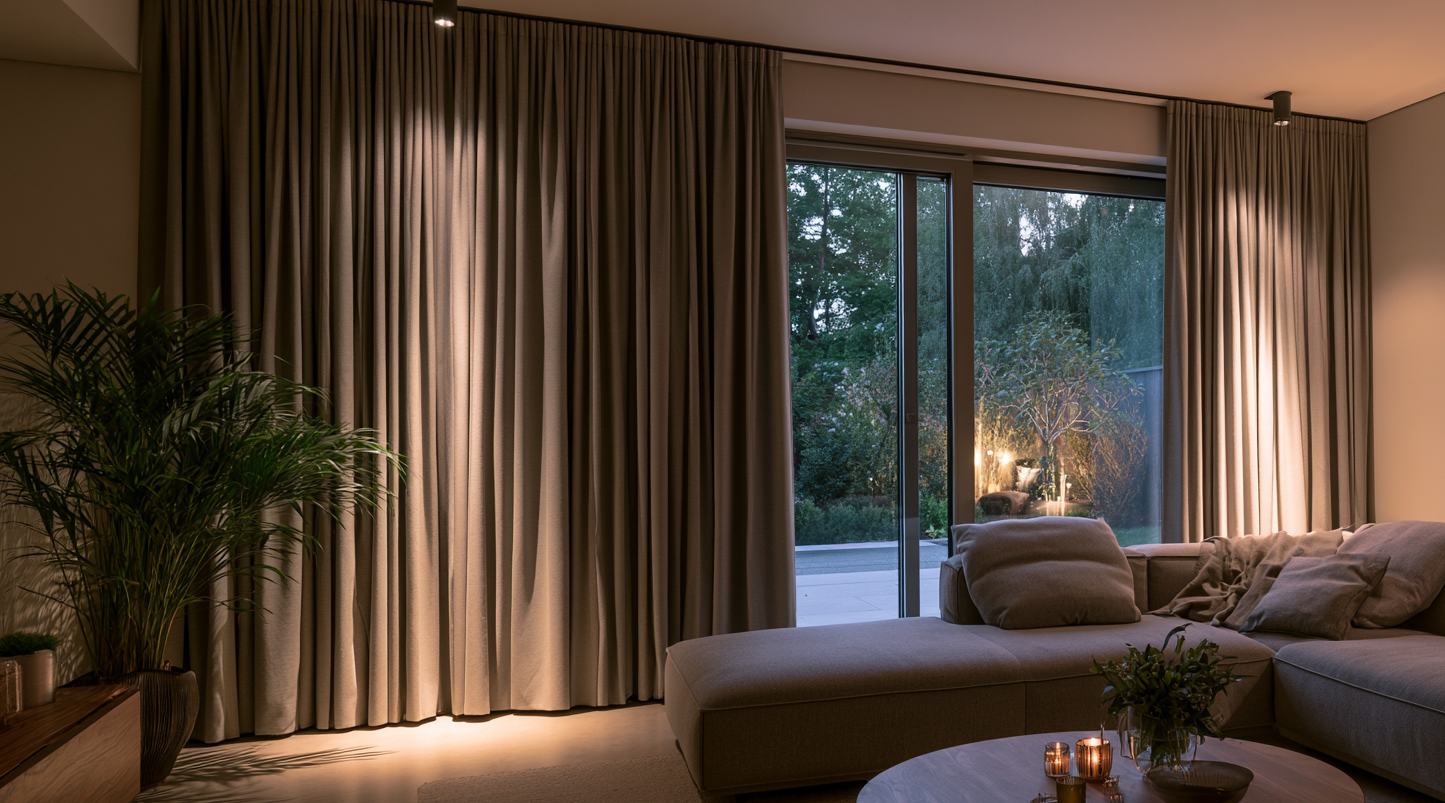
Soundproof curtains are dense, multi-layer fabric panels weighing several pounds per panel. Hang them from a ceiling-mounted track, extend them 6-10 inches past the door opening on each side, and let them reach the floor; coverage beyond the frame is what separates a working install from a decorative one. Expect $80-250 and a modest reduction of high-frequency noise (voices, birds), with little effect on traffic rumble.
MLV Panel or Moving Blanket
A mass loaded vinyl (MLV) panel or moving blanket hung over the doorway adds real mass at low cost, around $50-150. It blocks light and looks rough, which limits it to temporary use: night hours, a rental, or a room where appearance is secondary.
Acrylic or Laminated Glass Insert
An acrylic or laminated glass insert mounted on the interior side of the opening is the strongest add-on method. The insert creates a sealed air gap of 2-4 inches in front of the existing glass, and this gap, rather than the added pane alone, produces the improvement: the assembly can reach a 10-15 dB reduction while keeping the view and daylight. The approach mirrors interior window soundproofing inserts, adapted to a door-sized opening with a removable or operable frame section. Budget $300-1,000 depending on size.
Upgrade the Glass or the Door
Move to structural upgrades when sealed gaps plus an insert still leave too much noise, or when the door must stay fully operable with nothing added on top. Before spending on replacement, an acoustic consultation identifies whether the door is actually the weak point; a thin wall or a single-pane window next to it can be leaking more than the door itself, and replacing the wrong element wastes the budget.
Laminated Glass
Laminated glass raises the panel's rating from roughly STC 26-28 (standard single pane) to STC 35 and above. The plastic interlayer between two glass sheets damps vibration, so laminated units outperform ordinary double glazing of the same thickness for noise. Reglazing an existing door runs $300-800.
Acoustic Double Glazing
Acoustic double glazing works best with asymmetric panes, such as 6 mm and 4 mm glass: two different thicknesses resonate at different frequencies and cover each other's weak points. Standard symmetric double glazing helps with heat far more than with sound, which surprises many buyers.
Acoustic-Rated Door Replacement
A full acoustic-rated door replacement ($1,500-4,000 installed for sliding units) combines laminated glass, a heavy thermally broken frame, and factory compression seals. For severe exposure, a second glass door creating a vestibule air space in front of the first delivers the maximum result short of rebuilding the wall.
Cost vs Noise Reduction

|
Method |
Cost (USA) |
Typical effect |
Solves |
|
Acoustic caulk |
$10-15 |
Removes frame-to-wall leaks |
Perimeter gaps |
|
Weatherstripping |
$15-30 |
2-4 dB with other seals |
Door-to-frame gaps |
|
Door sweep / track seal |
$15-25 |
Closes the bottom leak |
Under-door gap |
|
Soundproof curtains |
$80-250 |
Softens high frequencies |
Voices, mid/high noise |
|
MLV panel / blanket |
$50-150 |
Noticeable, temporary |
Broadband, looks rough |
|
Acrylic/glass insert |
$300-1,000 |
10-15 dB with air gap |
Glass transmission |
|
Laminated reglazing |
$300-800 |
STC 26-28 → 35+ |
Glass transmission |
|
Acoustic door replacement |
$1,500-4,000 |
Strongest single upgrade |
Gaps + glass together |
Combine down the table rather than choosing one row: sealing plus an insert routinely outperforms an expensive door dropped into a leaky frame. Balcony doors in multifamily buildings deserve the system view, since the door shares its noise path with windows and party walls;apartment soundproofing treats those elements together and finds the order of fixes that pays off first.
What Doesn't Work
Several widely marketed products fail on glass doors because they target absorption or aesthetics instead of the two factors that reduce transmission: mass and airtightness. Four of them come up in almost every search, and skipping them saves both money and a false sense of progress.
Acoustic foam on or around the glass
Foam absorbs echo inside a room; it adds almost no mass, so it barely changes what passes through a door. Panels taped to glass reduce transmission by a fraction of a decibel while blocking the view entirely.
"Soundproof" paint
A millimeter of any coating cannot add meaningful mass to a door assembly. Marketed reductions come from lab conditions unrelated to a glass panel.
Thin window film
Security and tint films are far too light to shift the glass's acoustic behavior. Only a rigid pane with a sealed air gap changes the numbers.
Sealing the glass edge beads while leaving the perimeter open
The frame-to-wall and door-to-frame gaps dominate; caulking the small glazing joints first inverts the priority.
The common thread: transmission through a door drops only with mass and airtightness, while absorption products treat a different problem. When it's unclear whether the door is even the main leak, a professional sound measurement pinpoints the dominant path with meter readings instead of guesswork, often saving the cost of an unneeded upgrade.
The Right Order to Soundproof a Glass Door
Work in order: seal the perimeter first (caulk, weatherstripping, sweep, $40-70 total), then add mass over the glass (insert or curtains), and only then consider reglazing or replacement. A gap of 1% of the door's area can pass about half the sound, so upgraded glass behind open gaps is wasted money.
The air gap does the heavy lifting in every serious upgrade. An interior insert 2-4 inches off the existing pane reaches 10-15 dB; laminated glass lifts the panel from roughly STC 27 to 35+.
Skip absorption products for this task. Foam, paint, and films treat room echo or aesthetics; door transmission responds only to mass and airtight sealing, and a measurement settles any doubt about where the noise actually enters.