
Soundproofing a wall cheaply means cutting the noise that passes through it using low-cost mass, sealed gaps, and budget damping, without a full construction job. The methods below are ranked from free to modestly priced, and each one is marked for whether it blocks sound or only softens echo, so you don't spend money on the wrong fix.
What Soundproofing a Wall Actually Means (Blocking vs. Absorbing)
Soundproofing a wall reduces the sound that travels through it from the other side. Acoustic treatment does something different: it reduces echo and reverb inside your own room. Most cheap "soundproofing" advice online confuses the two, which is why people buy foam and stay disappointed.
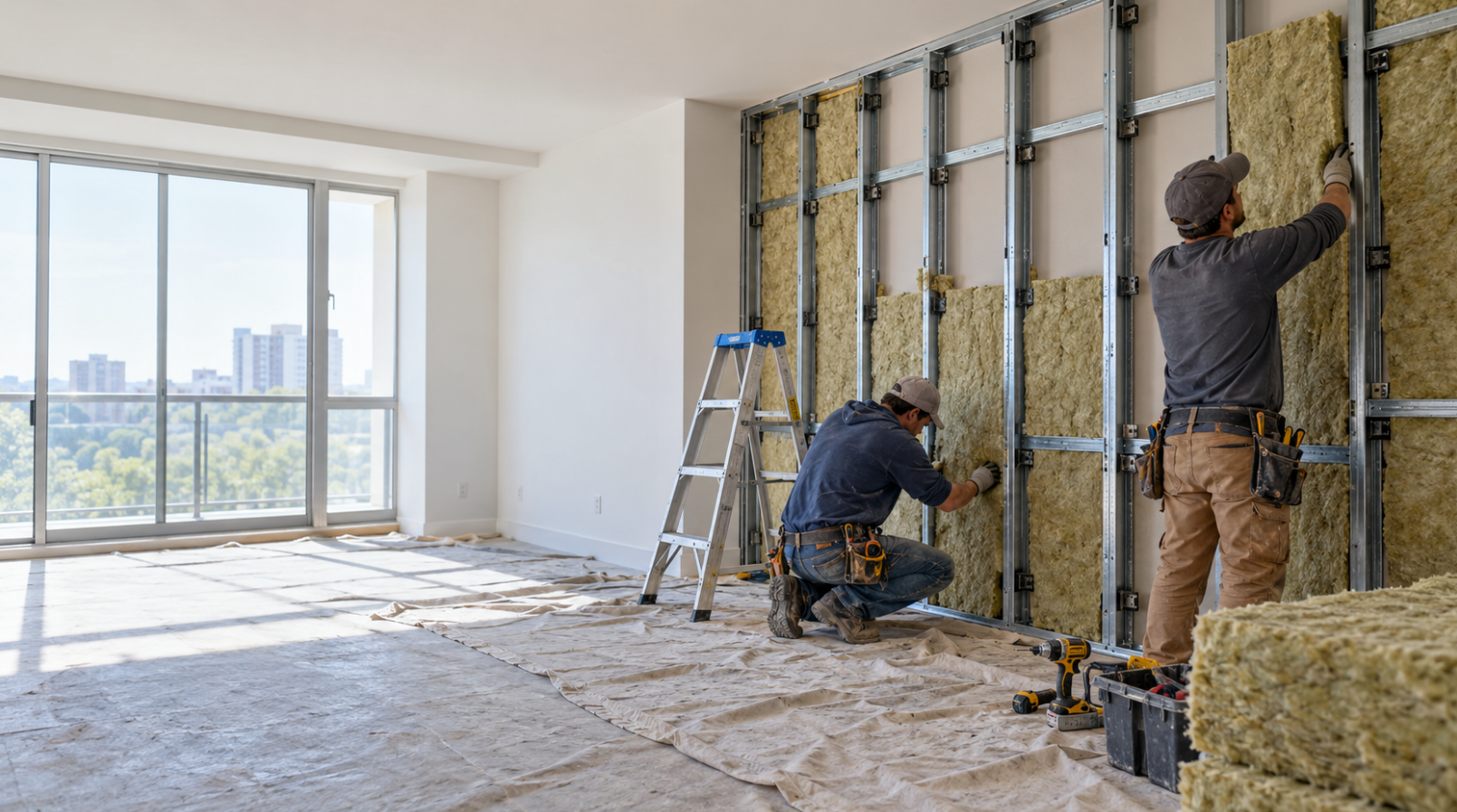
Four things physically stop sound from moving through a wall: mass, decoupling, damping, and sealing air gaps. Mass means heavier, denser material. Decoupling means separating the two wall surfaces so vibration can't cross. Damping means a layer that converts sound vibration into tiny amounts of heat. Sealing means closing the gaps where sound leaks straight through.
Foam panels and egg-crate foam do none of those four things. They absorb high-frequency reflections in the room they hang in. If your problem is a neighbor's TV or voices coming through the wall, foam will not fix it. Absorption belongs to acoustic treatment, a separate goal from blocking transmission.
On a budget, the two methods that give real transmission blocking are adding mass and sealing gaps. Everything cheap and effective comes back to those two.
The Cheapest Ways to Soundproof a Wall, Ranked by Cost

The cheapest effective sequence is: seal the gaps, add mass with things you already own, then hang or attach denser material if the noise still bothers you. Cost climbs only as you move down the list.
|
Method |
Approx. cost |
Blocks or absorbs |
Effort |
|
Seal gaps and cracks |
$15 to $40 total |
Blocks |
Low |
|
Bookshelf / heavy furniture on the wall |
Free (already own) |
Blocks |
Low |
|
Moving or acoustic blankets |
$20 to $60 each |
Blocks + some absorb |
Low |
|
Acoustic curtains over the wall |
$25 to $60 per panel |
Some block + absorb |
Low |
|
Mass-loaded vinyl (MLV) |
$1.50 to $3 per sq ft |
Blocks |
Medium |
|
Second layer of drywall + Green Glue |
$60 to $100 per 4×8 section |
Blocks |
High (DIY) |
For a full breakdown of what a professional job runs once you outgrow the cheap tier, see this NYC cost of professional soundproofing guide, which also covers the phased "start with one wall" approach.
Seal the Gaps and Cracks First
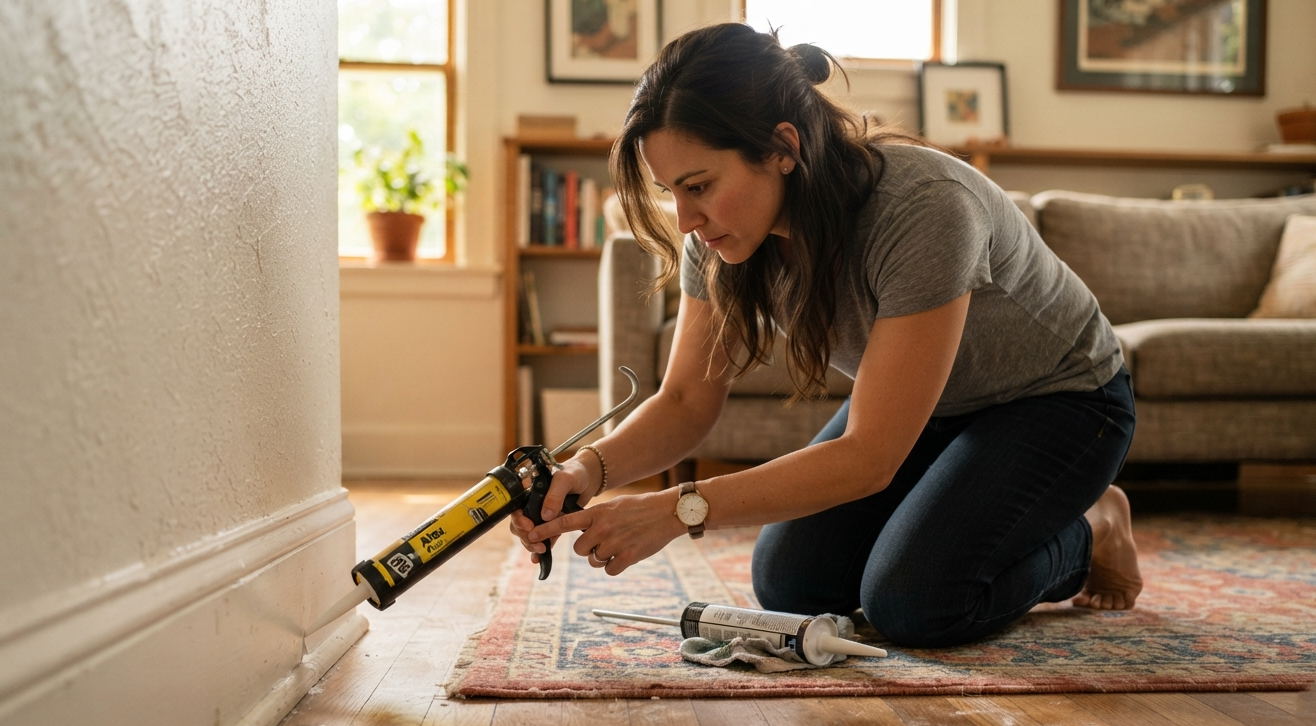
Sealing air gaps is the cheapest step and usually the best value per dollar, because sound leaks straight through openings that mass can't cover. A wall with unsealed gaps behind the baseboard or around outlets will leak noise no matter how heavy you make the surface.
The common leak points are the seam where the wall meets the floor and ceiling, the gaps behind electrical outlets and switch plates, and the perimeter of any door set into that wall. Each one is an open-air path for sound.
Run a bead of acoustic caulk (roughly $10 to $18 per tube) along the baseboard seam and any visible cracks. Acoustic caulk stays flexible, so it keeps sealing as the building shifts. Behind outlet and switch covers, add foam gasket pads, sold in packs for about $5 to $8.
If a door sits in the wall, its perimeter gap leaks more sound than the door slab itself. Add weatherstripping around the frame and a bottom sweep, or handle the whole opening properly by soundproofing the door. A tight door seal often does more than any panel you could hang.
Add Mass to the Wall on a Budget
Mass blocks sound because heavier surfaces are harder for sound waves to vibrate. The cheapest way to add mass is to cover the wall with dense material you already own before buying anything.
Bookshelves and Heavy Furniture
A tall bookshelf packed with books, pushed flat against the shared wall, is one of the most effective free fixes available. Books are dense and irregular, so they add both mass and a rough surface for absorption. A full wardrobe or a solid cabinet against the wall works the same way. Fill every shelf and leave no gap between the back of the furniture and the wall.
Moving Blankets and Acoustic Blankets
Moving blankets add mass and hang flat against a wall for about $15 to $30 each. Grommeted acoustic blankets, made to hang, run around $30 to $60 and include hanging holes. Mount them on hooks or a curtain rod covering the whole wall surface, corner to corner. Expect a clear reduction in muffled voices and mid-range noise, though not silence.
Fabric options that look less like a warehouse include acoustic curtains, which layer heavy fabric over a wall or window to soften both incoming noise and room echo.
Mass-Loaded Vinyl (MLV)
Mass-loaded vinyl is a thin, heavy sheet that adds serious mass for its thickness, priced around $1.50 to $3 per square foot. A standard 8-by-10-foot wall runs roughly $120 to $240 in materials. You staple or screw it to the wall studs, then cover it with a decorative layer or drywall. MLV is the strongest budget upgrade that still counts as a real transmission blocker.
A Second Layer of Drywall with Green Glue
Adding a second sheet of ⅝-inch drywall with Green Glue damping compound between the layers is the top of the DIY-budget tier. A 4-by-8 sheet costs about $15 to $22, plus roughly $45 in Green Glue per sheet. The compound turns the two drywall layers into a damped sandwich that stops vibration far better than a single wall. For a permanent result on a shared wall, this is where many people bring in professional wall soundproofing to combine mass, damping, and decoupling correctly.
Absorb Echo Inside the Room (Optional, and Cheap)
Acoustic foam and fabric panels reduce echo and reverb inside your own room. They do very little against a neighbor's noise coming through the wall, so treat this as an optional add-on, not a soundproofing step.
Use absorption only if your own room sounds hollow or your voice bounces on calls and recordings. Basic foam panels cost about $20 to $40 for a set, and fabric-wrapped acoustic wall panels look cleaner for a living space.
Renters can hang foam without wrecking the paint. This guide on how to install acoustic foam without damaging the wall covers removable mounting that leaves the surface intact.
Cheap Soundproofing Myths - What Doesn't Work

Egg cartons do not soundproof a wall. They are thin, light cardboard with no meaningful mass, and their shape does nothing to block transmission through a wall. The myth comes from studios using them as cheap-looking absorption, and even for that, they perform poorly.
Thin acoustic foam does not block a neighbor's noise. Foam absorbs high-frequency reflections in a room and has almost no effect on sound passing through a solid wall. It cannot add the mass that blocking requires.
Soundproof paint is heavily overhyped. A thick coating adds a negligible amount of mass and gives at most a slight reduction against high frequencies. It will not stop voices or bass through a wall.
Thin curtains and tapestries without weight barely help. Only dense, heavy fabric that covers the full wall adds enough mass to matter, which is why moving blankets and true acoustic curtains work while light decorative fabric does not.
Realistic Results You Can Expect on a Budget
Cheap methods reduce noise and make a room more comfortable, but they rarely achieve full silence. The best budget outcome comes from stacking fixes: seal every gap, add as much mass as the wall can hold, and use absorption only if your own room echoes.
A standard interior wall typically has an STC rating of 33 to 38, where normal speech is audible through it. Sealing plus added mass can lift real-world performance several points, enough to turn clear voices into a low murmur. Reaching the higher levels that block bass and TV noise usually requires decoupling and a heavier build.
For a noisy shared wall or a co-op unit, the durable solution is apartment soundproofing that treats the wall assembly as a whole. If the cheap fixes only get you partway, an acoustic consultation or a full wall soundproofing service can identify exactly where the sound is leaking and what the wall needs.