
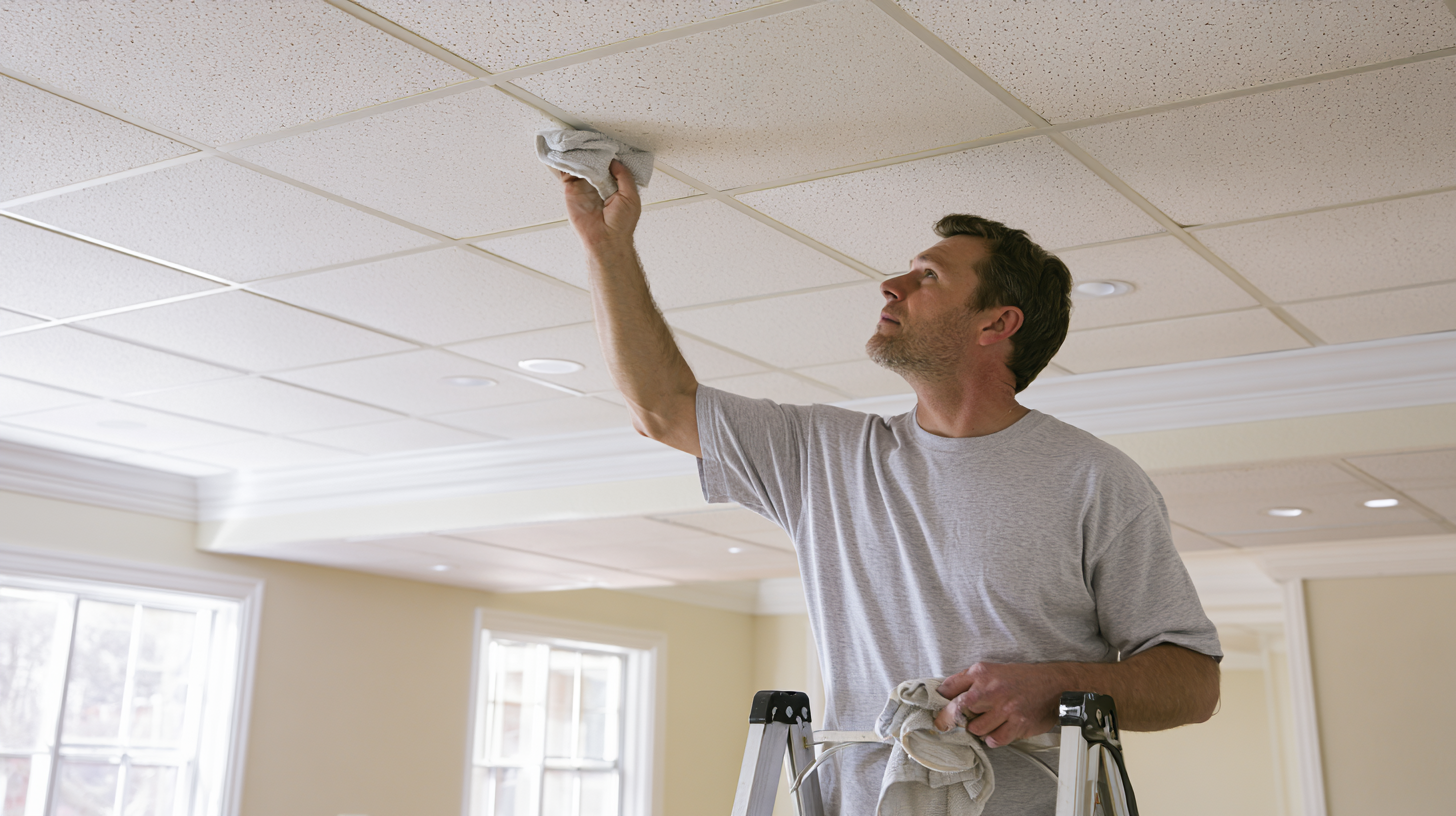
Cleaning drop ceiling tiles follows a simple order. Start by identifying the tile material, then dry-clean off any dust before any liquid touches the surface. From there, spot-clean stains with a method matched to the tile, and replace any tile that is warped, moldy, or stained through. The rule behind all of it: dry-clean first and keep porous tiles as dry as possible, because water spreads dirt and leaves rings on mineral fiber.
Identify Your Tile Type (Washable vs Porous)

The right cleaning method depends entirely on whether your tile is washable or porous. Washable tiles have a smooth, sealed surface and can be cleaned with a damp cloth. Porous tiles are soft and fibrous, and they stain or warp if they get too wet.
Washable tiles include vinyl or PVC-faced panels, metal or tin tiles, and molded plastic. Their coated surface lets you wipe grease, dust, and most marks off with mild soap and water.
Porous tiles include standard mineral fiber and fiberglass panels, the light gray or white boards found in most basements and offices. These absorb moisture, so they require dry methods and only the lightest spot cleaning.
If you are unsure, press a barely damp cloth on a hidden corner. A washable tile shows no change, while a soft tile darkens and soaks up the water. Knowing which system you have also helps at replacement time, since the types of drop ceiling tiles differ in material and finish.
Prep the Area and Stay Safe
Before cleaning, protect the room and yourself, and cut power to any light fixtures if you plan to use moisture near them.
Lay a drop cloth over furniture and the floor to catch dust and drips. Set up a sturdy ladder, and have someone steady it while you work overhead.
Wear gloves, safety glasses, and an N95 mask. Ceiling tiles shed fine dust, and stirred-up mold spores or bleach fumes are worth guarding against.
When a tile is badly soiled, lift it out of the grid and clean it flat on a covered surface. Working on a horizontal tile is easier and keeps water from running into the grid or the ceiling cavity. Clean one section at a time so you can track what is done.
Dry-Clean First (Dust, Cobwebs, Soot)
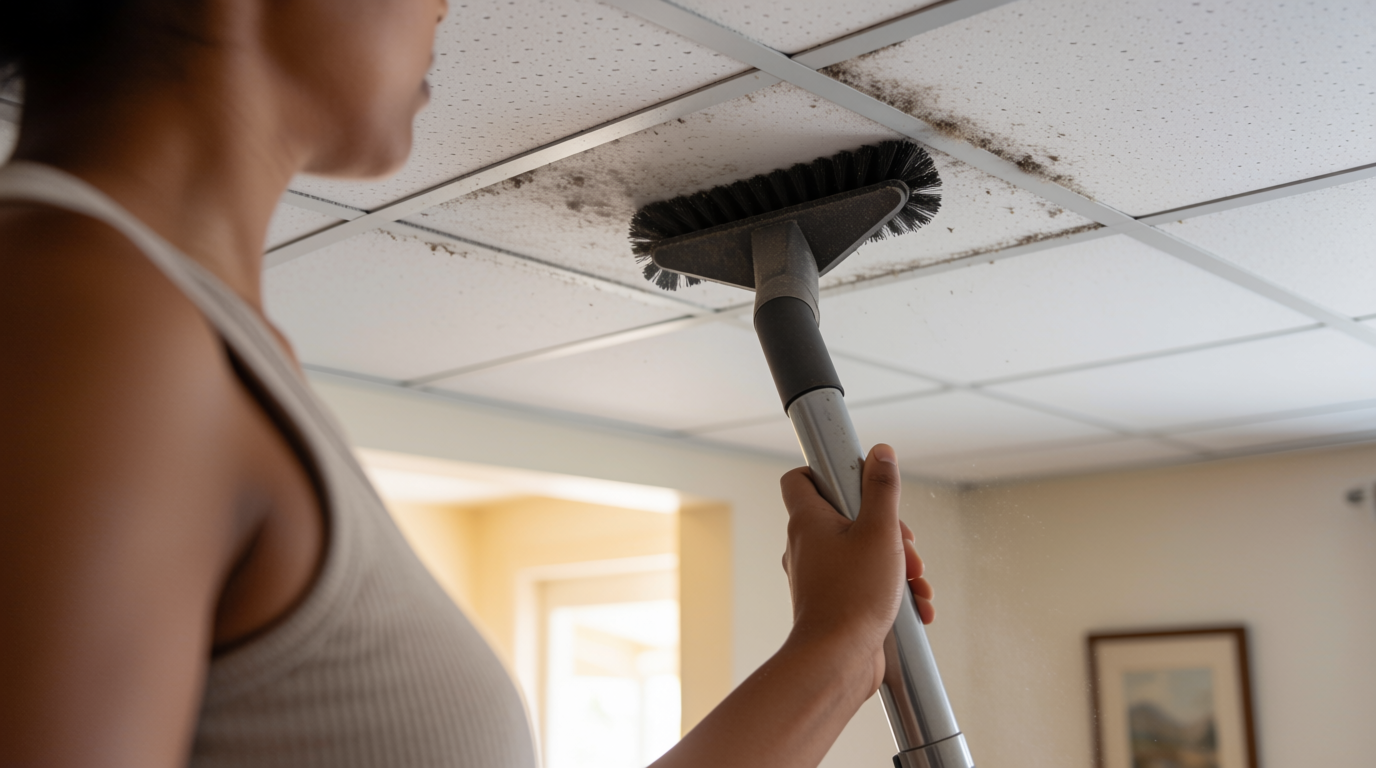
Always remove loose dust and dirt dry before any liquid touches the tile. Wet dust turns to a smear that mineral fiber holds onto.
Run a vacuum with a soft-bristled attachment across the tile surface to lift surface dust. Use a microfiber duster or a dry cloth to remove cobwebs from the corners and along the grid.
For soot, smoke film, or heavy dust on soft mineral fiber tiles, use a dry-cleaning sponge, also called a chemical or soot sponge. It lifts grime off the surface with no water, which is what these tiles need. Wipe in one direction, then turn the sponge to a clean side as it loads up.
Spot-Clean by Tile Type

Wet-clean only the tiles that can take it, and keep the fibrous ones as dry as the job allows.
For washable tiles, dampen a cloth with water and a few drops of dish soap, then wipe the marked area. Go over it once more with a clean, damp cloth to remove residue, and dry it with a lint-free towel. Metal and vinyl faces handle this well.
For mineral fiber tiles, dampen a cloth or sponge only slightly and touch it to the stain alone. Blot the spot instead of scrubbing, since pressure drives dirt deeper into the fiber. Let the tile air-dry fully before returning it to the grid.
Where water risks a ring, skip liquid and use the dry cleaning sponge instead. On soft tiles, less moisture almost always gives a cleaner result.
How to Remove Common Drop Ceiling Stains
Different stains call for different treatments, and some set-in marks are better covered or replaced than scrubbed.
Water stains, the yellow or brown rings, are the most common drop ceiling problem, and they start with a leak. Fix the moisture source first, or the ring returns. Dab a diluted bleach solution, about one part bleach to three parts water, on a light ring and let it dry. A stain that has soaked through will not wash out, so cover it with an oil-based stain-blocking primer such as Kilz, or swap the tile.
Mold and mildew need a bleach or white vinegar solution, applied with the room ventilated and your gloves and mask on. Wipe the growth off a washable tile, or dab it on a fibrous one. Mold that has grown deep into porous fiber cannot be fully removed, so replace that tile and correct the underlying humidity or leak.
Grease and kitchen grime wipe off washable tiles with a mild degreaser or dish soap and water. Mineral fiber tiles absorb grease into the fiber, where cleaning rarely works, so a grease-stained tile usually needs to be replaced.
Smoke and nicotine film comes off best with a dry cleaning sponge first, followed by a soap-and-water wipe on washable tiles. Heavy nicotine buildup on mineral fiber tiles often requires a stain-blocking primer or new tiles, since the yellowing is embedded in the material.
When to Clean vs. Replace a Tile
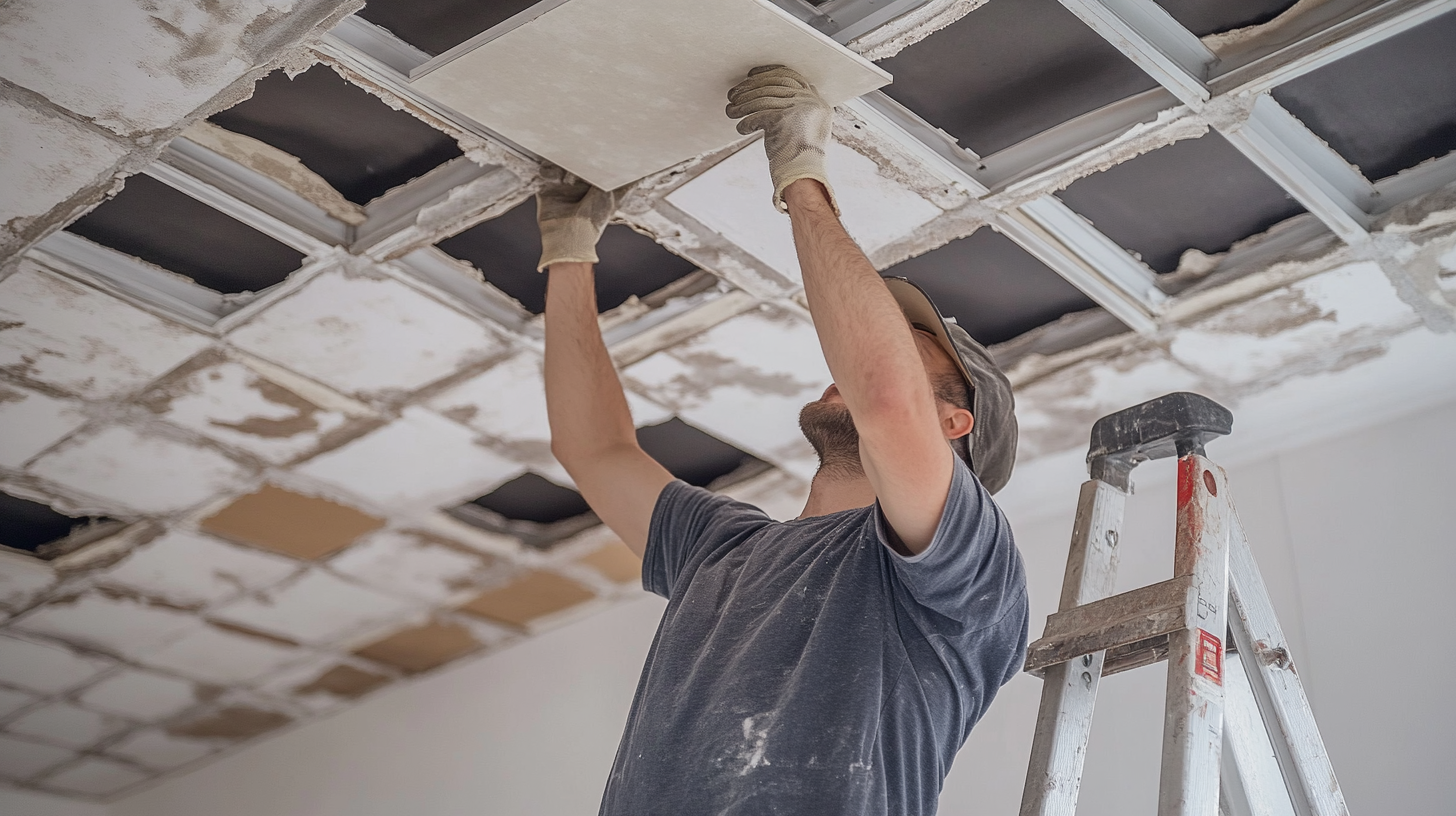
Replace a drop ceiling tile rather than cleaning it when it is warped, sagging, crumbling, severely moldy, or stained all the way through. Cleaning cannot restore a tile that has lost its shape or absorbed a stain into the fiber.
Drop ceiling tiles are modular, so a swap is quick and cheap. Lift the damaged tile out of the grid and drop a matching one in. Match the size; most US tiles are 2 by 2 feet or 2 by 4 feet, along with the edge type and surface pattern.
If you are buying replacements, tile material and thickness affect both look and acoustics, and this guide to choosing the right ceiling tile thickness covers the trade-offs. For a ceiling with many failed tiles or a tired grid, a full professional drop ceiling installation often costs less hassle than replacing tiles one by one.
Keeping Drop Ceiling Tiles Clean
Regular dry dusting and moisture control prevent most drop ceiling stains before they set. A quick vacuum every few months keeps dust from building into a film that needs wet cleaning.
Address leaks and high humidity fast, since water is behind the worst stains and mold. A bathroom fan, a dehumidifier in a damp basement, or a prompt roof repair saves far more tiles than any cleaning routine.
Cleaning keeps tiles looking right, though it does nothing for noise passing through the ceiling. If footsteps or voices from above come through the grid, upgrading the assembly with ceiling soundproofing does what a cleaning never will.