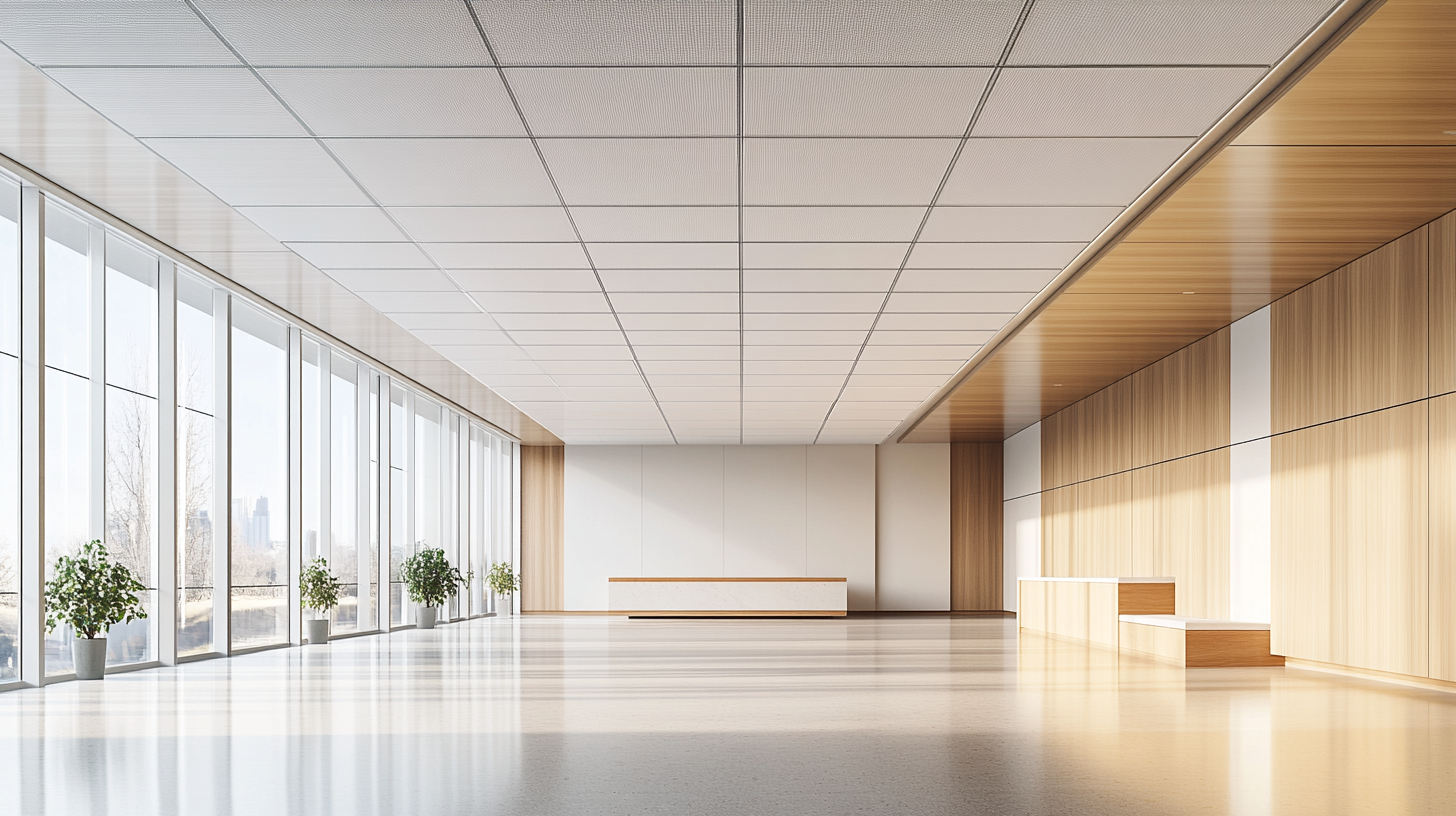
Acoustic ceiling tiles are ceiling panels made from sound-absorbing materials designed to reduce echo, lower reverberation, and improve a room's sound quality. They differ from standard decorative tiles because their core material is engineered to convert sound energy into heat rather than reflect it back into the space.
There are three practical ways to classify acoustic ceiling tiles: by material, by installation method, and by acoustic rating. Material determines how much sound a tile absorbs and how it looks; installation method determines how it mounts to your structure; and the acoustic rating (NRC or CAC) determines whether it controls noise inside a room or blocks noise between rooms.
This guide breaks down each category so you can identify the right type for a home theater, office, restaurant, or any space with a noise problem.
What Are Acoustic Ceiling Tiles?
An acoustic ceiling tile is a panel made of a porous or perforated sound-absorbing material, installed on a ceiling to reduce airborne noise and echo in a room.
The defining feature is the material's open structure. Sound waves enter the surface, lose energy through friction inside the porous core, and reflect back at a much lower level. A standard hard ceiling, such as bare drywall or concrete, reflects nearly all of that energy and creates a harsh, echo-prone environment.
Most acoustic ceiling tiles perform one of two acoustic jobs: absorption, which reduces echo inside the room as part of a broader acoustic treatment for the space, or attenuation, which blocks sound from passing to an adjacent room. Some specialized tiles do both, but most are optimized for one.
Types of Acoustic Ceiling Tiles by Material
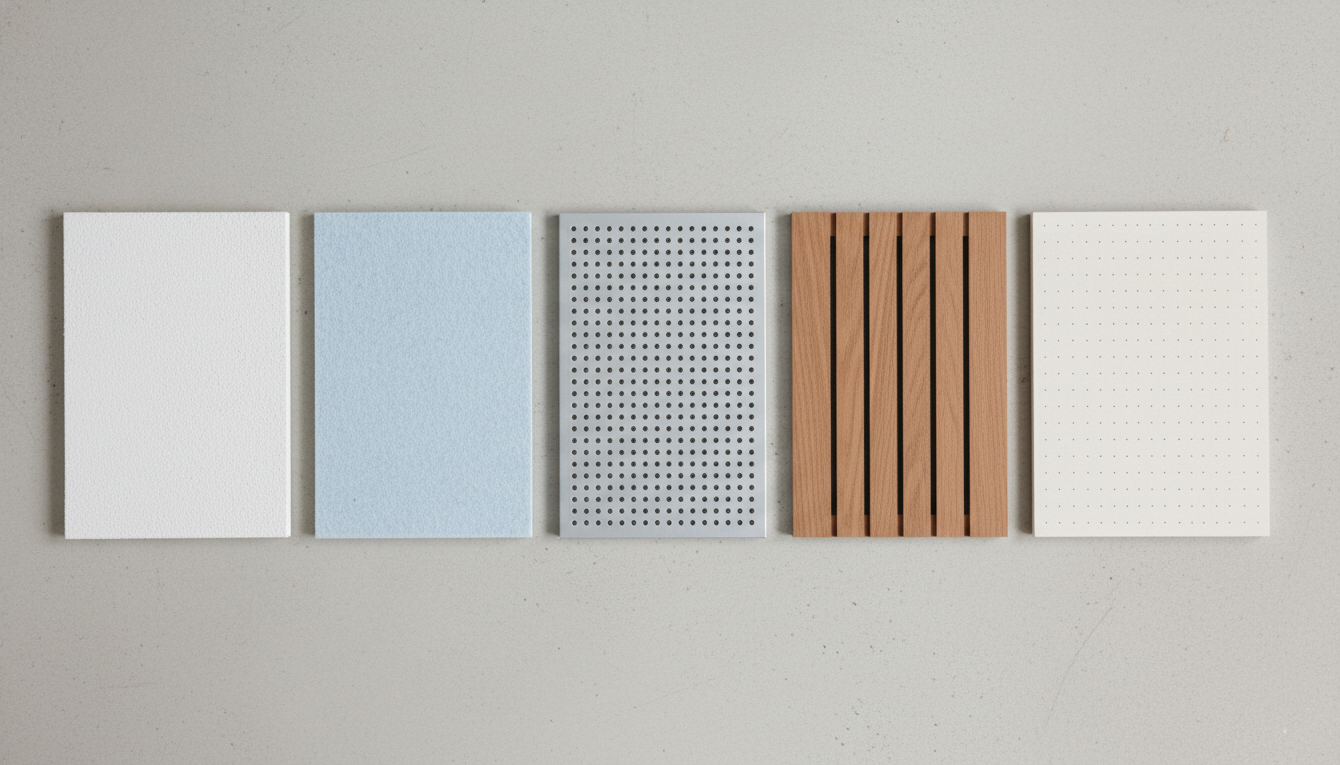
Material is the single most important variable because it sets both the acoustic performance and the visual finish of the tile. The categories below cover the materials used in residential and commercial ceilings across the United States.
Mineral Fiber
Mineral fiber tiles are the most common acoustic ceiling tile, made from compressed mineral wool and recycled content. They typically deliver a Noise Reduction Coefficient (NRC) of 0.50 to 0.70, are naturally fire-resistant, and are the default choice for suspended grid ceilings in offices, schools, and commercial spaces.
Their main limitations are sensitivity to high humidity and a basic, utilitarian appearance unless upgraded to a designer finish.
Fiberglass
Fiberglass tiles use a compressed glass-fiber core, often wrapped in a fabric or painted facing. They offer the highest absorption in the category, with NRC values typically between 0.75 and 0.95, making them the preferred choice for recording studios, conference rooms, and auditoriums where echo control is critical.
They are lightweight and effective but more easily damaged on impact than denser materials, so they suit ceilings rather than walls within reach.
Perforated Metal (Aluminum and Tin)
Perforated metal tiles are aluminum or steel panels with thousands of small holes backed by an acoustic fleece or mineral infill. The perforations allow sound to pass through to the absorptive backing, combining durability and a clean architectural look with NRC values up to 0.70, depending on the backing.
They are well-suited to restaurants, lobbies, and modern commercial interiors where appearance and washability matter as much as acoustics.
Wood and Wood-Wool
Wood acoustic tiles include perforated or slotted wood panels and wood-wool (cement-bonded wood fiber) boards. Perforated wood panels provide moderate absorption with a premium, warm finish, while wood-wool boards offer strong absorption plus a rugged, textured surface used in gyms, schools, and sports venues.
This category prioritizes aesthetics and durability, with acoustic performance that varies widely by perforation pattern and backing.
Gypsum
Acoustic gypsum tiles are perforated gypsum boards backed with an acoustic membrane. They deliver a smooth, monolithic plaster-like ceiling appearance with moderate absorption, typically chosen for upscale lobbies, hotels, and spaces where a seamless finish is desired over maximum performance.
They are heavier and less DIY-friendly than mineral fiber, usually requiring professional installation.
PVC and Foam
PVC and foam tiles are lightweight, low-cost options. PVC tiles are primarily decorative and water-resistant with limited acoustic value, while open-cell foam tiles absorb mid and high frequencies but offer little fire resistance and a less refined look.
These types fit budget projects, temporary setups, or rooms where moisture resistance outweighs acoustic precision.
Types of Acoustic Ceiling Tiles by Installation Method

The installation method determines how the tile attaches to your structure and how much ceiling height you keep. The right method depends on whether you already have a grid, how much headroom you can spare, and the condition of the existing ceiling.
Drop-In (Lay-In)
Drop-in tiles rest inside a suspended metal grid hung below the structural ceiling. This is the most common commercial method because it provides easy access to wiring and ductwork above, accommodates standard 2x2 and 2x4 sizes, and allows individual tiles to be replaced in seconds.
The trade-off is lost ceiling height, since the grid hangs several inches below the original ceiling.
Glue-Up (Direct Mount)
Glue-up tiles are bonded directly to the existing ceiling surface with adhesive. This method preserves headroom, works over drywall, concrete, or wood, and requires no grid, making it the practical choice for rooms with low ceilings.
Because the tiles attach to the original surface, this method does not create the air gap that improves low-frequency performance in suspended systems.
Nail-Up
Nail-up tiles are fastened with nails or staples to a solid backing such as plywood or furring strips. This method suits surface-mount installations where adhesive alone is not sufficient and is often used with metal and tin-style acoustic panels.
It requires a nailable substrate, so it is less suitable for bare concrete.
Tegular vs Square Edge
Edge profile is a sub-classification within drop-in systems. Square-edge tiles sit flush with the grid for a flat, economical look, while tegular tiles have a stepped edge that drops slightly below the grid line, creating a more dimensional, finished appearance.
The choice is aesthetic and does not change the tile's acoustic rating.
Understanding Acoustic Ratings - NRC vs CAC
Two standardized ratings describe what an acoustic ceiling tile actually does, and they measure opposite functions.
Noise Reduction Coefficient (NRC) measures how much sound a tile absorbs within a room, on a scale from 0 to 1. An NRC of 0.70 means the tile absorbs about 70 percent of the sound that reaches it; a higher NRC means less echo and reverberation inside the space.
Ceiling Attenuation Class (CAC) measures how effectively a tile blocks sound from passing through the ceiling into an adjacent room, expressed in decibels. A CAC above 35 is considered high performance for privacy between rooms. For full isolation between floors, tiles are combined with proper ceiling soundproofing.
These ratings often trade off against each other. A highly absorptive tile (high NRC) frequently has a lower CAC, and a strong sound-blocking tile (high CAC) may absorb less. Identifying whether your goal is echo control or sound isolation tells you which rating to prioritize.
How to Choose the Right Type for Your Space

The correct type follows from your acoustic goal, your room, and your constraints. Work through these criteria in order.
Define the problem first. If the issue is echo and harsh reverberation in one room, prioritize a high-NRC tile, such as fiberglass or perforated metal. If the issue is noise passing between floors or rooms, prioritize a high CAC tile.
Check your headroom. With limited ceiling height, choose a glue-up or nail-up tile that mounts directly. With normal height and a need to hide ducts or wiring, choose a drop-in system.
Match the environment. High-humidity areas such as kitchens and bathrooms favor PVC or moisture-rated mineral fiber; commercial spaces usually require fire-rated tiles to meet building code; design-forward rooms favor wood, gypsum, or finished metal.
Balance the budget and appearance. Mineral fiber offers the best value, fiberglass the best absorption, and wood or gypsum the best aesthetics at a higher cost.
Acoustic Ceiling Tiles for Residential vs Commercial Spaces
The same material categories apply to homes and businesses, but the selection priorities differ.
Residential projects usually prioritize appearance and echo control. Home theaters, basements, and home offices benefit most from absorptive tiles in finishes that match the room, and code requirements are generally lighter than in commercial settings.
Commercial projects usually prioritize code compliance and durability. Offices, restaurants, and public buildings typically require fire-rated tiles, often need a defined CAC for speech privacy, and favor drop-in grids for maintenance access.
Choosing the Right Acoustic Ceiling Tile
Choosing among the types of acoustic ceiling tiles comes down to three decisions: the material that fits your performance and design needs, the installation method your ceiling allows, and the acoustic rating that matches your goal of either absorbing echo or blocking sound. Mineral fiber covers most general needs, fiberglass leads on absorption, and metal, wood, and gypsum add durability and design.
Because the right combination depends on the specific acoustics of your space, a professional assessment removes the guesswork. New York Soundproofing designs and installs custom acoustic ceiling solutions for residential and commercial spaces, matching tile type, mounting, and rating to the measured needs of each room.